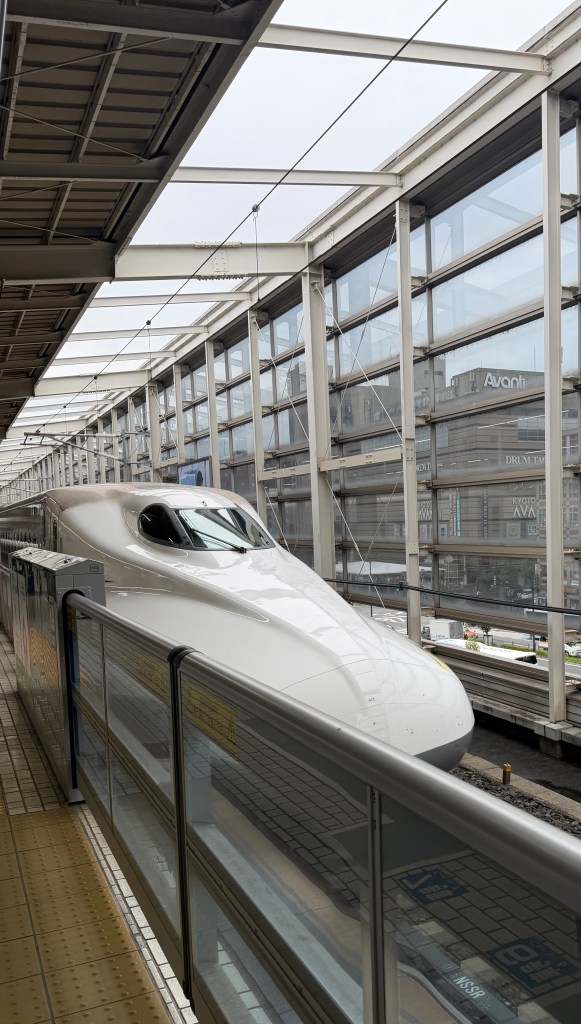
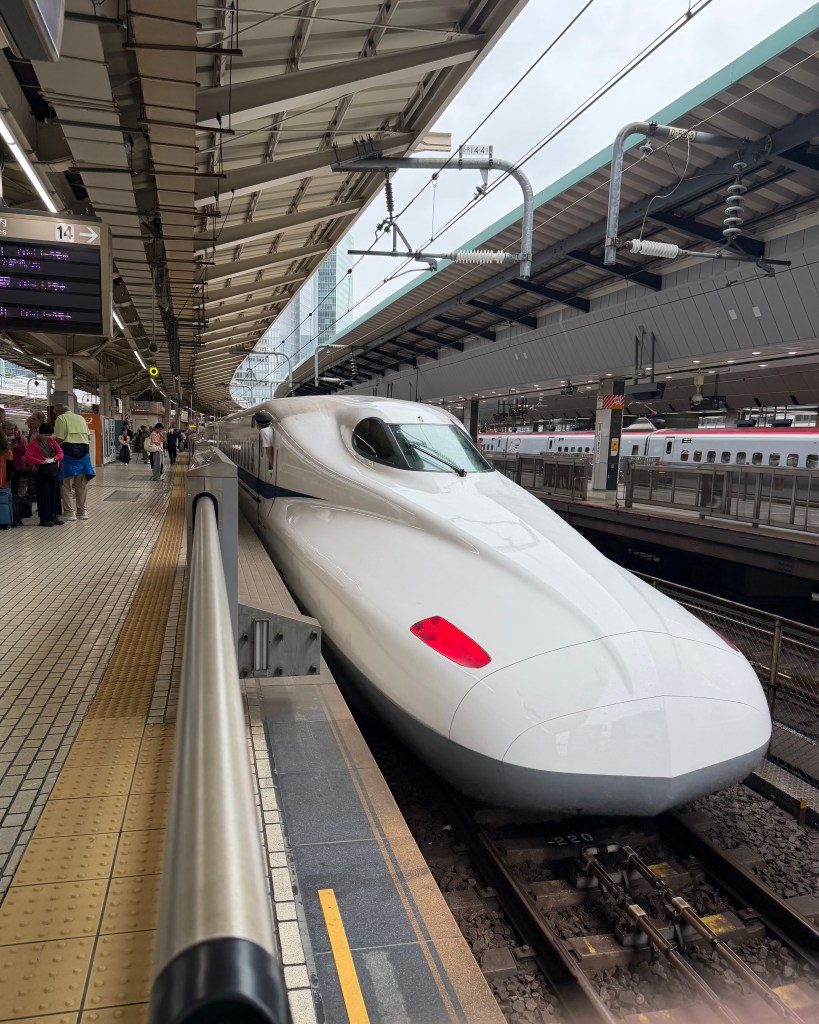
Taxied to the Kyoto station on Wednesday morning where we boarded our bullet train for Hiroshima. Arrived at our hotel to discover an “oops”. Our bags, which were supposed to be waiting for us, had not arrived. Learned we would be living in our wrinkled, dirty clothes for another day. No problem, as no bags made for a very orderly hotel room. Tooth brushes & toiletries provided by the hotel, & Norika went to the Don Quijote store & bought us all some undies.
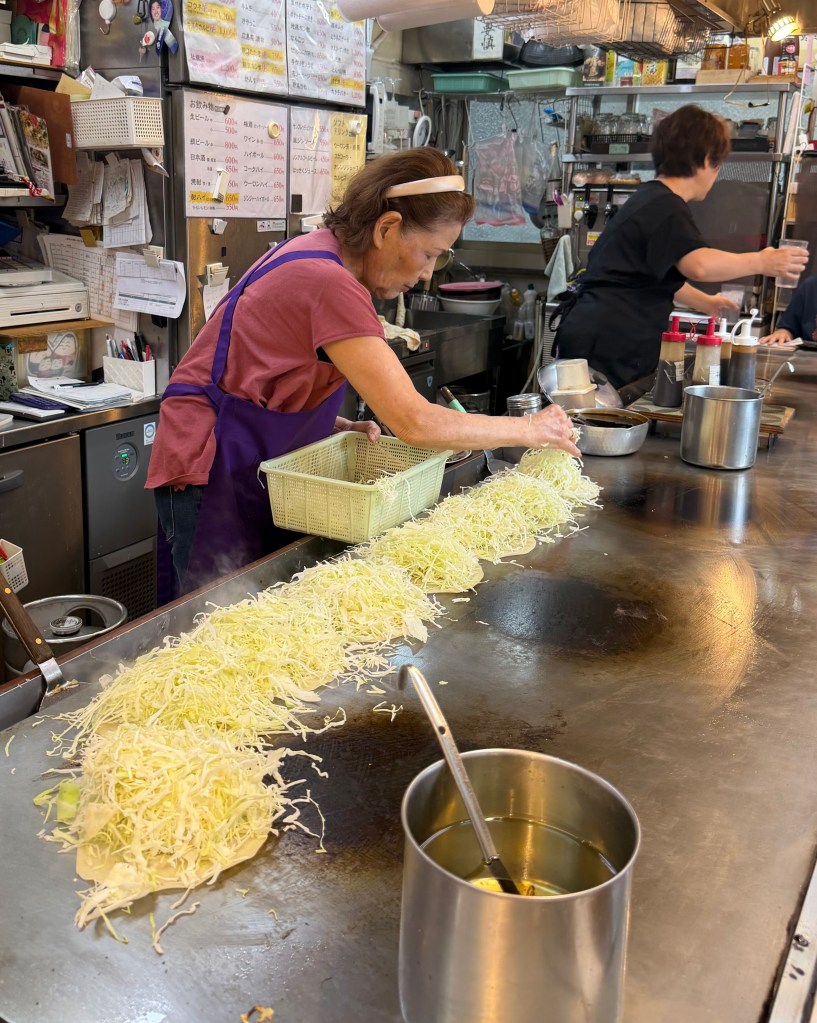
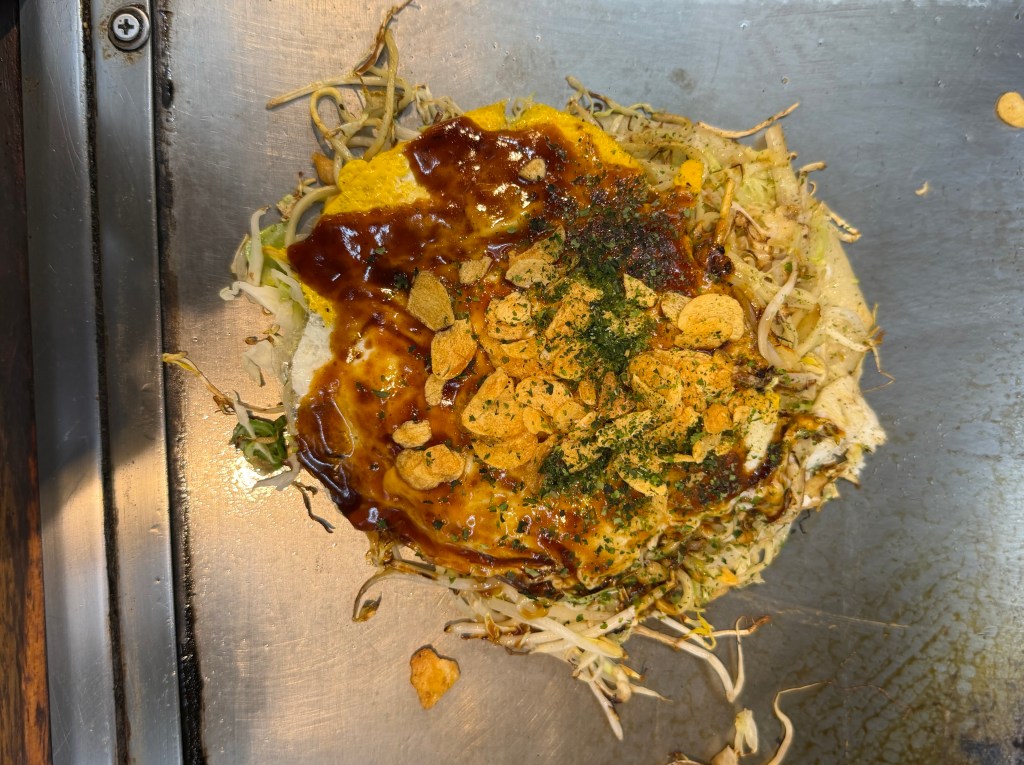
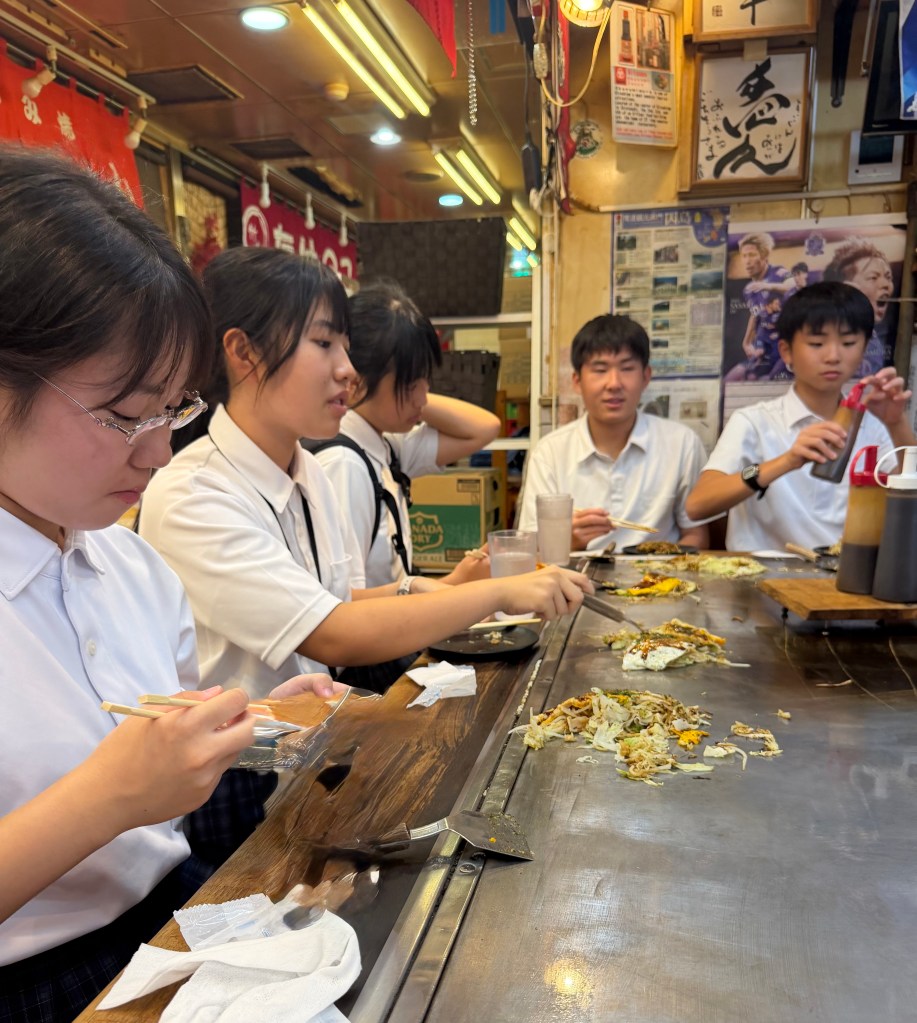
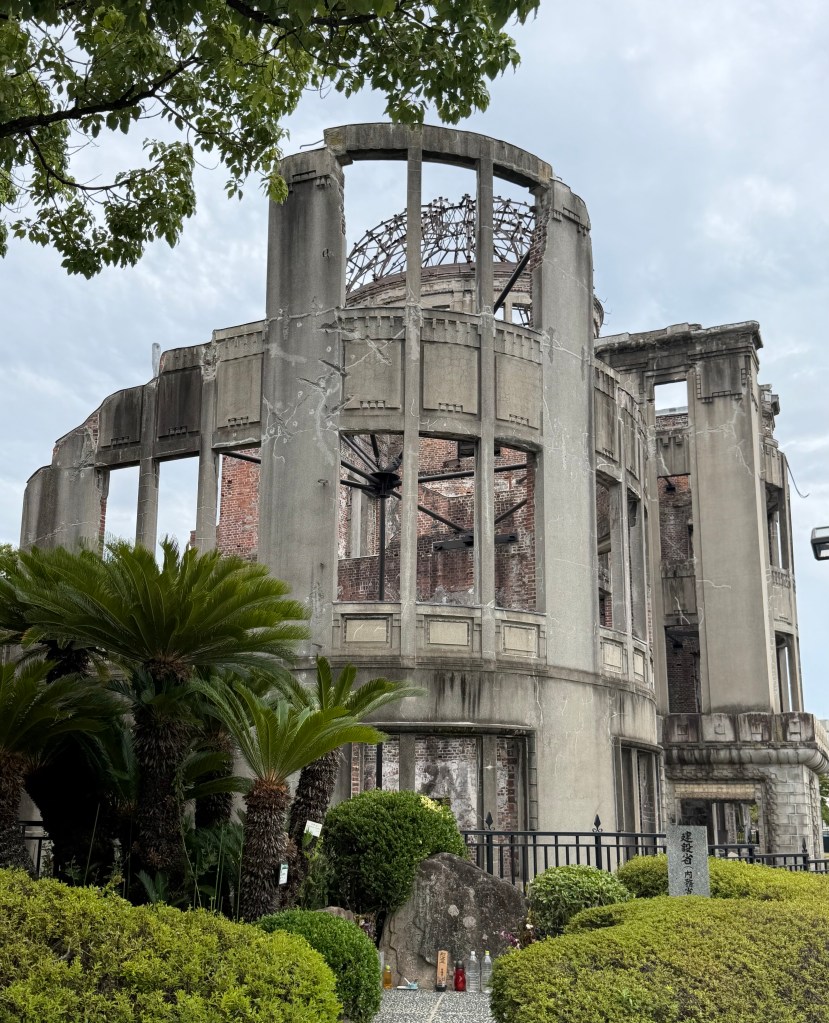
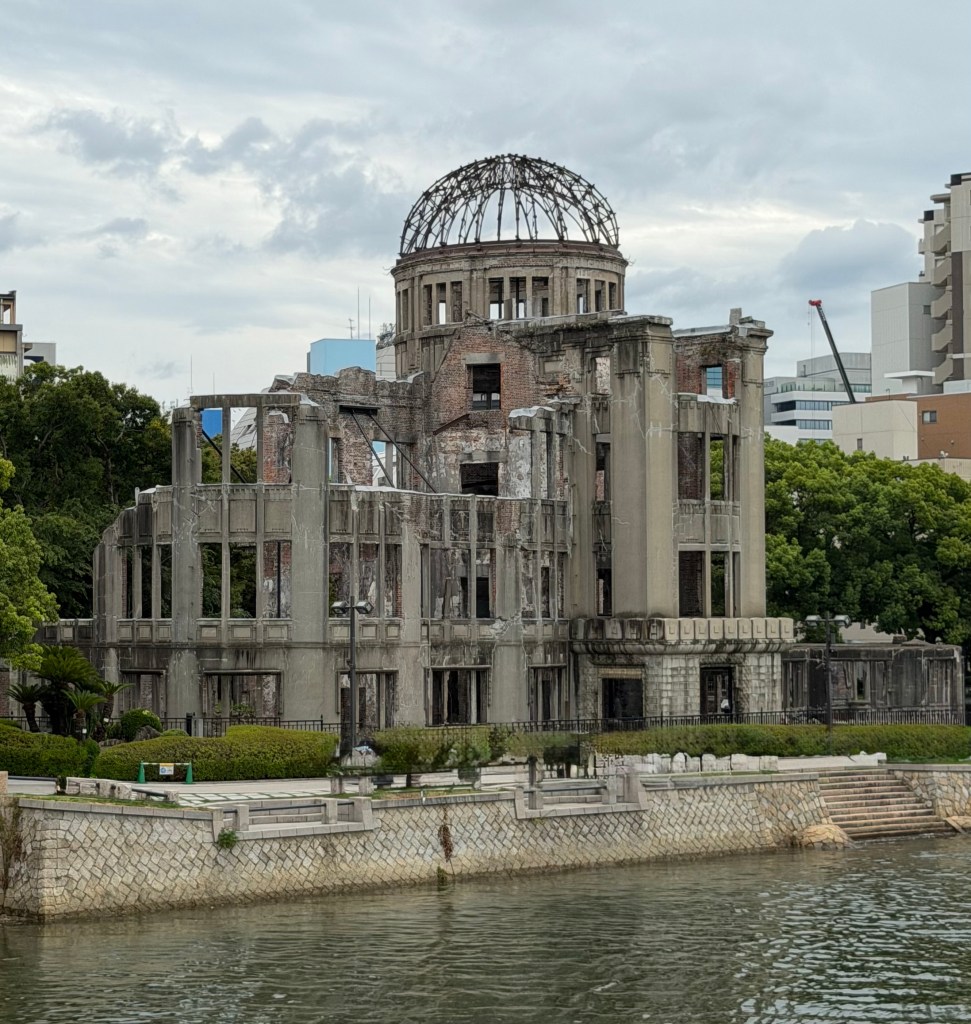
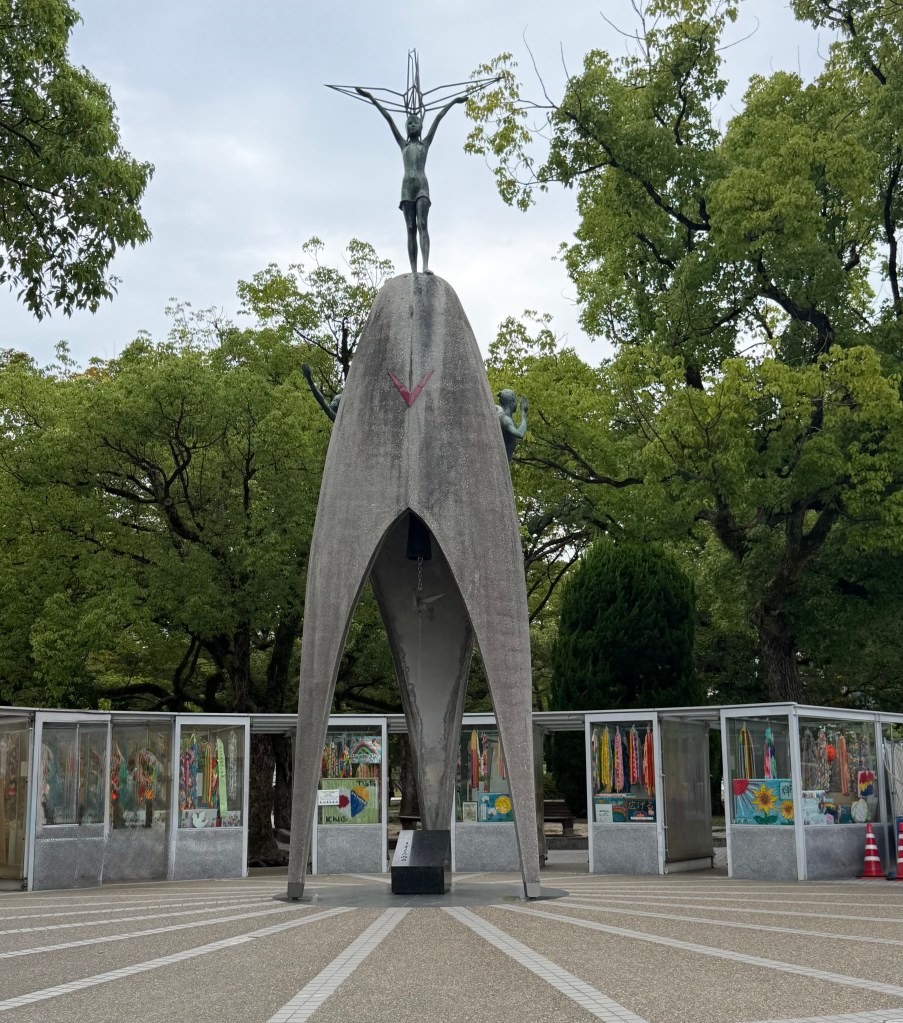
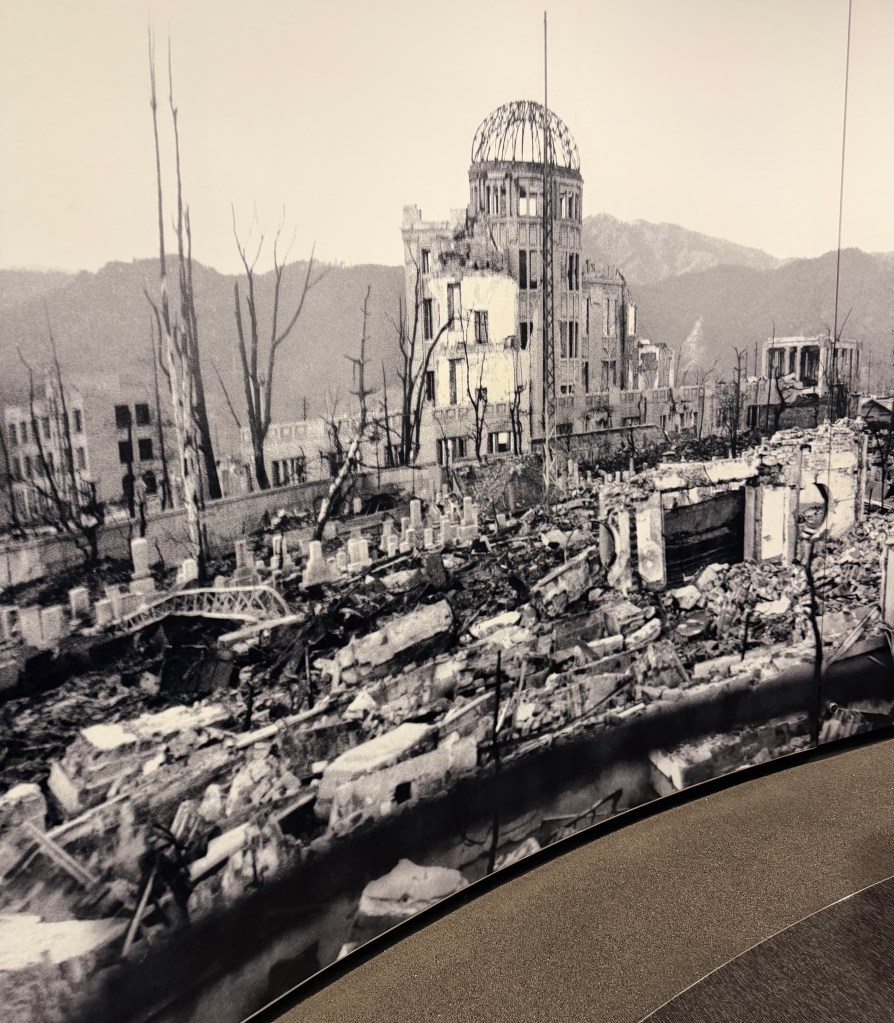
We quickly forgot about the turmoil of no bags as we were treated to a famous Hiroshima lunch: Okonomiyaki, a savory Japanese pancake. Then it was off for an emotional visit to Peace Memorial Park, located near the very center of the area of the atomic bomb blast.
Wednesday evening, another Hiroshima delicacy: oysters. I have had deep fried oysters, grilled oysters & oysters with noodles. Makes me happy, but not sure some in our group would concur.
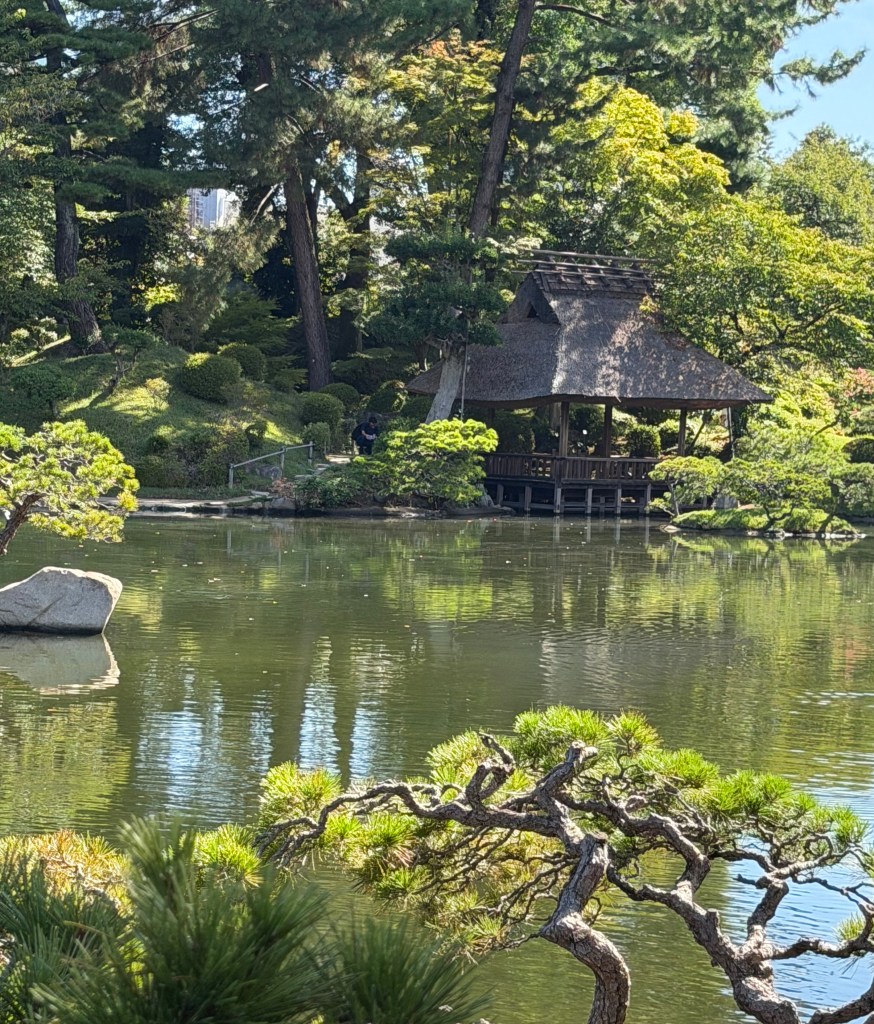
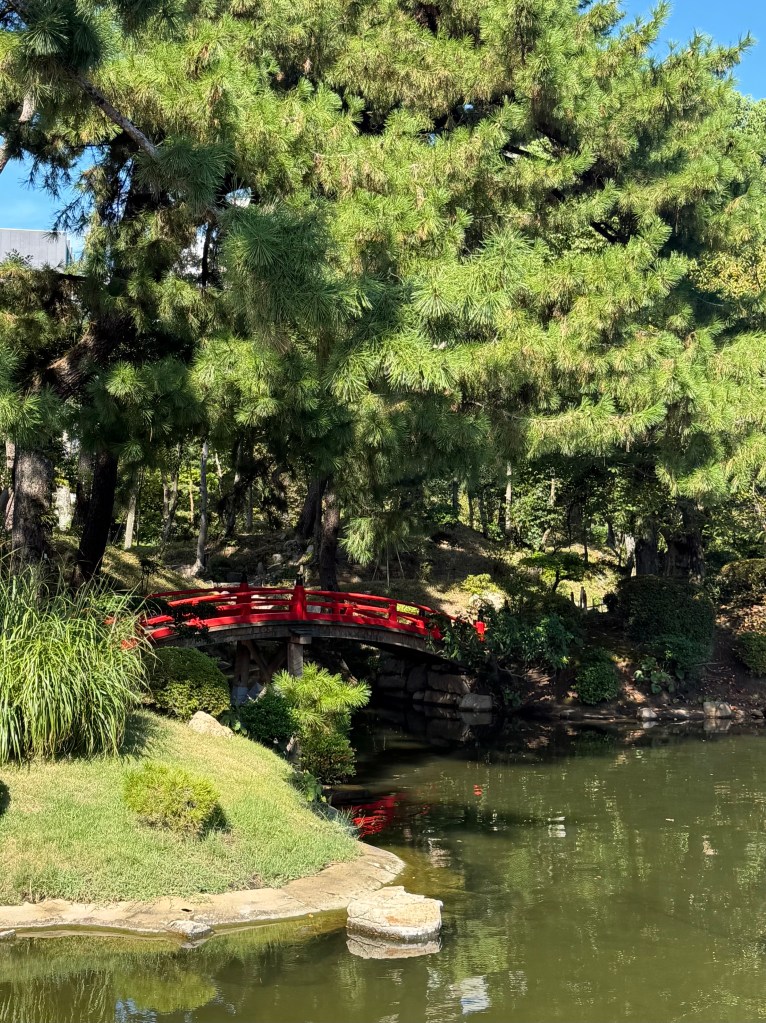
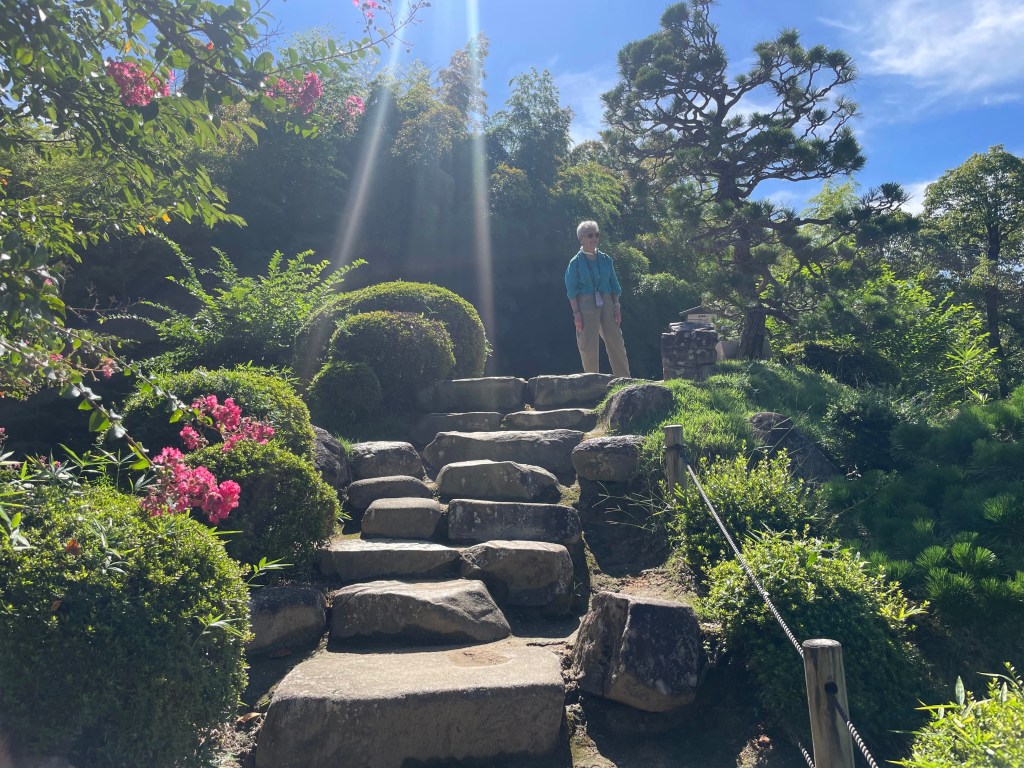
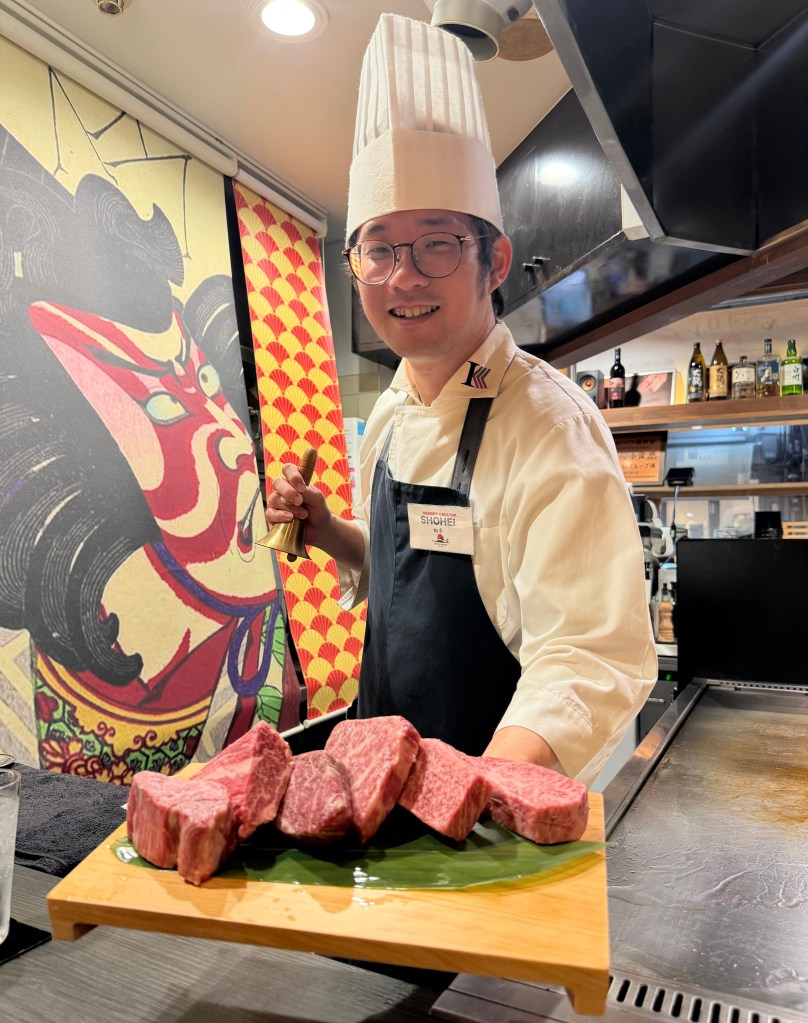
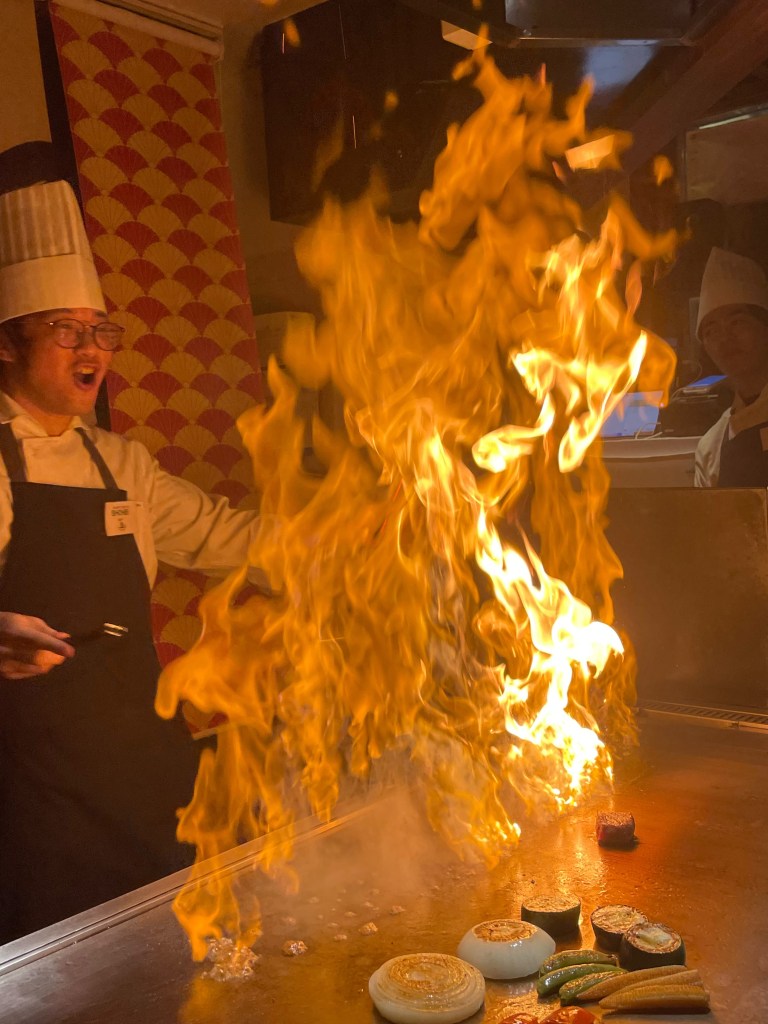
On Thursday, our bags arrived before we left the hotel for today’s Japanese garden excursion, so everyone could relax regarding the wayward bags. Beautiful sunny day with low humidity & few crowds. Afternoon free to wander the streets & people watch. This evening, a special treat for some of us: Kobe beef.
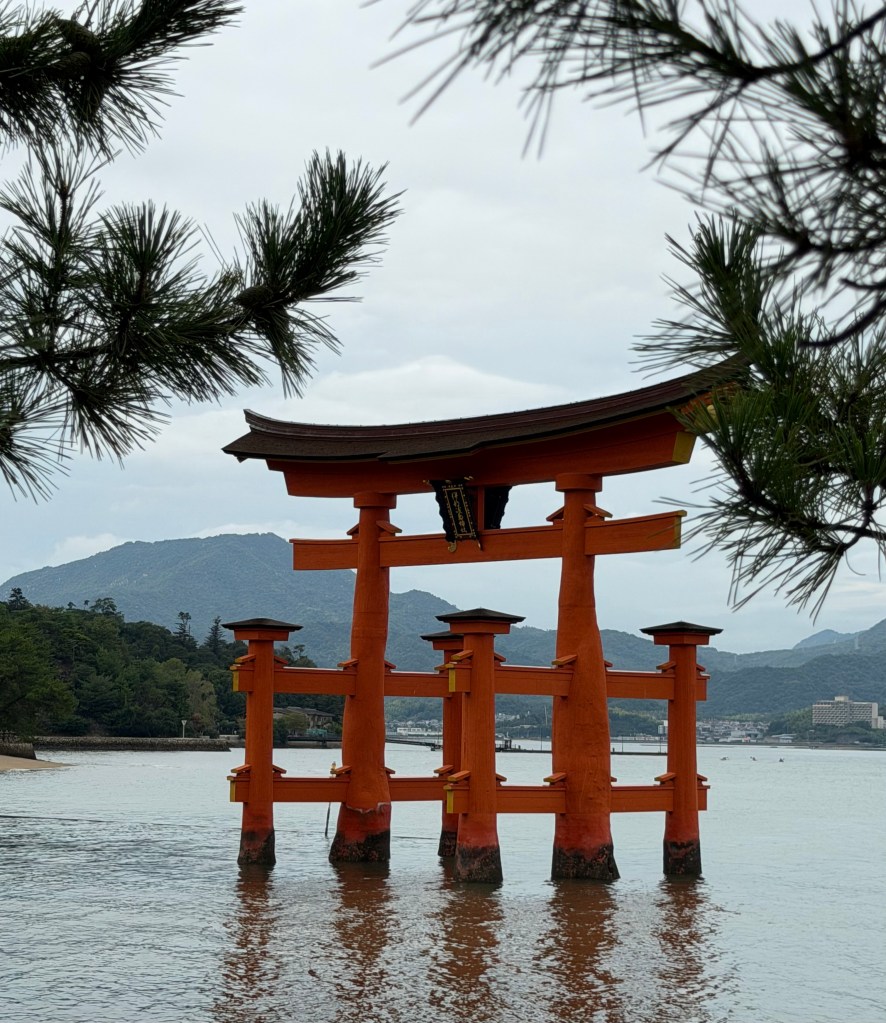
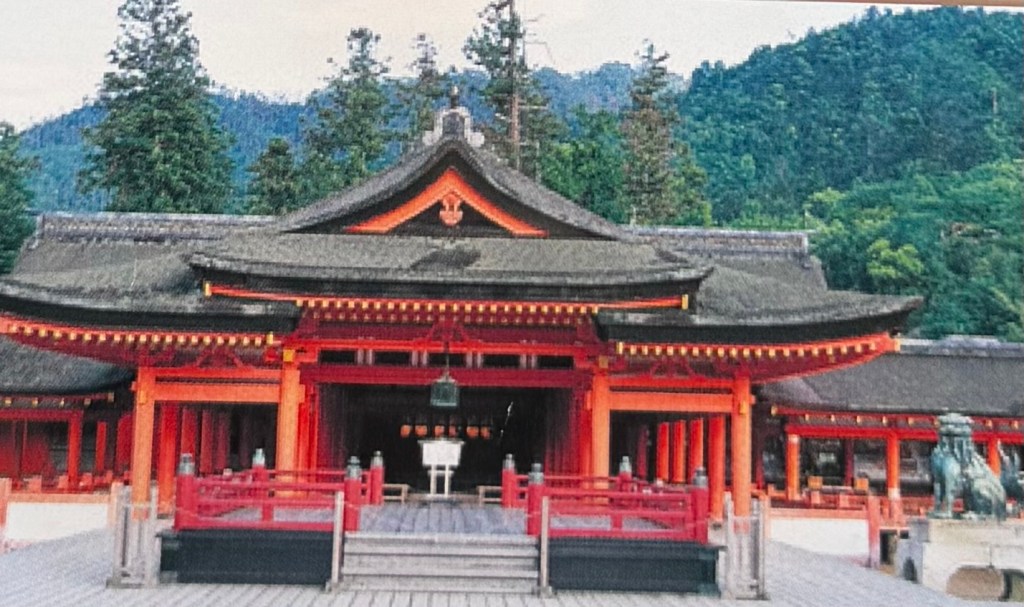
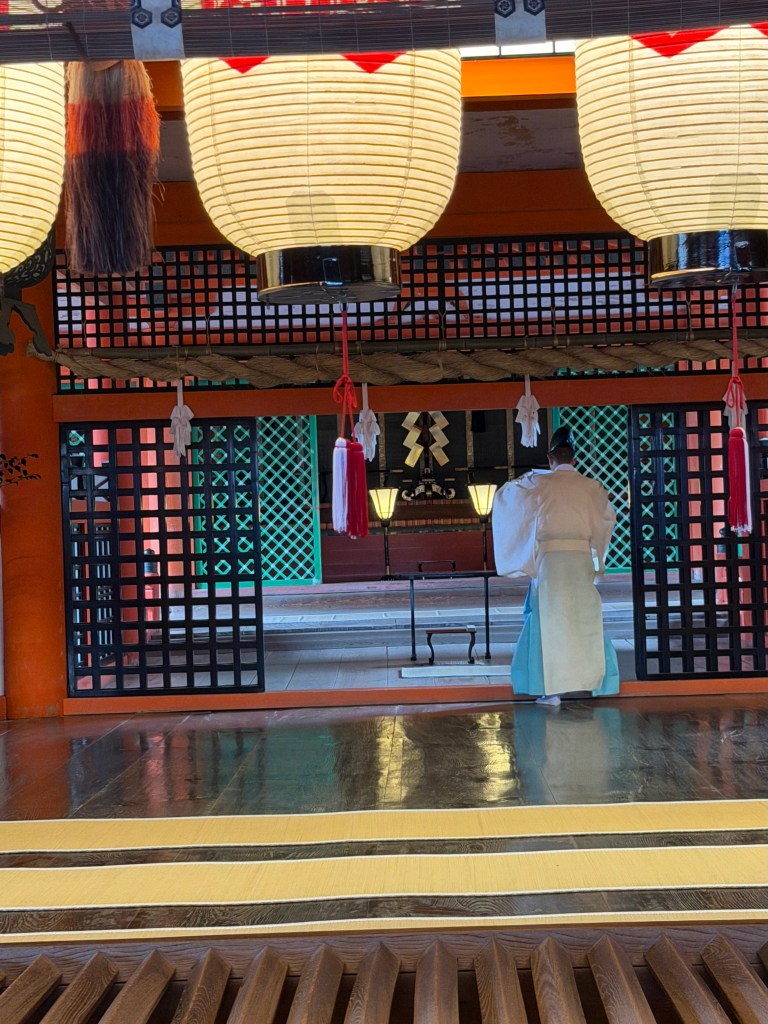
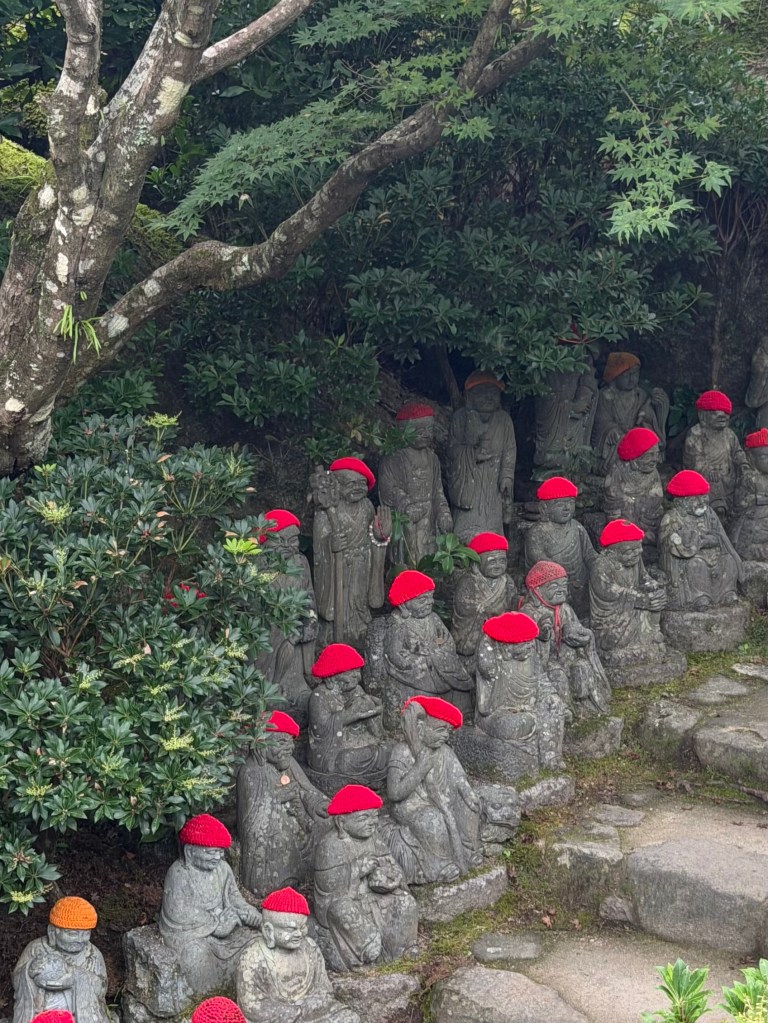
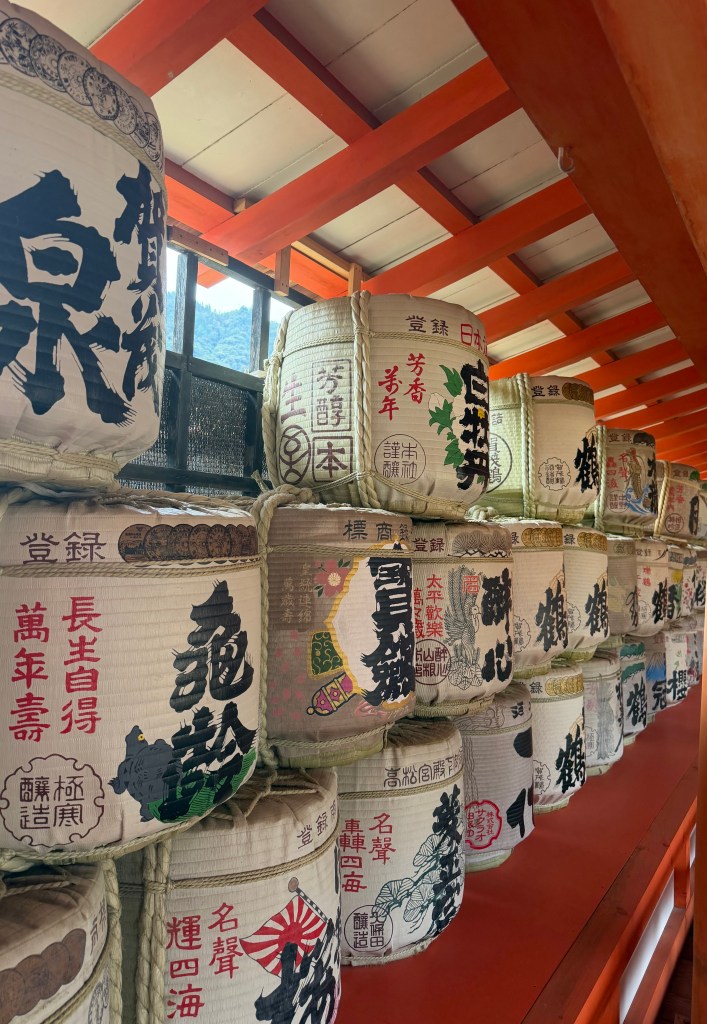
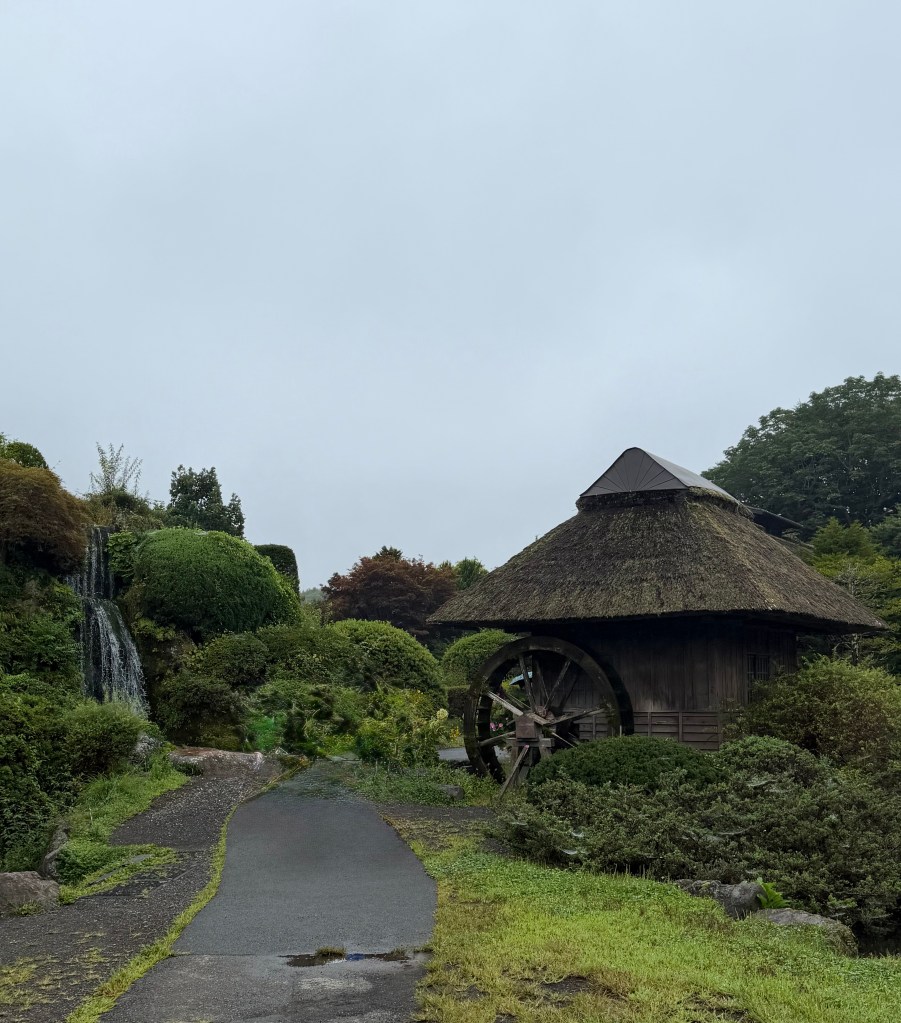
Friday found us using a local bus, local train & ferry to visit the Itsukushima Shrine on Miyajima Island, an island once worshiped for its spirituality. It rained again today, but the visit was an enjoyable experience & a place of beauty.
Oh no, as of Saturday, the trip is officially over, & I will be making my way from Hiroshima to Tokyo to Chicago. I am not tallying my travel hours as ignorance, in this case, is bliss.
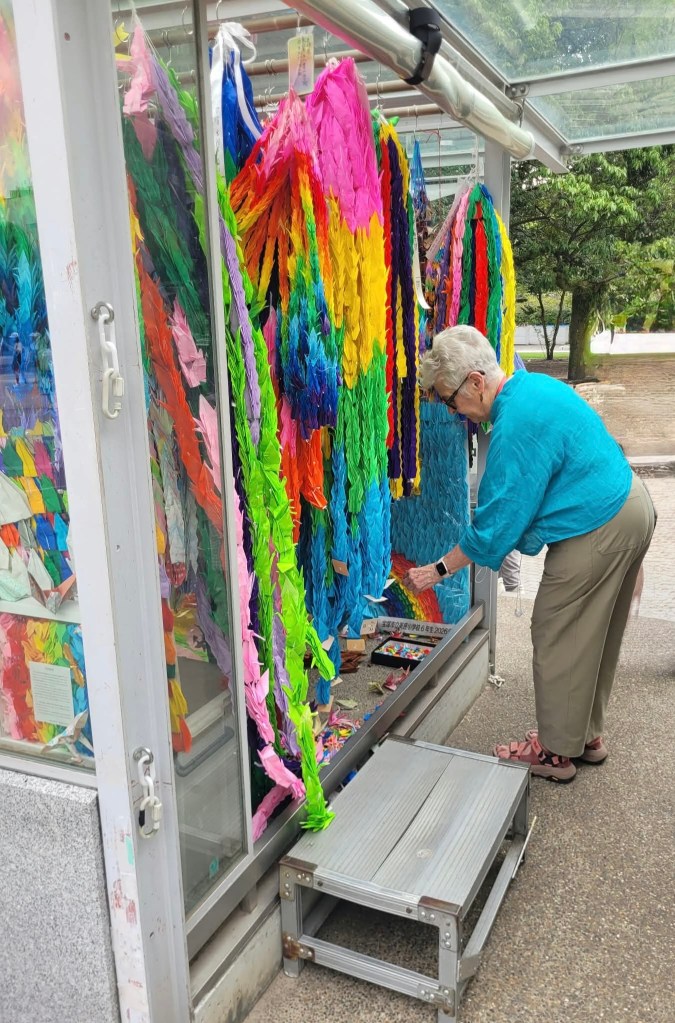
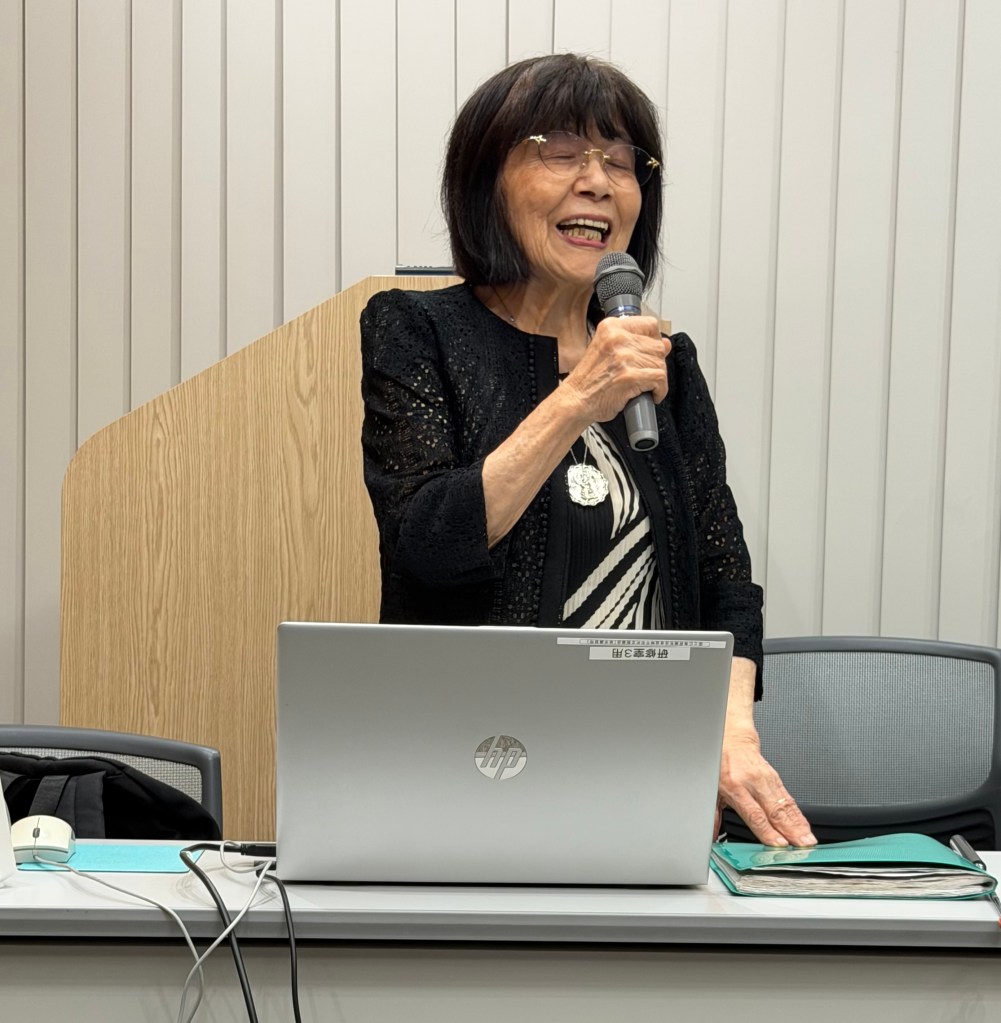
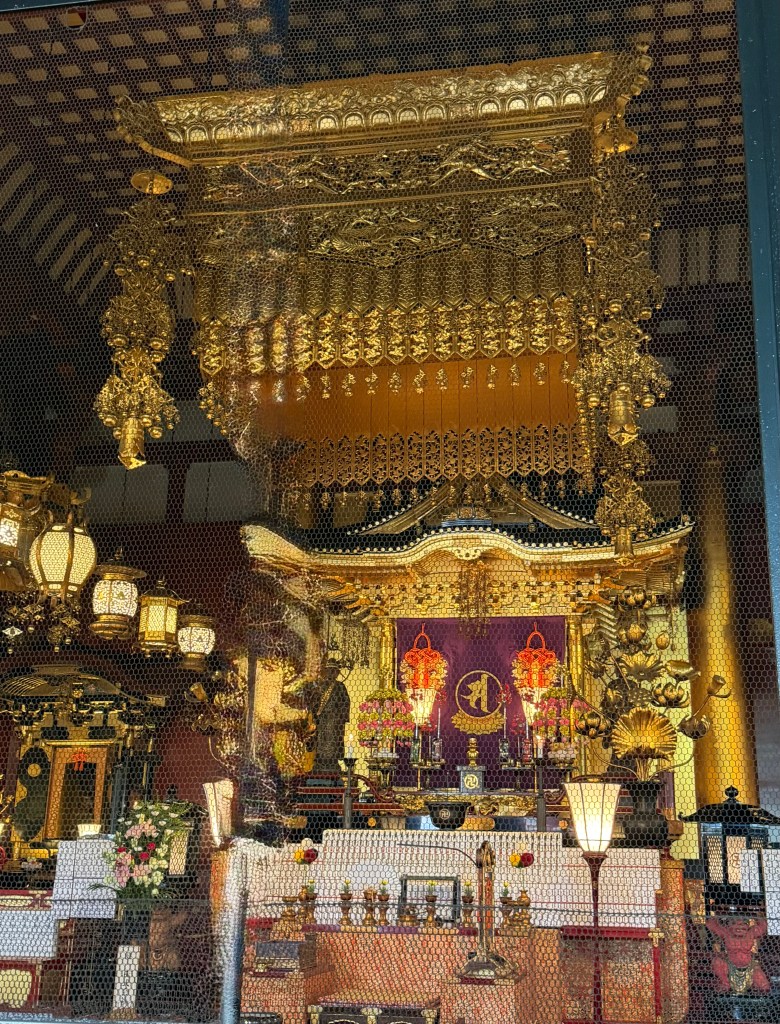
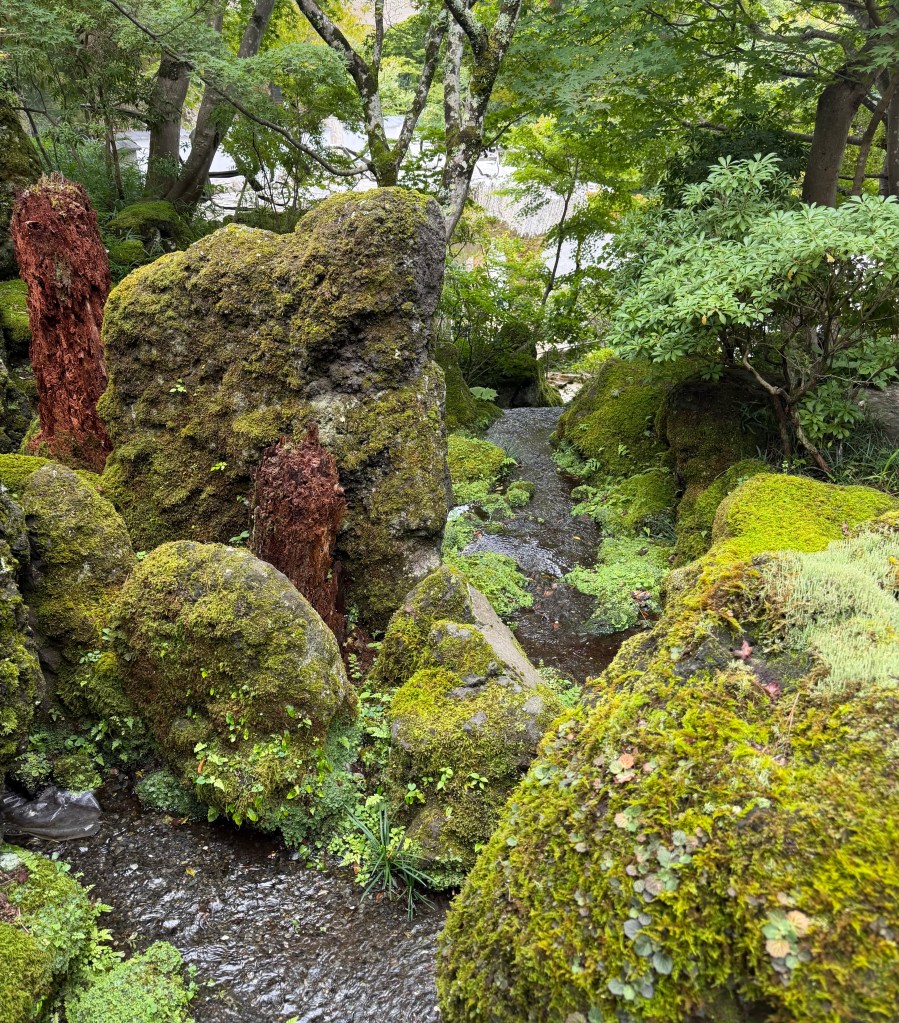
Bullet train arriving into the Kyoto station for our 1 1/2 ride to Hiroshima. Comfortable seats, smooth ride, very fast. Train travel really can be fun.Cabbage Pancake: Pancake,cabbage, bean sprouts, green onion,deep fried flower button, pork, wheat flower butter. Flip, fry noodles, add to pancake & top with fried egg. I ordered mine with fried garlic, all topped with soybean (barbecue)sauce. May not sound like a treat, but it was. We sat at the counter & watched this mother/daughter team prepare our pancakes. The 84 year old mother has operated this stand for over 50 years.The end result.Japanese students teaching us how to eat the cabbage pancake with chopsticks.The atomic bomb was dropped very close to the promotional hall killing everyone inside, but parts of the walls remain standing. Some Japanese would like to see it demolished while others feel it should stand as a memory to the evils of war.Another view of the what remains of the promotional hall with a rebuilt Hiroshima in the background. This is known as the A-Bomb Dome.Children’s Peace Monument at Hiroshima. Thousands of children were killed & many orphaned. Note the abundance of origami cranes in the kiosks. Noriko taught each of us, with much assistance, how to fold an origami crane to be placed in this kiosk. Left a message & my name on the crane. The crane is the symbol of peace as is the dove, both of which can be found on many monuments. This picture was taken from the walls of the museum. Walking through the Peace Memorial Museum & hearing the stories through the audio head set was a moving experience. Read Hiroshima by John Hersey which prepared me for the tragedies these innocent citizens, many children, of Hiroshima endured.An atomic bomb survivor, 86 years old today, 8 years at the time of the bombing. Related her memories of her family’s experiences.Japanese Garden in Hiroshima.Japanese Garden in Hiroshima.Lots of up & down while visiting this beautiful Japanese garden on a beautiful morning in Hiroshima.Noriko introduced us to a Kobe beef evening out. What an experience; best filet I have ever eaten, even with chop sticks. Seven seat counter. Served with grilled vegetables: red pepper, onions, baby corn, zucchini & egg plant. Couldn’t afford to eat like this very often.Our chef putting on a show for his guests.O-Torii Gate seen from the ferry as we approach Miyajima Island, a scenic spot of Japan. We saw the Gate at both low tide, 10 am & high tide 2 pm.Tsushima Shrine on Miyajima Island. The shrine was built in the 1st half of the 6th century & remodeled into the present beautiful structure in 1168. I took this picture from a brochure.Shinto priest at the Shinto Shrine. Made an offering, bowed twice, clapped twice, asked for a blessing, then bowed once again at the end of my request.Buddhist monks with knitted red caps, lined along the route to the Daishoin Temple. Here we made a purification walk along the dark tunnel, a sensory experience in total darkness. Left hand placed on the wall for guidance & purification.Saki barrels lining the wall of the Shinto Shrine.
Hopefully, time permitting, I would eventually like to share some of the special characteristics, pictures & idiosyncrasies of the Japanese culture. It’s been a wonderful learning experiencing, Thanks to all who traveled with me.
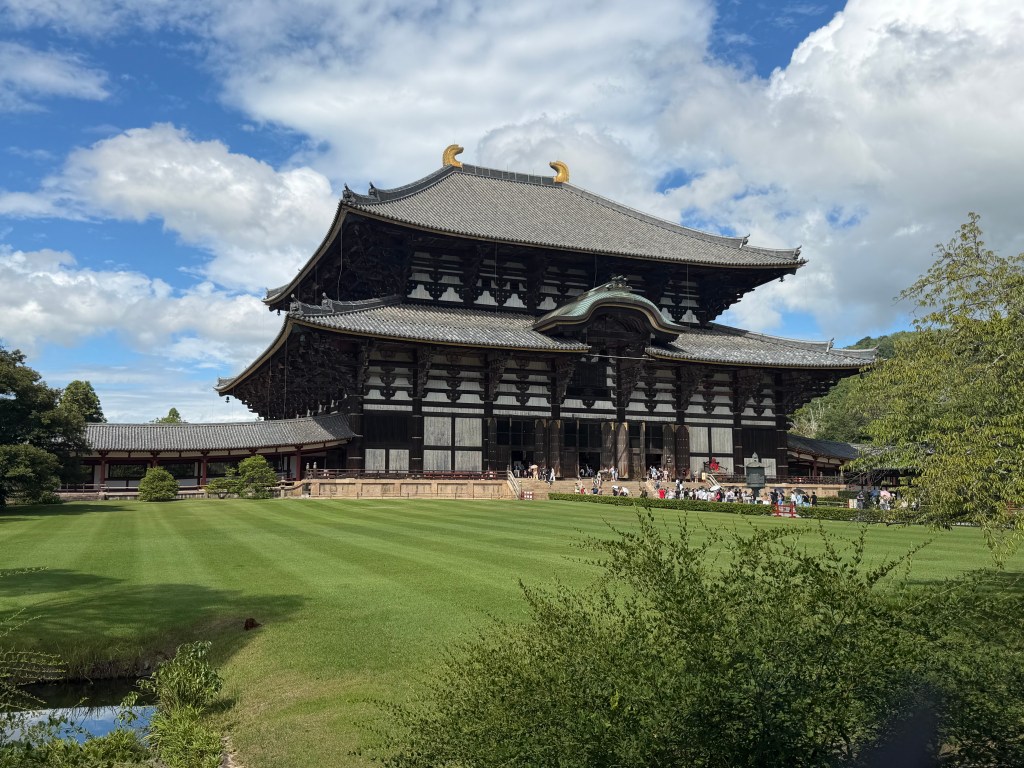
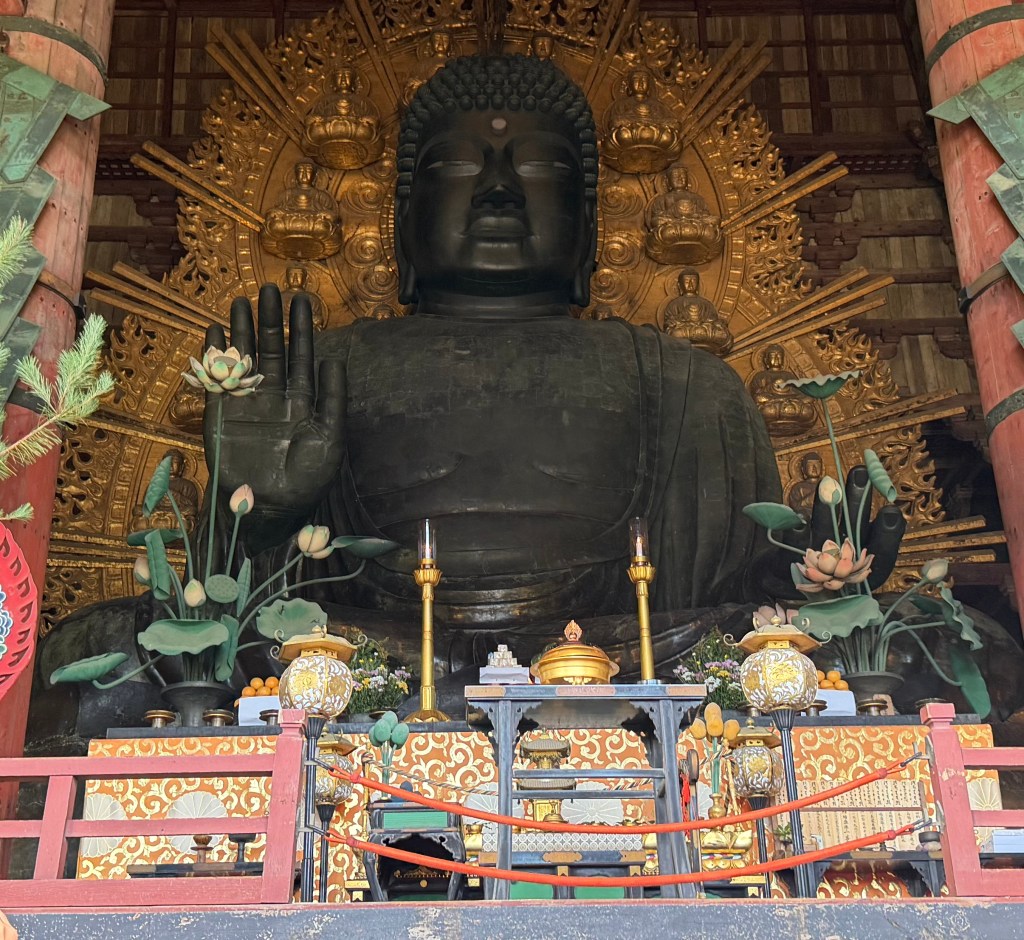
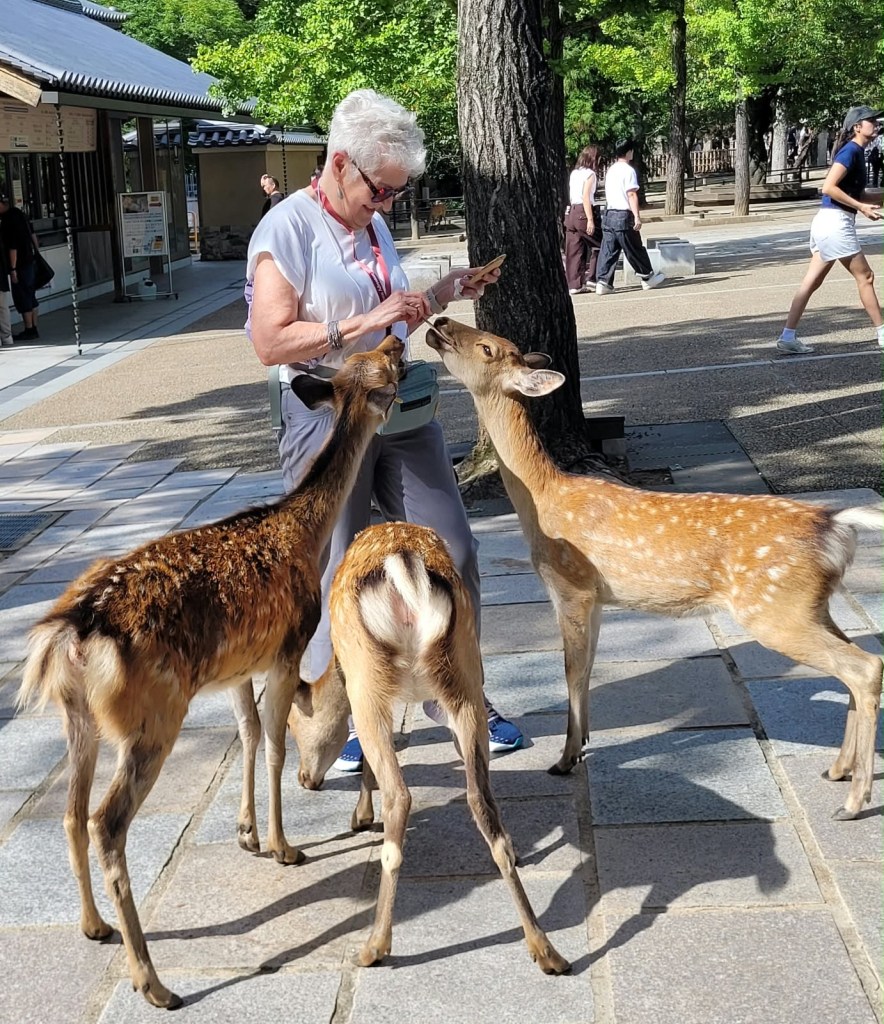
Departed Toba on Sunday via train for our eventual destination, the ancient city of Kyoto; but first a stop in the city of Nara where we visited the famous Todaiji Temple & its Buddha statue. The park area where the temple complex is located is unique for a variety of reasons, but its free roaming deer are rather inquisitive & greedy. These deer are regarded as the messenger of the Shinto god, & thus protected.
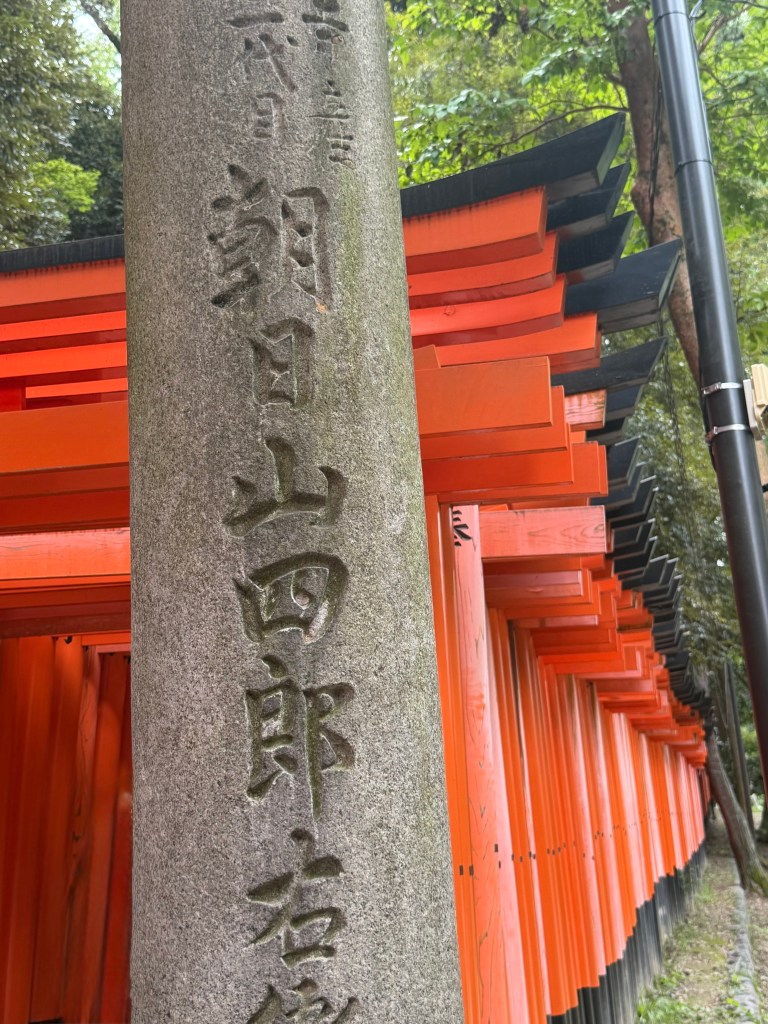
On Monday we began our day with a visit to Fushimi Inari Shrine to witness the site’s tunnel of an estimated 10,000 red Tori gates. Yes, it’s MORE shrines & temples, always crowded, but after all this trip was dubbed TEMPLES, SHRINES & TREASURES.
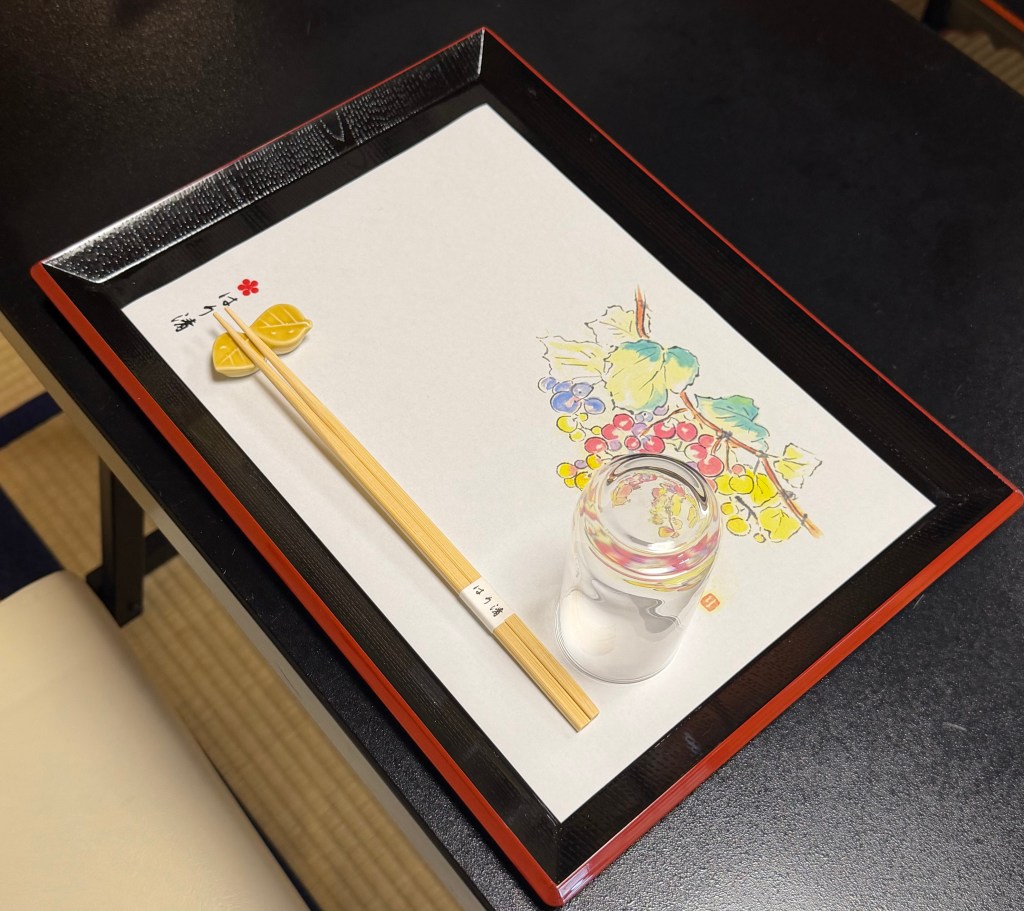
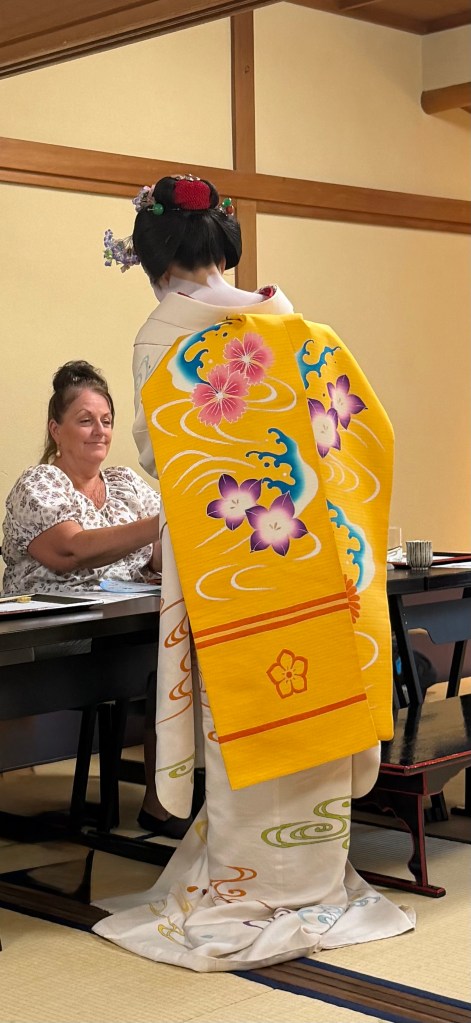
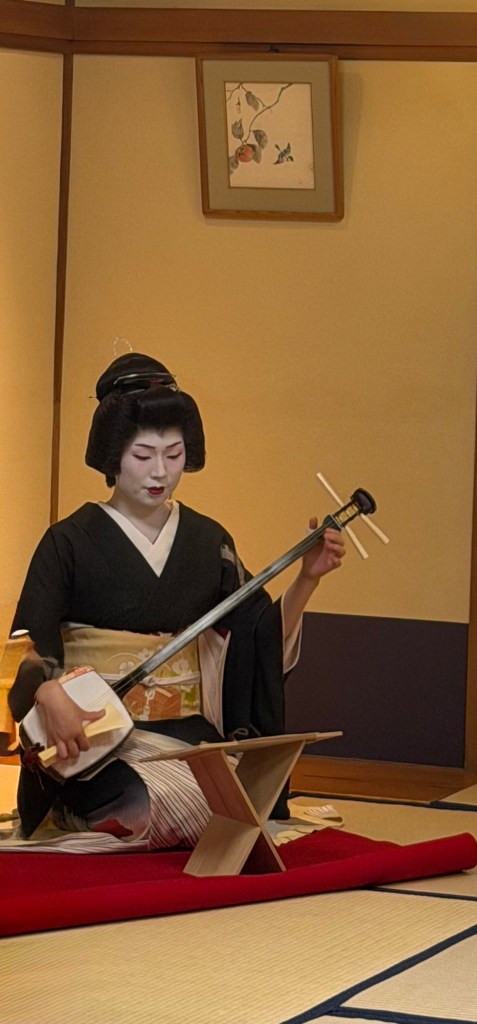
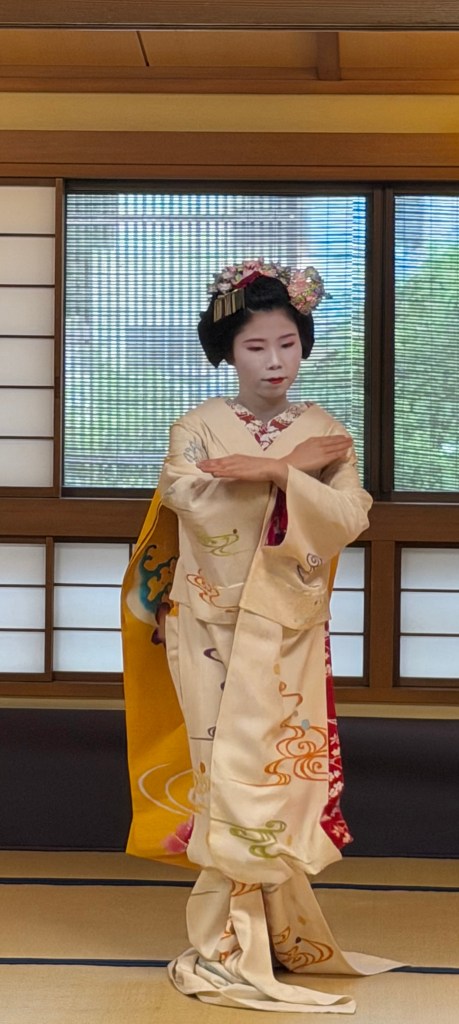
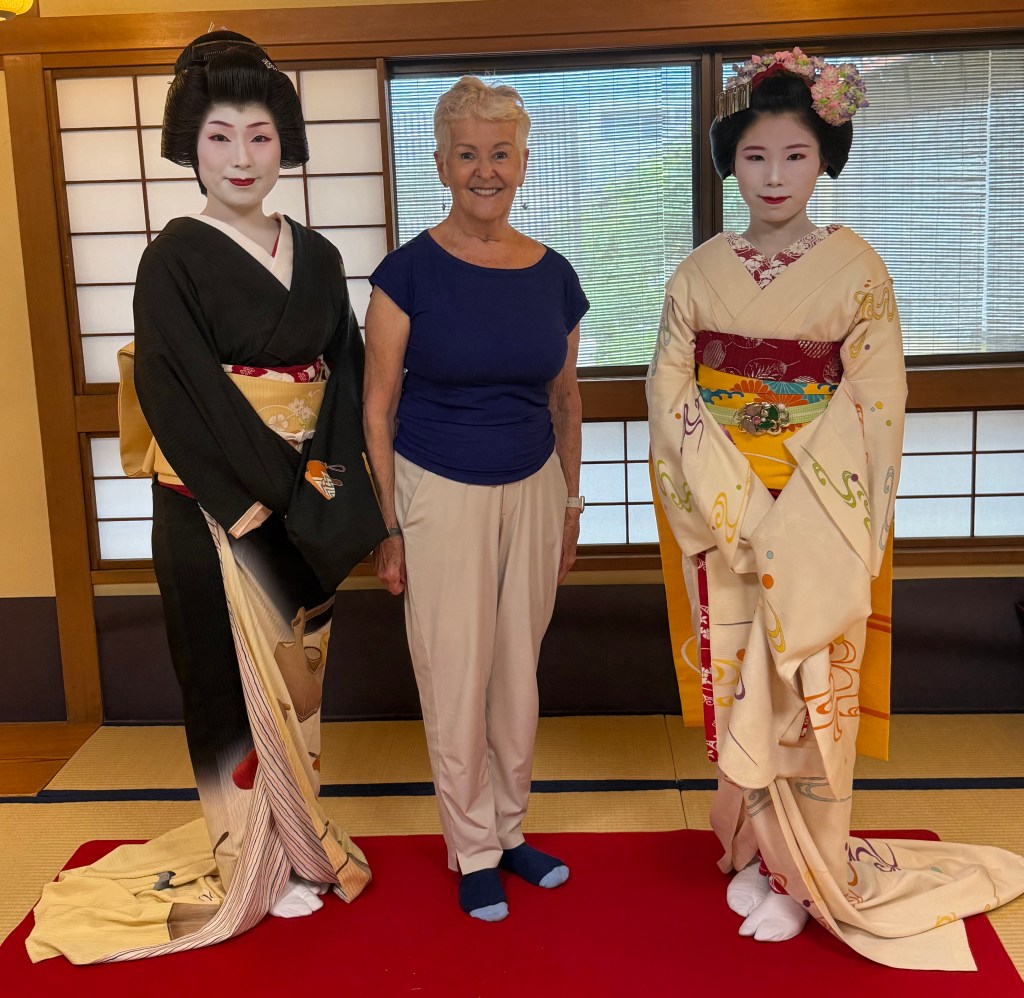
The real treat of the day was lunch & entertainment at a karyukai where we had a sumptuous lunch, learned about maiko (geisha apprentice), entertained with song & dance & had an opportunity to learn about the profession of a geisha.
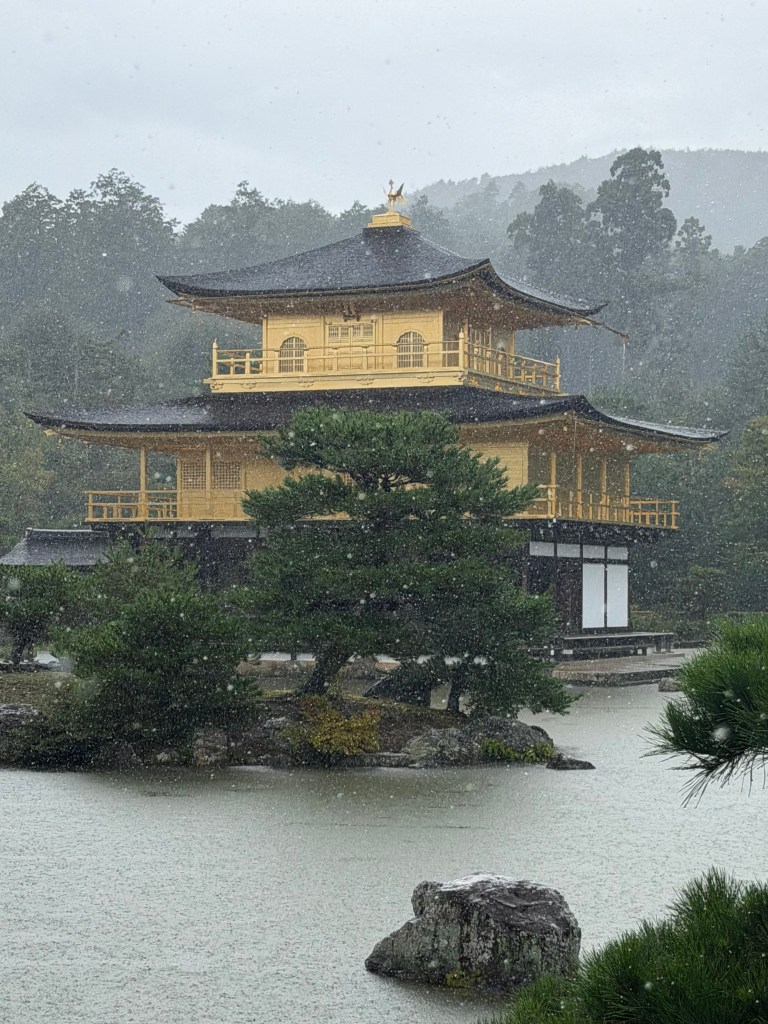
After lunch, it was another temple, Kinkakuji Temple, a UNESCO World Heritage Site. Here we saw the Temple of the Golden Pavilion which dates from 1387.
We had a bit of free time in the afternoon, so we headed for a delightful excursion of shopping where Melina & I found treasures, while Joan encouraged. Fashion is quite important in Japan, & much of it is quite beautiful & unique.
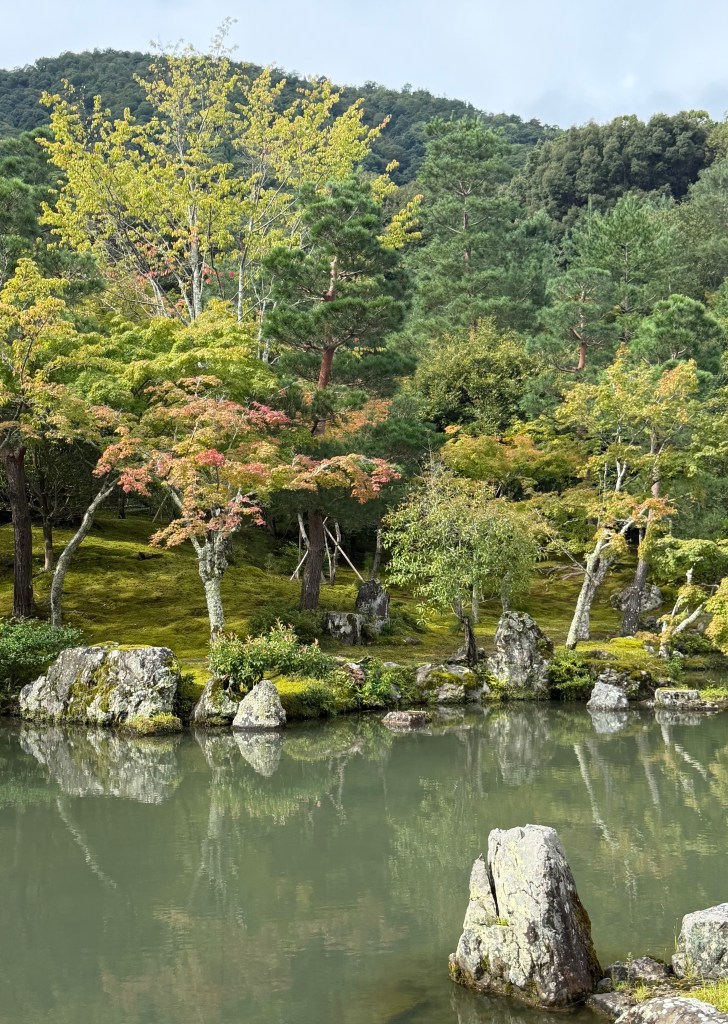
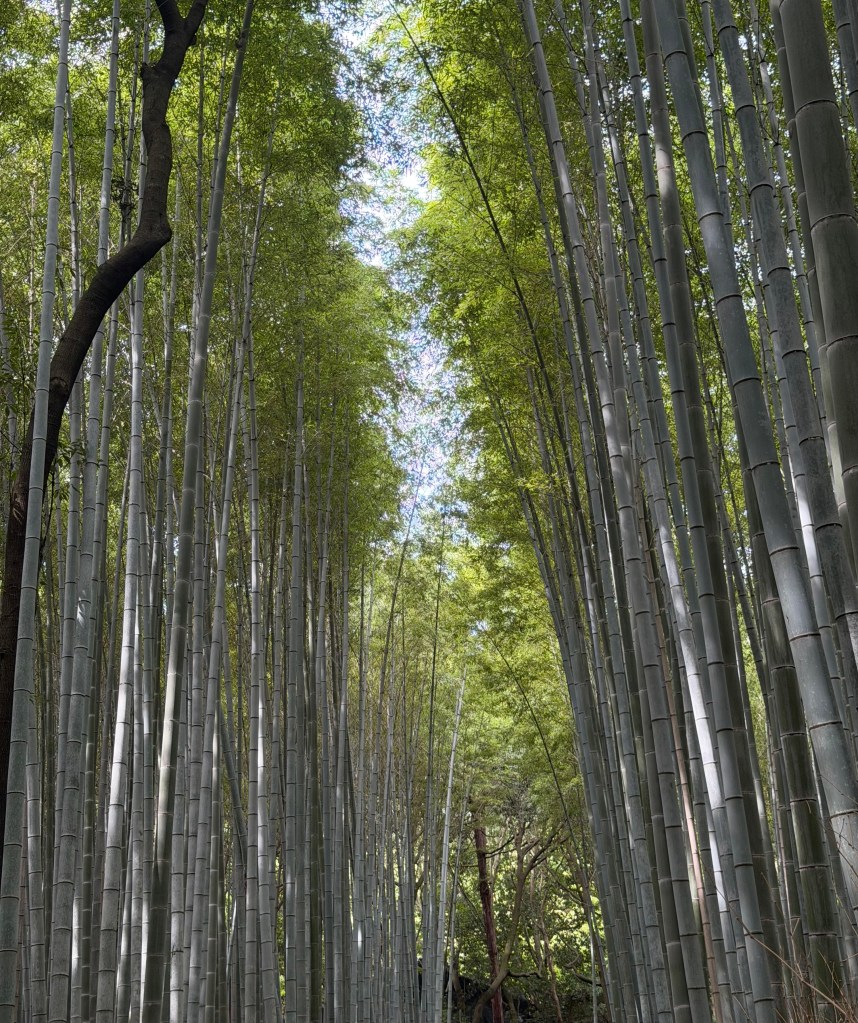
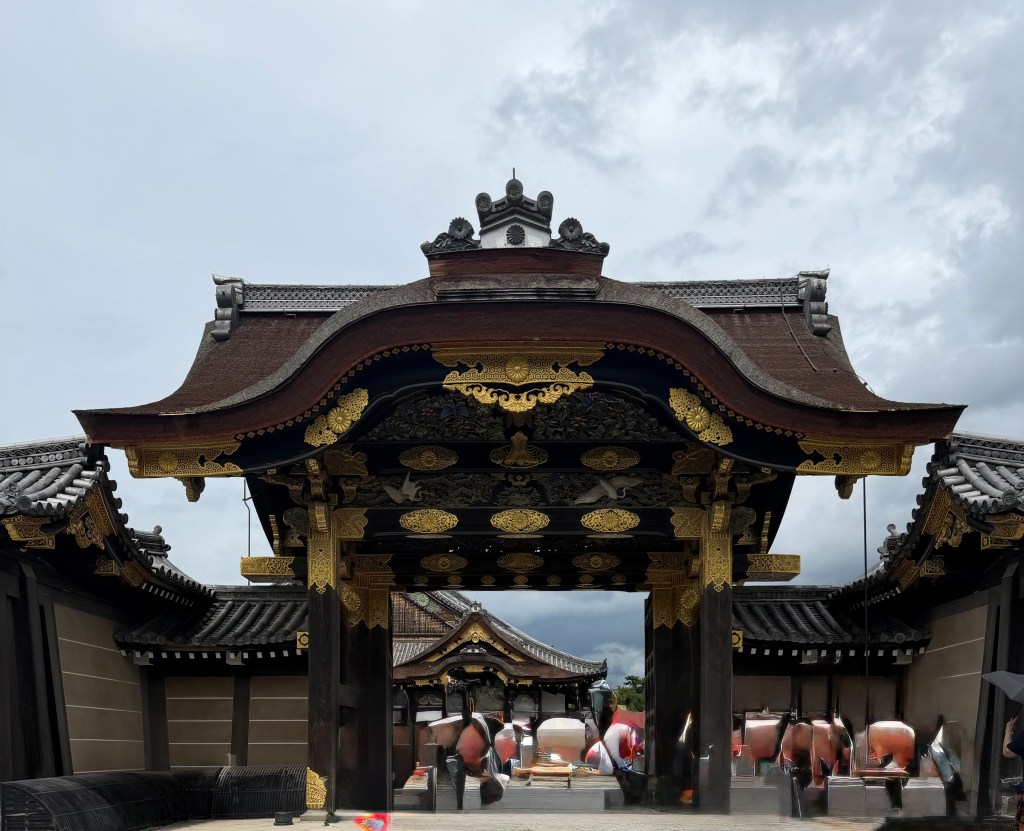
Tuesday found us visiting the Tenryuji Garden, beautiful & serene, & a bamboo grove. Then, our last castle visit, the Nico Castle Complex where we visited a palace of the last Shogun. No pictures inside & no shoes.
Tonight was a traditional Japanese farewell dinner where we shared our surprises, likes & dislikes, & said goodbye to those headed home or elsewhere. The 14 of us got along famously, for the most part. We had a Trip Experience Leader from Egypt who didn’t try hard enough to meld with the group.
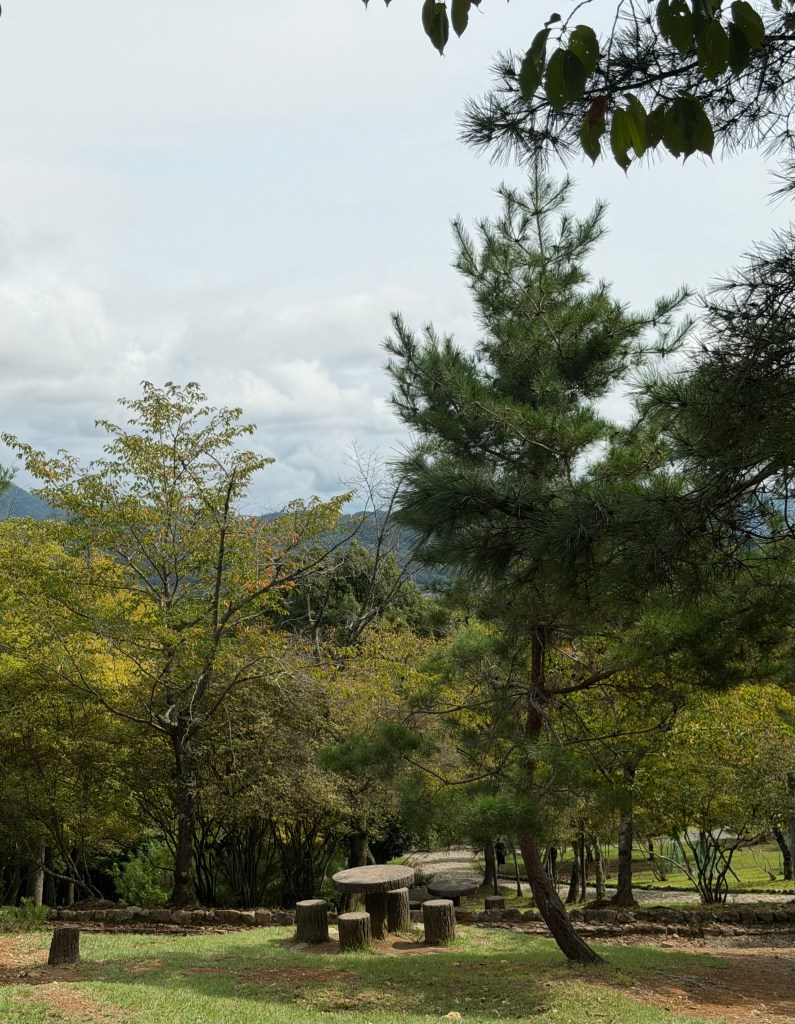
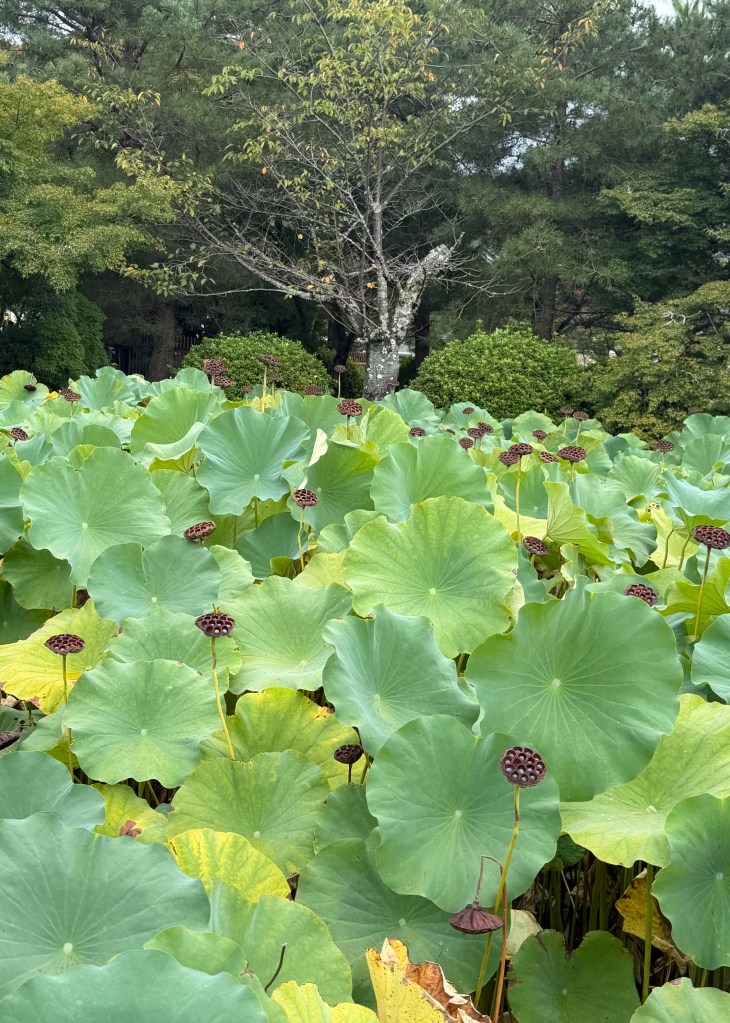
Main house of the Buddha at the Todai-ji Temple, largest wooden building in the world. Has burned several times through the years, but has stood now since the 1700’s. Impressive grounds, but the hordes of tourists make it difficult to truly appreciate.Daibutsu – an impressive 52 foot Buddha in the temple in Nara. His raised hand symbolizes no fear.Sika deer which roam freely in the UNESCO World Heritage site of the Todaiji Temple. Noriko gave each of us biscuits to feed the deer. Didn’t want to participate, but she insisted.Wall of 10,000 red torii gates at the Shinto Shrine in Kyoto. Very difficult to capture the wonder of this marvel.Have become very adept at using chopsticks even with rice & noodles. Perfectly fine to bring small bowl close to face & scoop. Also, drink miso soup, not spoon; acceptable to slurp in this polite Japanese culture.Lisa receiving her drink from the Maiko, an apprentice geisha. Maiko begin their training between 15 & 20 years old. Like geishas, they don traditional kimonos & often have special talents, such as dancing, singing or playing an instrument.A 26 year old geisha performed a beautiful song for us, while the Maiko danced.Maiko dance performance. Lives in a house (karyukai) with other apprentice geisha, & works 6 days out of 7. Has little if any contact with the outside world. No cell phones, no socializing with peers. Sees her parents only when they come to one of her performances.Geisha, Judy, Maiko after a delicious Japanese lunch, performance & q&a. Quite the commitment to become a geisha. Some commit for life; one 80 years old in this karyukai. Reminded me so much of one committing to become a nun, except no religion associated with the geisha commitment.Noriko with the gentleman of the Geisha who help the Maiko into their elaborate dress.Golden Zen Buddhist Temple in the pouring rain. Dates from 1387.Tenryuji Garden in Kyoto, a UNESCO World Heritage site, with very much a Zen feeling. Not so busy here this morning, so we could experience the Zen atmosphere. Trees are just hinting at their fall colors.Arashiyama Bamboo Grove canopy. In one year, bamboo grows to this height. Forest is closely monitored for regrowth, so forest stays lush & abundant.This view at the bamboo grove reminds me of a spot at the Morton Arboretum.Garden of sacred lotus. Beginning to show the approaching fall, although doesn’t feel at all like fall. Unusually warm.Nijo Castle Complex where we visited the Ninomaru Palace. No pictures allowed in this palace. It was the home of the last Shogun before it was returned to the authority of the Imperial Court in 1867. The Shoguns, military, ruled Japan for 350 years.
Leaving colorful Kyoto for Hiroshima, City of Peace, on Wednesday on another bullet train. Hope to share what will undoubtedly be a moving experience, visiting the Peace Memorial Museum, with you.
Left in taxis this early a.m. to make our way to the train station for our bullet train trip to Nagoya, then eventually on to Toba. The bullet train is lightening fast & among the fastest trains in the world, traveling up to 160 miles per hour. We arrived in Nagoya & hopped aboard the Kintetsu Express in order to reach our final destination, Toba.
Our bags were sent ahead to Kyoto, so making our way through the stations was so much easier with just 2 days of clothing in a small carryon. We’ll see our bags again in 3 days.
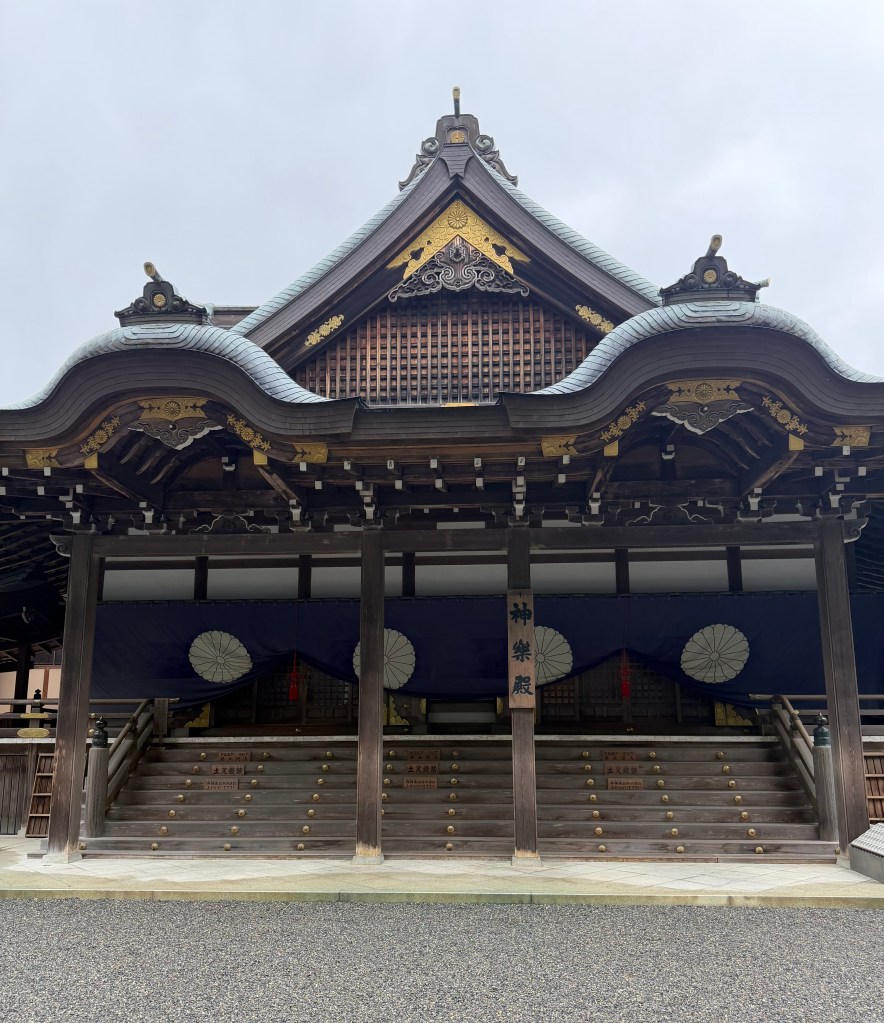
Our first stop after arriving in Toba was the famous Ise Shrine, which is actually a collection of many shrines; a riverside complex with some structures dating back 2000 years.
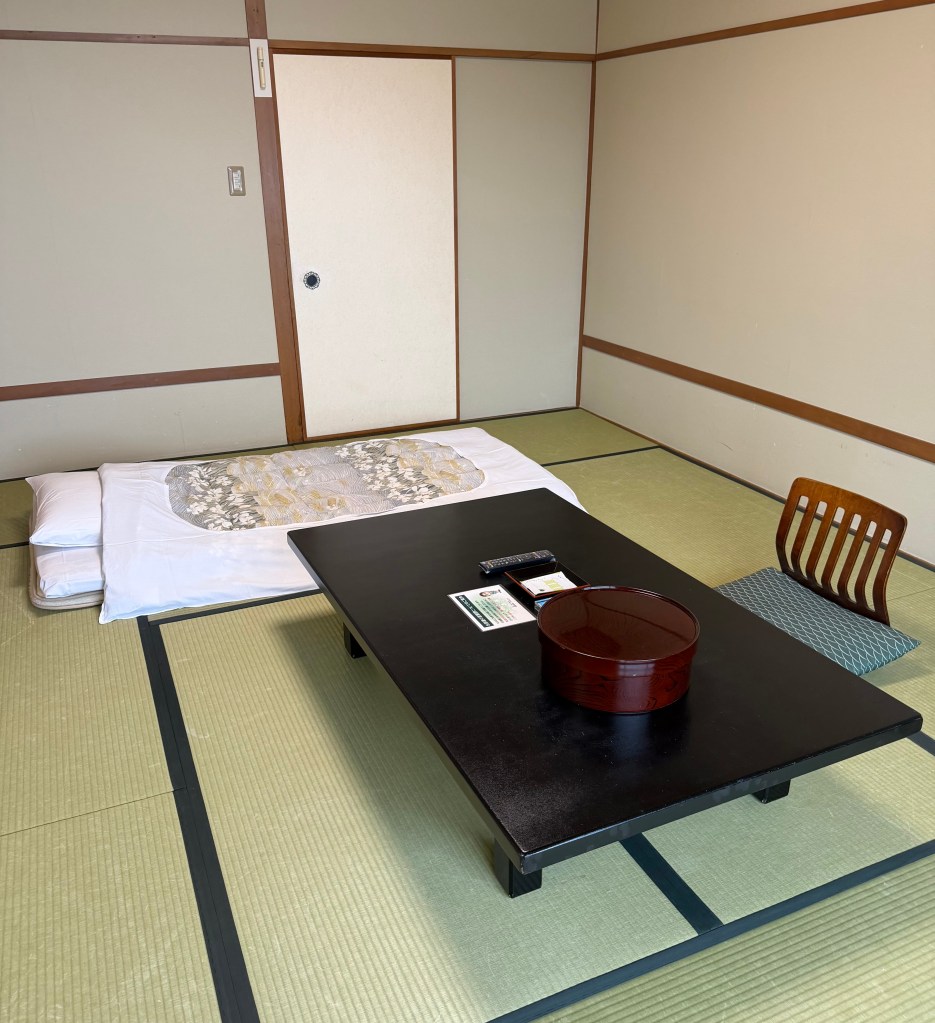
New hotel, Toba Seaside Resort, new experience. The hotel is Japanese style hotel with both Western & Japanese style rooms: Western beds or Tatima mat beds. Yea for me, I am sleeping on the floor for 2 nights.
Also unique about this hotel are the hot springs baths, known as the onsen. Put pride aside when going into the hot spring area; communal bathing before going into the hot spring pools, obviously no clothes ever, with just a small towel to place on top of the head. The towel is to be used as a front cover (barely) when getting out of the pool. I used the pool both nights; amazing sleep.
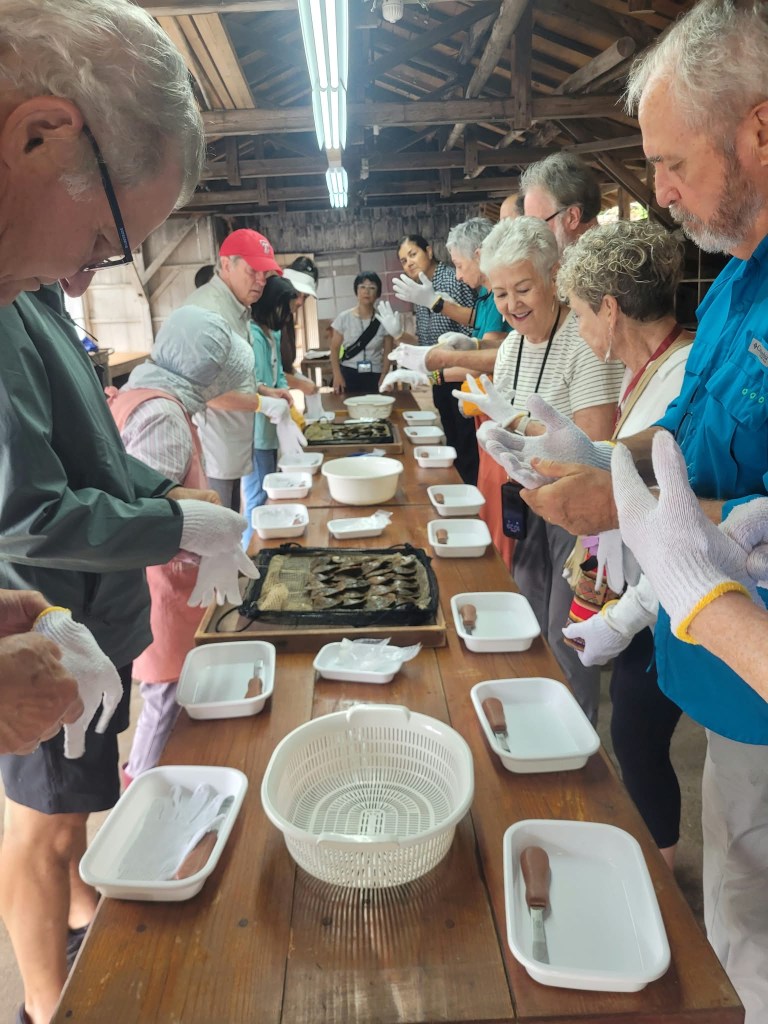
Saturday morning we visited a pearl farming family & learned how cultured pearls come about. First basket fish for the oysters, delicately pry open the oyster, implant a small bead (nucleus) & tissue from the oyster (mantle). Put pack in water in cages, check frequently. Pearl should develop in 6 months. Helps to explain why pearls can be so expensive.
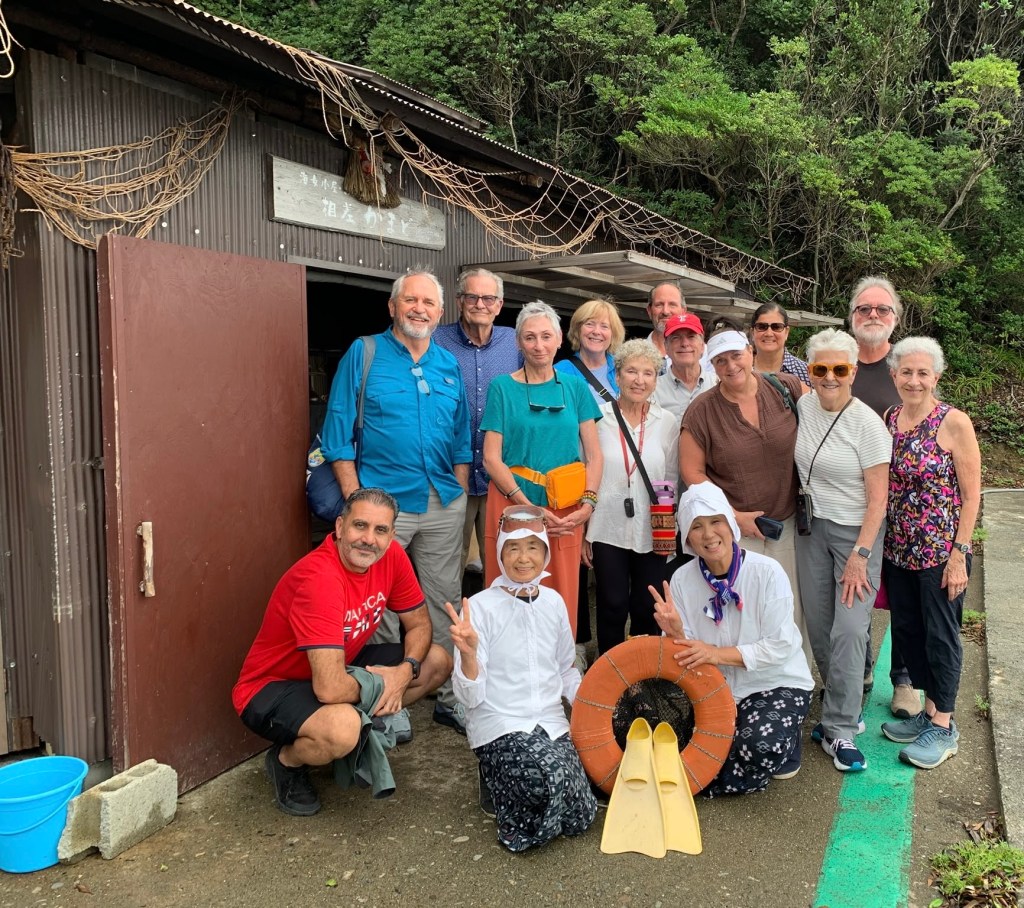
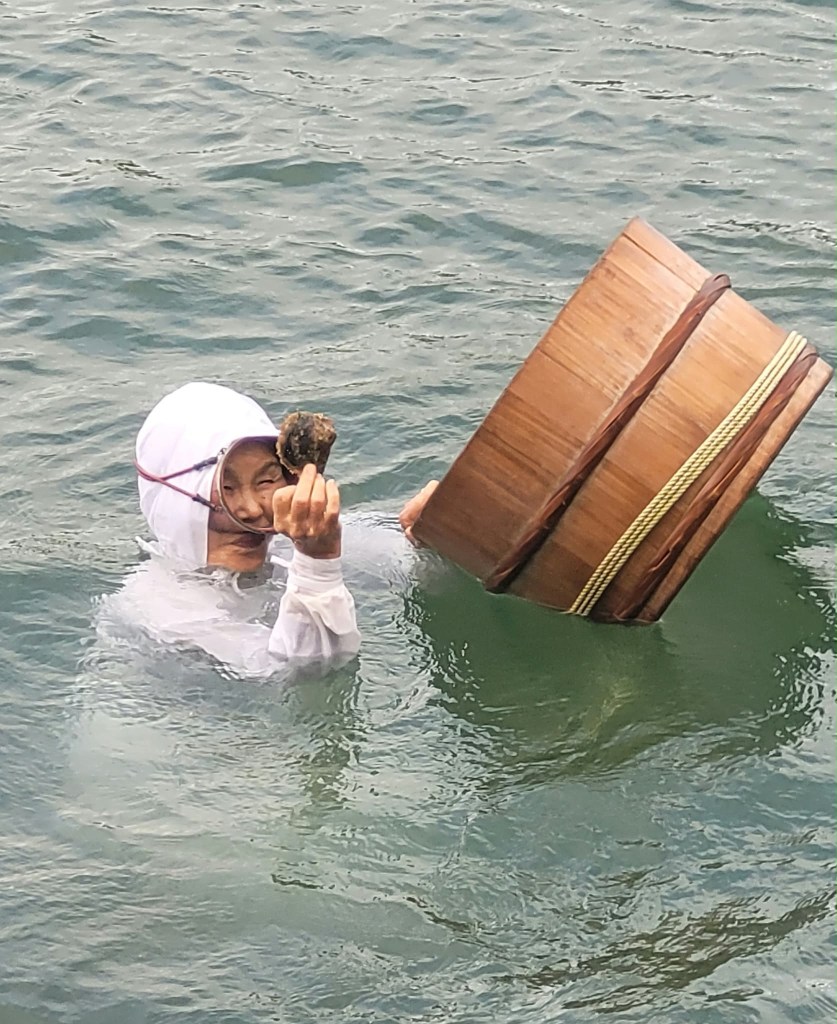
Next, it was off to a hut where we met up with the local ama, sea women. Luckily I read the book The Island of Sea Women so I had a bit of an idea about this type of fishing by mostly women divers. These remarkable women free dive without a breathing apparatus for lobster, sea urchins, sea weed & other marine delicacies along the coast.
One more stop at the end of another busy day, the Mikimoto Pearl Island Museum. One of the highlights of the visit was an amazing diving demonstration.
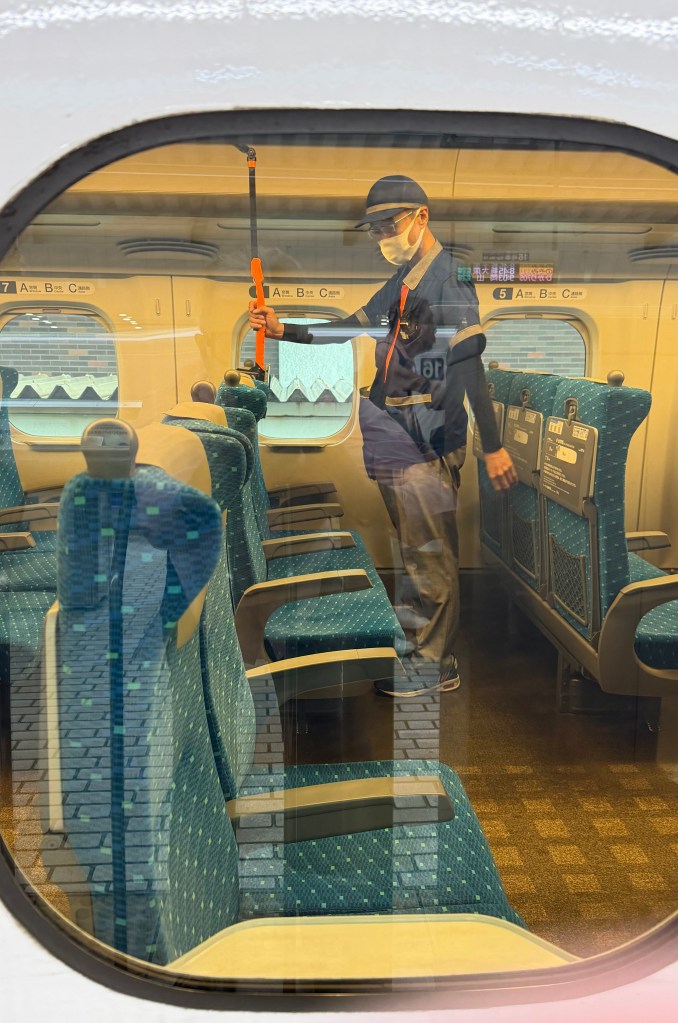
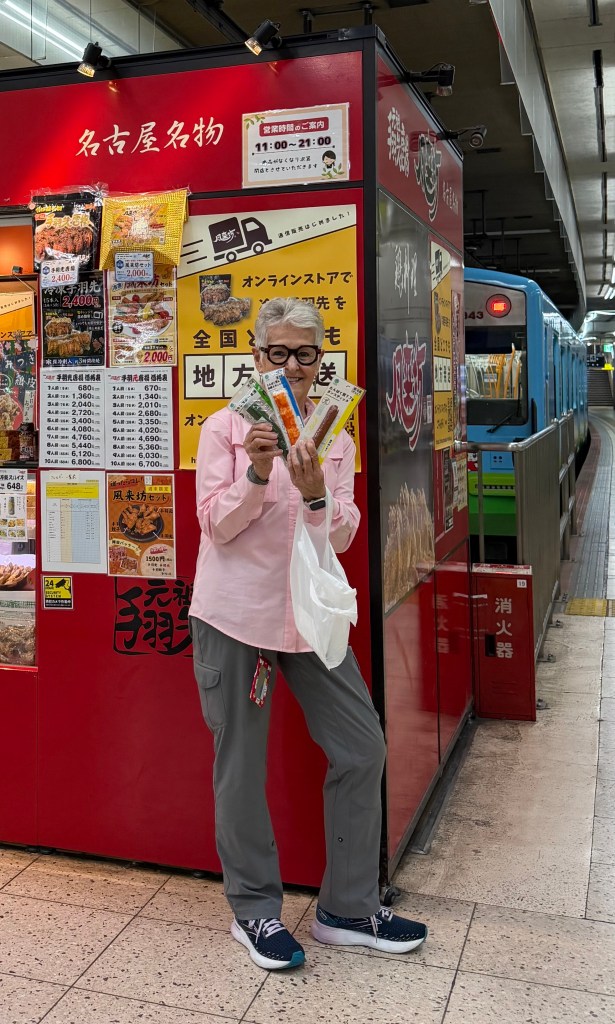
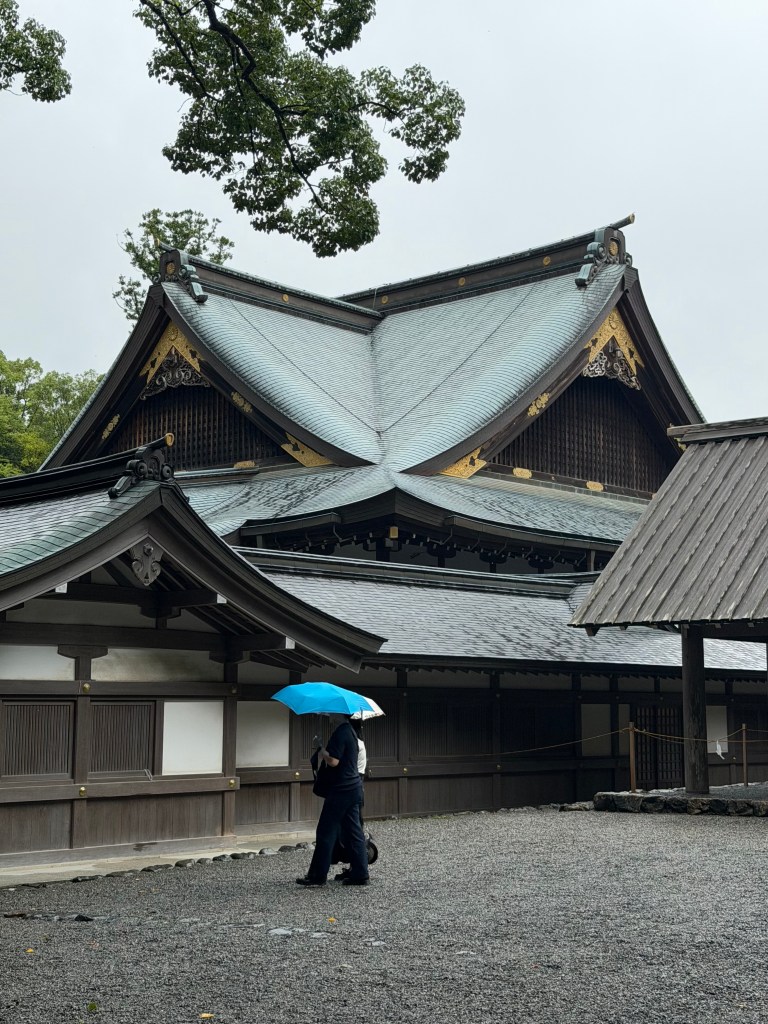
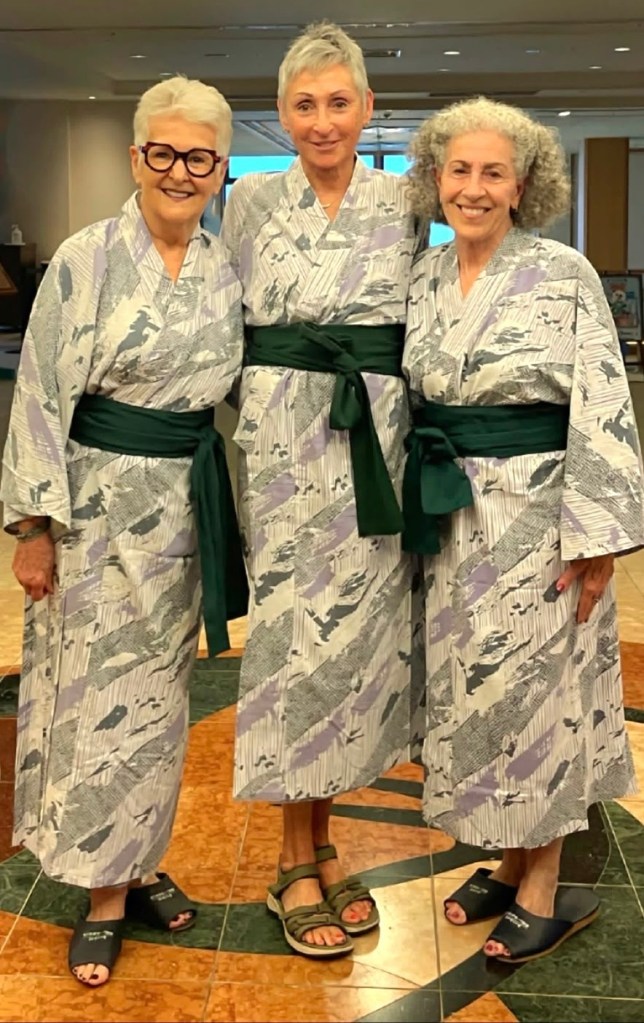
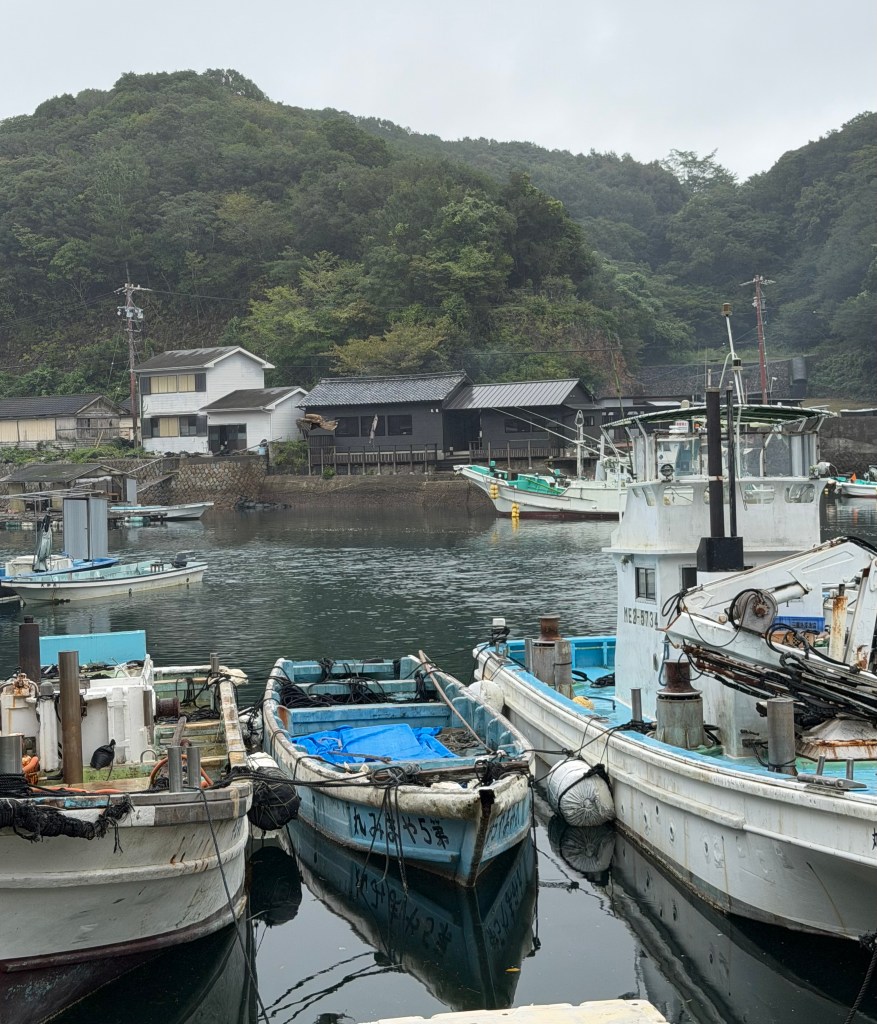
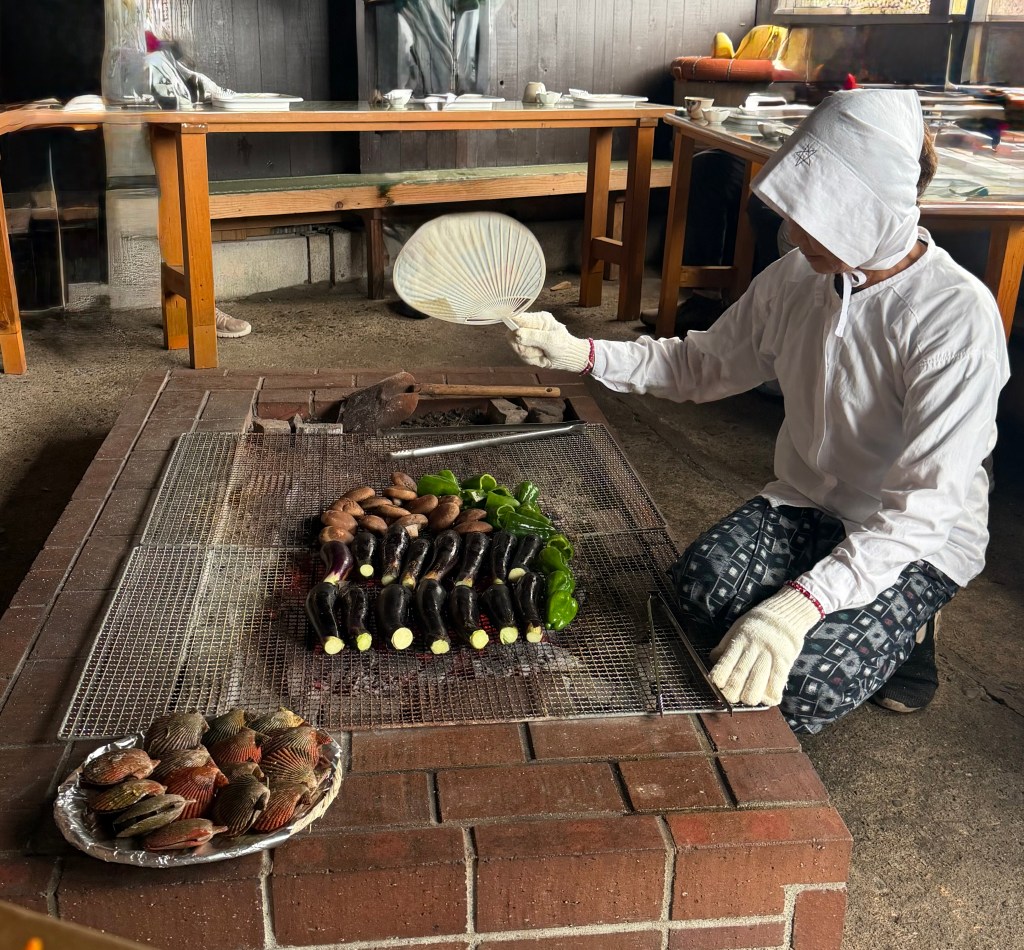
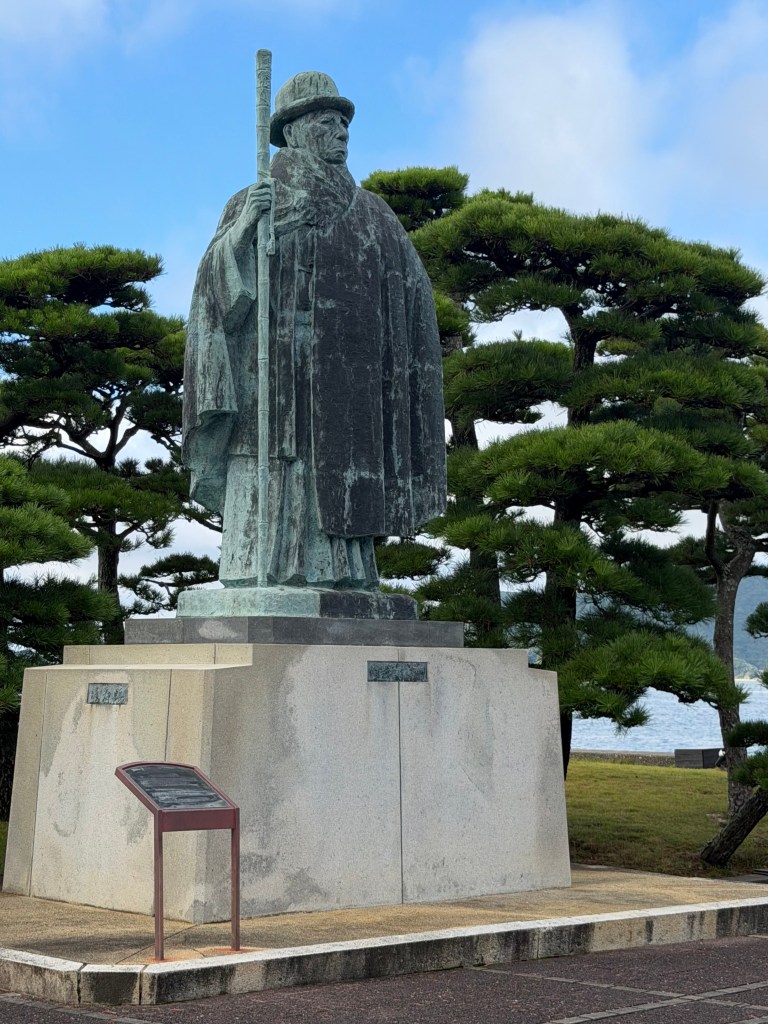
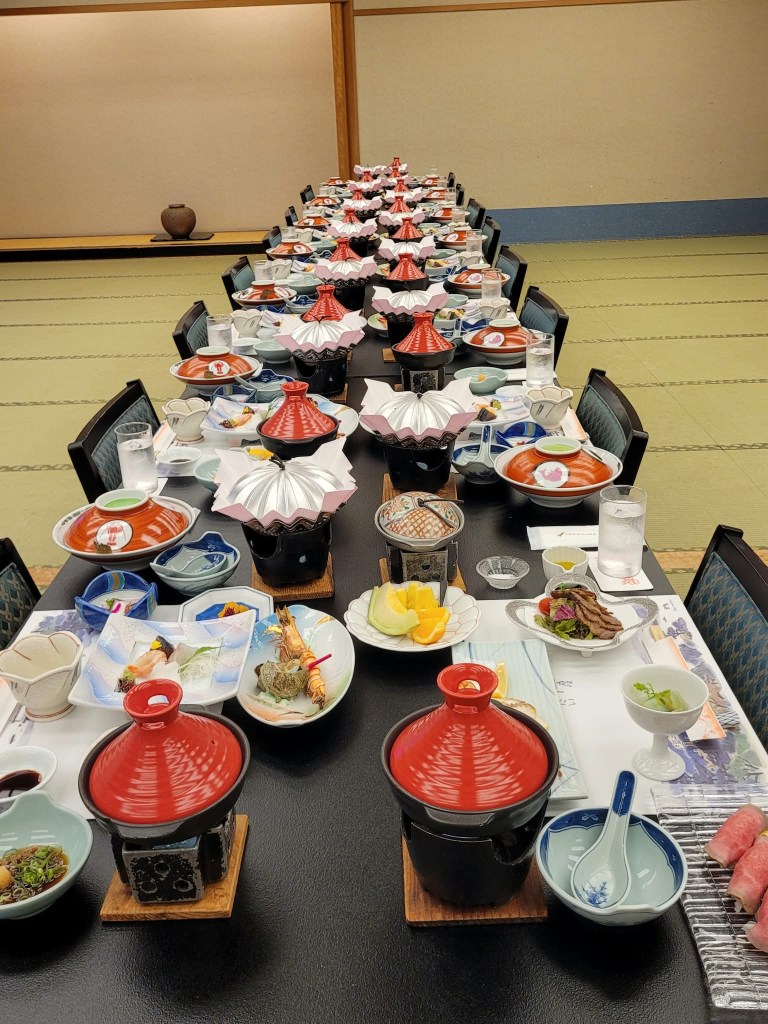
Bullet train which we boarded for a 2 hour trip to Nagoya. Every 3 minutes the Shinkansen leaves Tokyo for Osaka & can transport more than 1300 passengers in 16 cars. The train is more than 4 football fields long & weighs 700 tons. The train is powered by electricity from overhead power lines.Bullet train 7 minute miracle. Seats turned & cleaned, ready for the next group of travelers. A feat executed when the heavily used train arrives in Tokyo station. Total time in station is 12 minutes; 5 minutes to disembark & load.My lunch purchased at a Family Store in the train station in Nagoya to satisfy my hunger on the next leg of our journey. On to TOBA on a different train (Kintetsu Express). Lunch menu: Pickle, lemon flavored pork tongue, plain seafood. Did not finish the tongue, but I tried. Oh yes, chocolate bar in the bag to enjoy on the rest of the trip; one bite a day.Isu-jingu shine in TOBA. Many Japanese come here frequently for a pilgrimage. We followed the tradition of bowing when approaching the shrine. Japanese practice both Shintoism & Buddhism.Many of the buildings of the Ise Shrine use the Chrysanthemum flower in the architecture which is the crest for Imperial Family.My bed for two nights: tatami mat. Traditional room, bamboo floor & no shoes. Never attempted to use the table & chair. Wonder why!!!!Beautiful view of the bay from my large window. Slept so well as both nights I used the onsen (hot spring).Our Kimonos for dinner on Friday night. Everyone wears these “robes” in & around the hotel. Robes comfortable, but the shoes are an accident waiting to happen. Charming little fishing village where we learned about pearl farming.Getting ready to extract the pearl from the oyster shell. Gloves & oyster knife at hand. Pearl perfectly round, but itty-bitty. Some of the group used their pearl in a piece of jewelry or trinket.AMA, still working as a sea diver, preparing our lunch. Grilled peppers, mushrooms, eggplants plus shell fish & a perfectly grilled flounder. Finished with carbs of rice & ice cream.Most of the group with the Ama. Father of the cultured pear, Mikimoto. Developed the technique of the cultured pearl in 1893.Sea diver emerging with her catch.Table set for our 12 course dinner on Saturday night. Sounds & looks like a good deal of food, but small portions. Lots of fresh seafood, but beef & pork as well in hot pots. Japanese people eat very heathily. I’m certainly enjoying myself. Have tasted my share of sake.
Off to Kyoto on another train, & coming to the end of our group excursion. Some of us are going on the Hiroshima, others heading home.
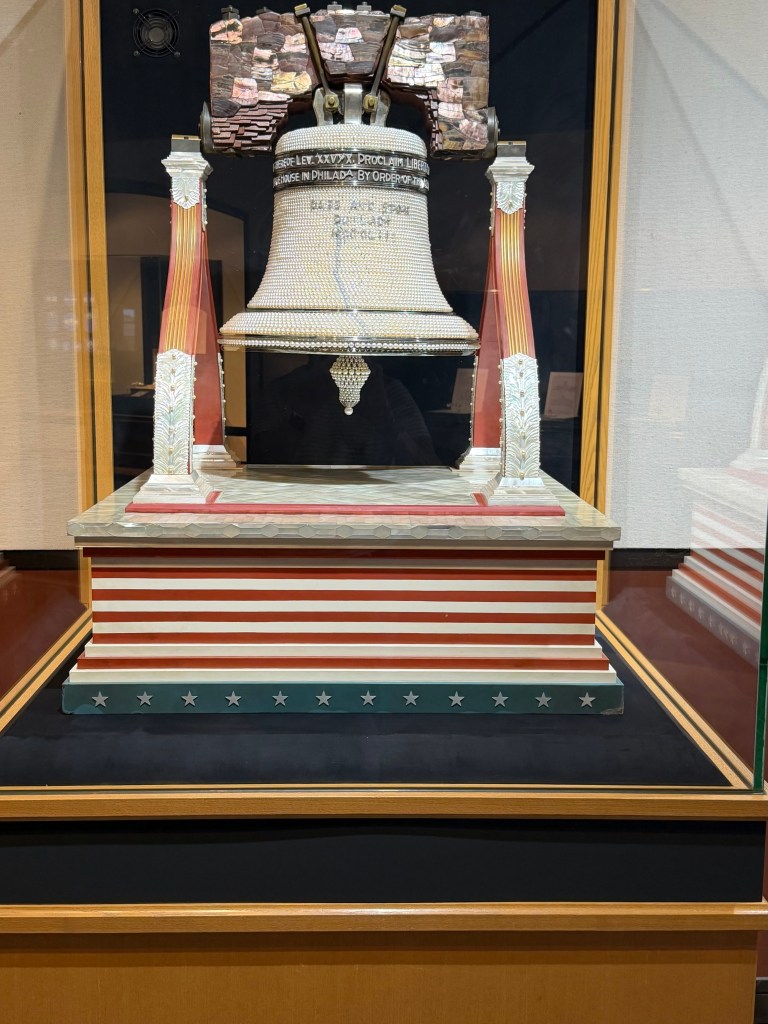
Visited the Mikimoto Pearl Museum. This liberty bell was made for the New York 1939 Exposition. This peace bell is made of 12,250 pearls & 366 diamonds. The crack in the bell is made of pearls. “Million Dollar Bell”
Arrived in Tokyo after a pleasant flight on Nippon Airlines. Actually took us longer to get through all of the requirements at Haneda Airport than it did to fly to Tokyo from Seoul. Arrival card to be completed of which we knew nothing about. Another card to exit the airport, plus 3 or 4 passport checks. Mass of humanity, but organized chaos. Eventually made it to baggage claim where we met Noriko, our guide for the rest of the trip.
Another surprise upon arrival at the LOTTE City Hotel. We are definitely on an OAT experience trip, & the company has set about to ensure we do just that. We are once again in the heart of the city of 14 million (the broader metropolitan area has between 33 to 37 million) along a subway/train route. Because of this density, some of the hotels provide only small rooms, & I definitely am in one of these rooms; very intimate, but functional. Little nooks everywhere to put things or lose things.
We are on the move constantly, so we 3 have to carve out a bit of time for wine & non-traditional fare. I love the food, but how much rice can one eat!!
Cultural activities since arriving, in addition to food: Sumo wrestling history & demonstration; Bonsai Garden/Museum; Taiko drumming experience; Visit to a Buddhist Temple; Art Aquarium Museum. We traveled by subway, small bus & taxi. All timely & efficient. If one wants to shop, options are plentiful as are the most beautiful food markets within the centers. Lots of high end shopping meccas for Americans as the dollar is very favorable here. 153 Yen to the US Dollar.
City Scenes:
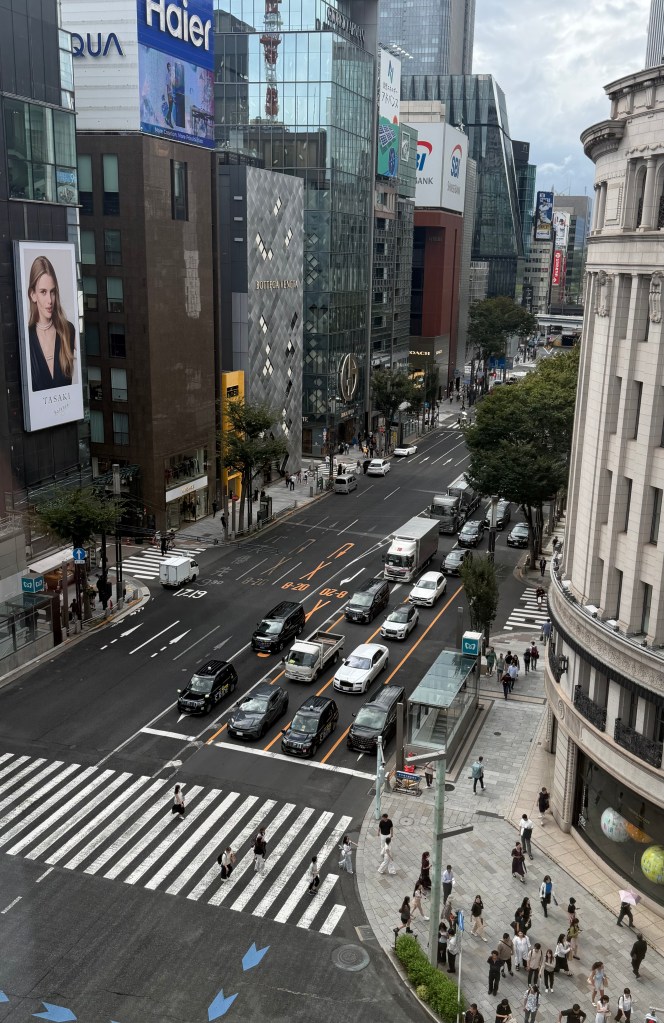
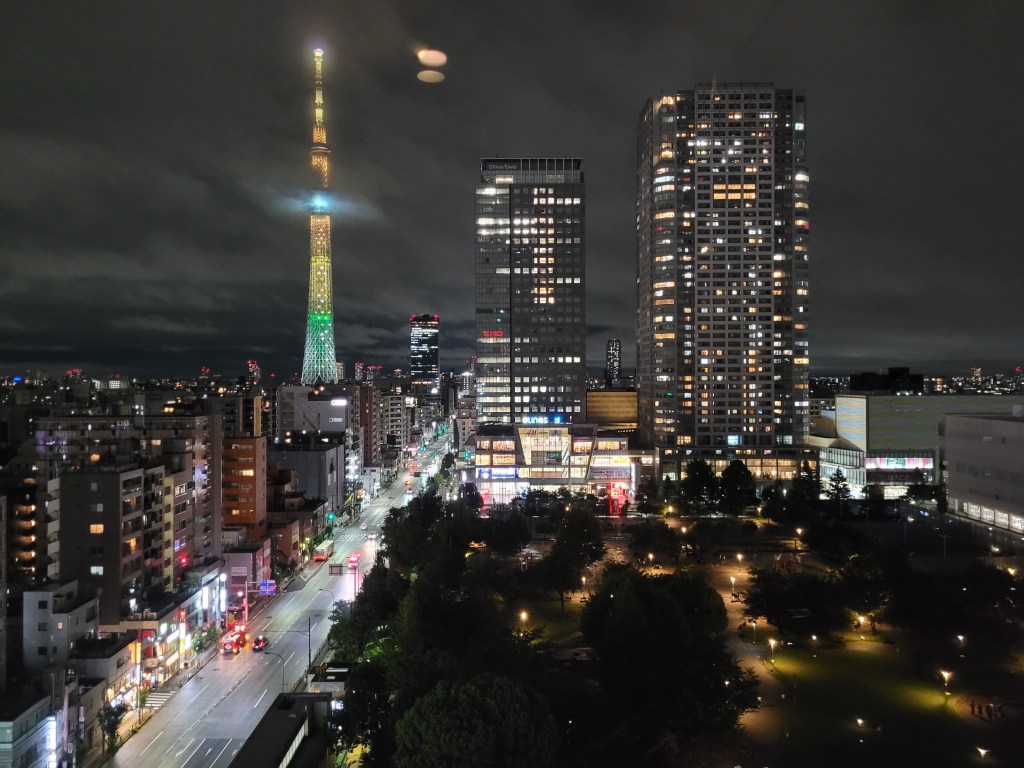
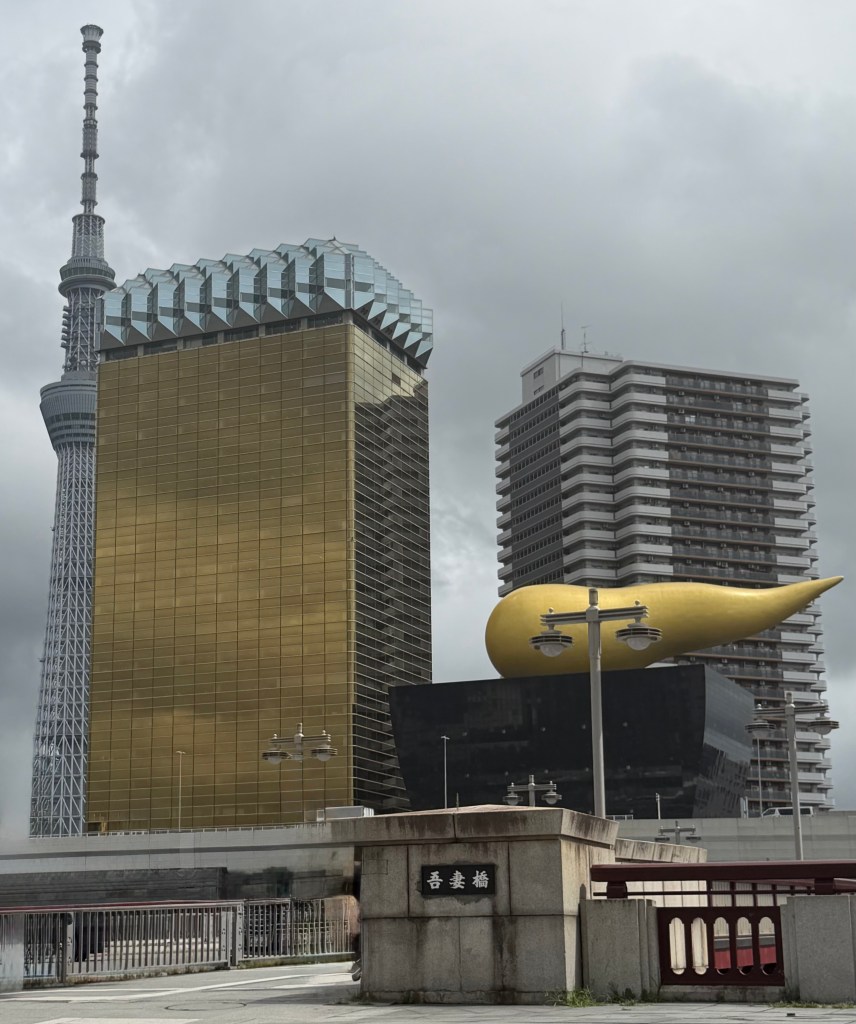
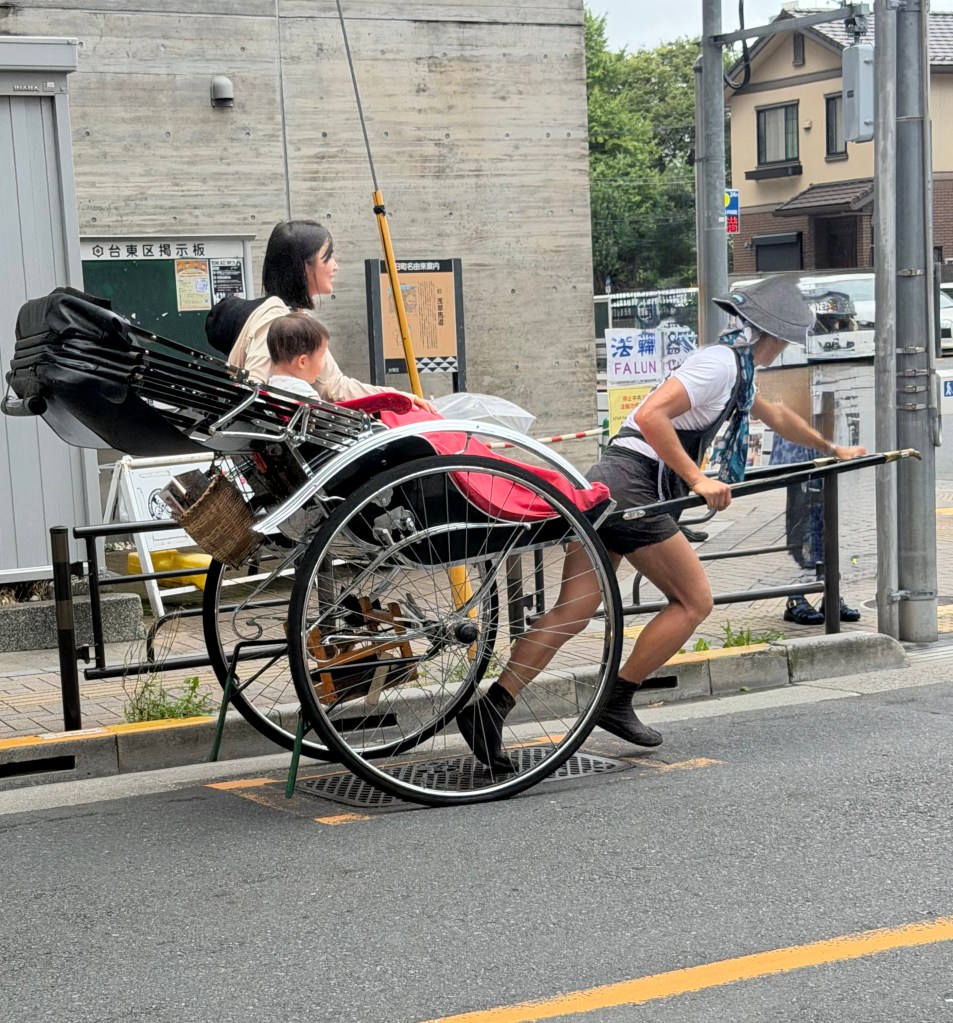
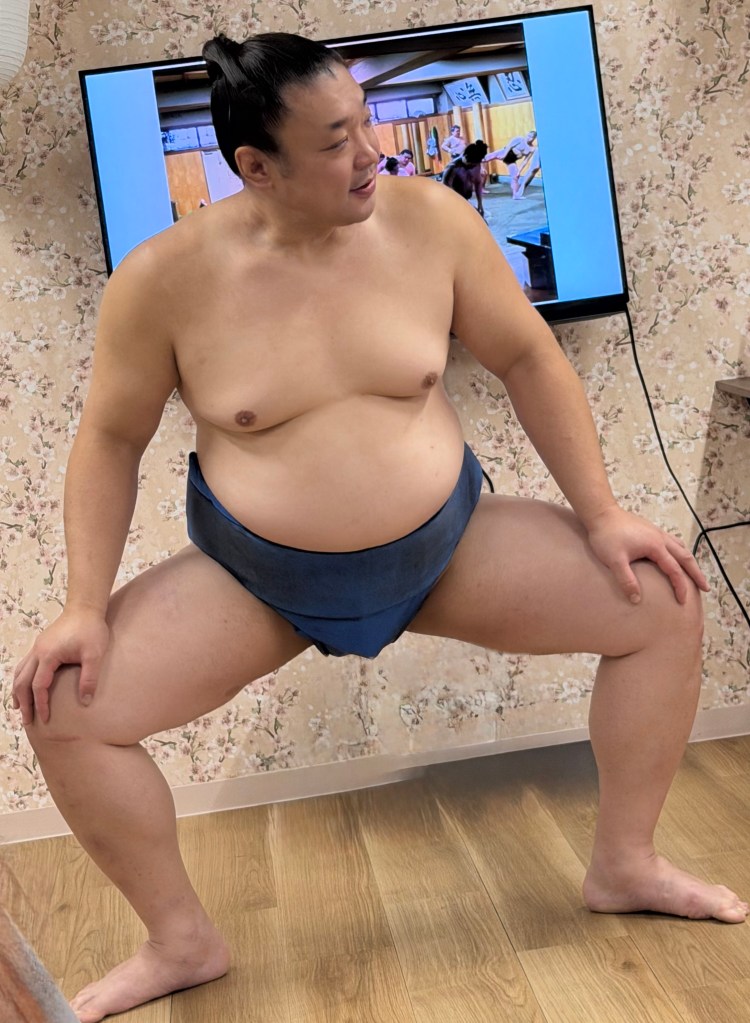
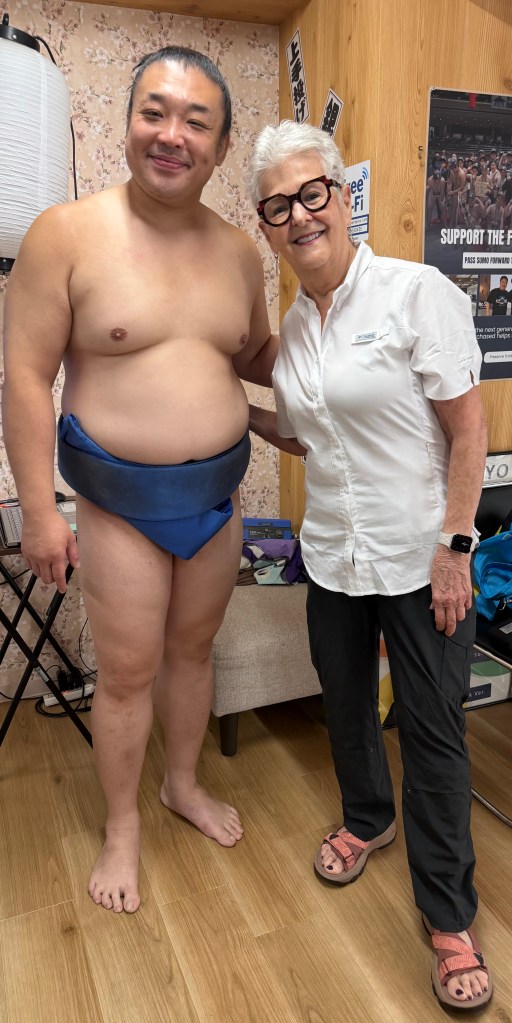
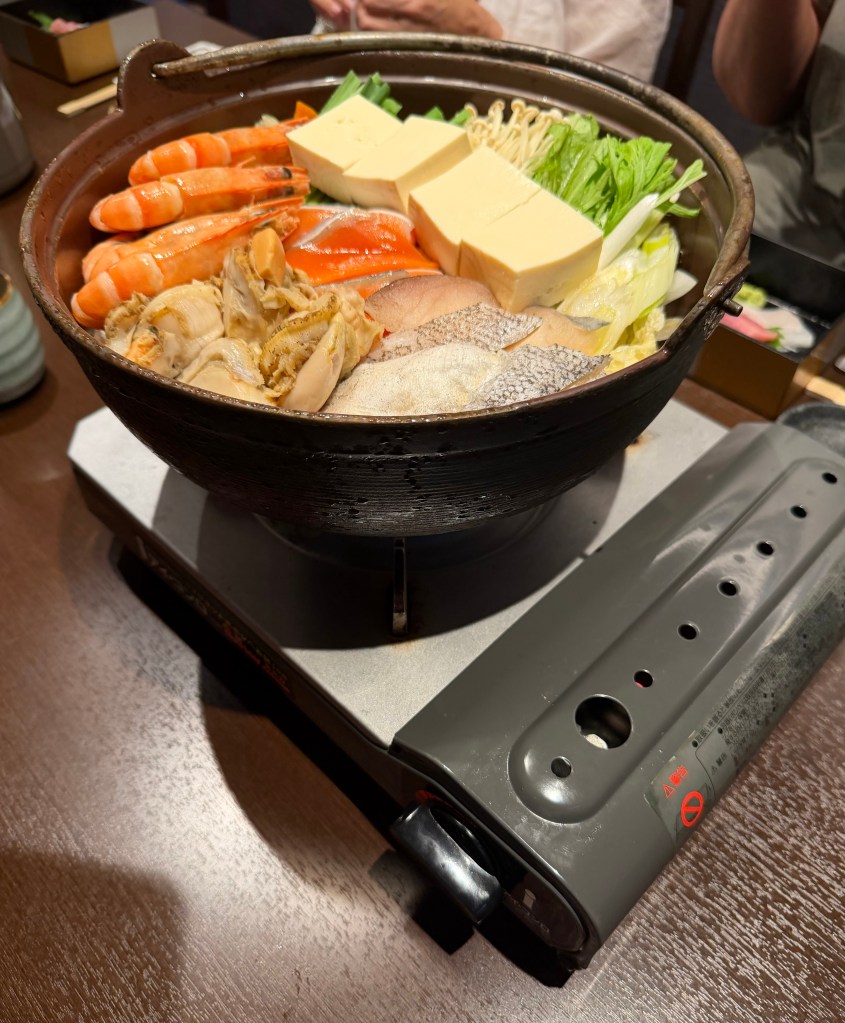
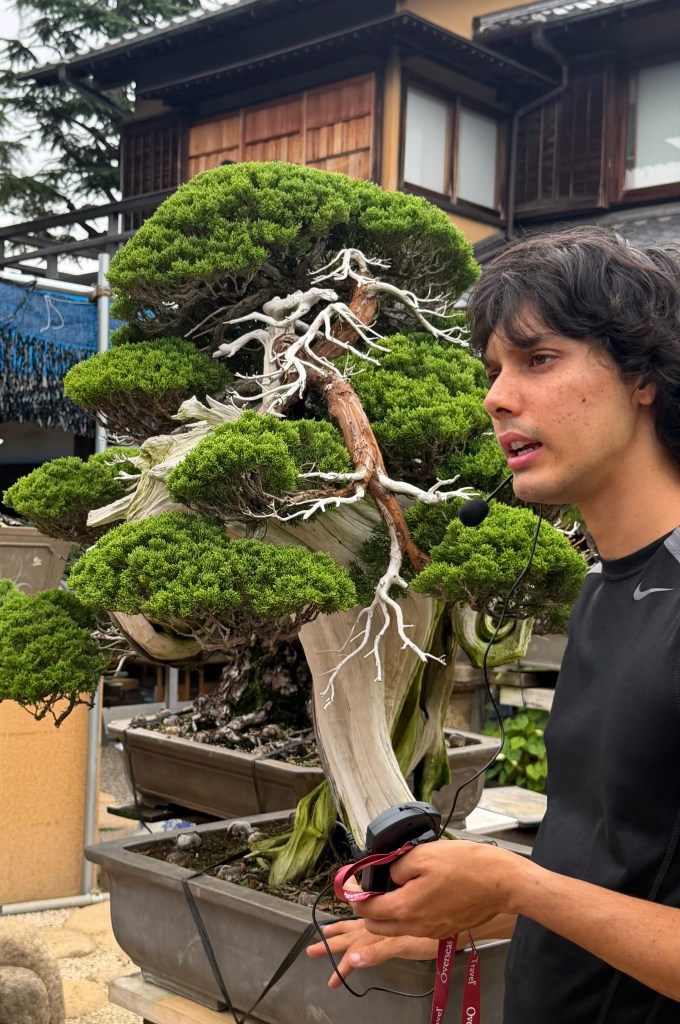
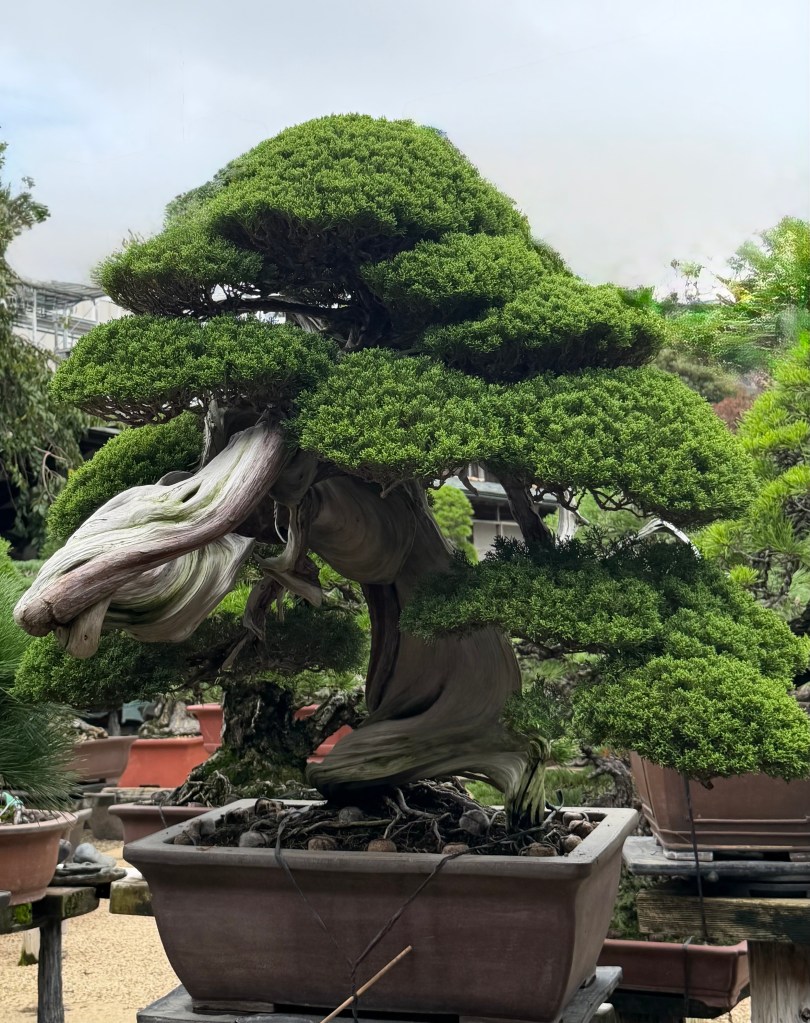
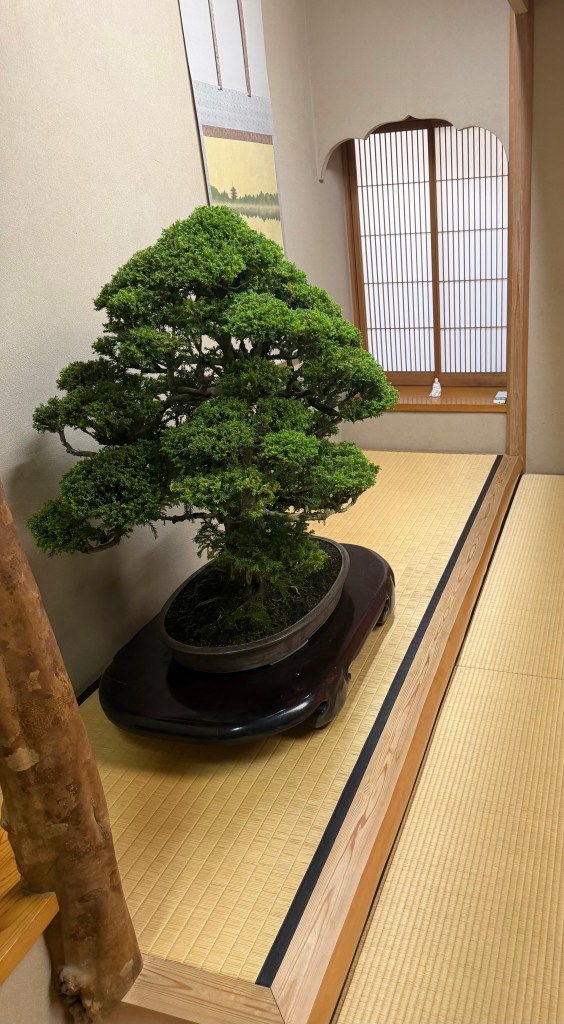
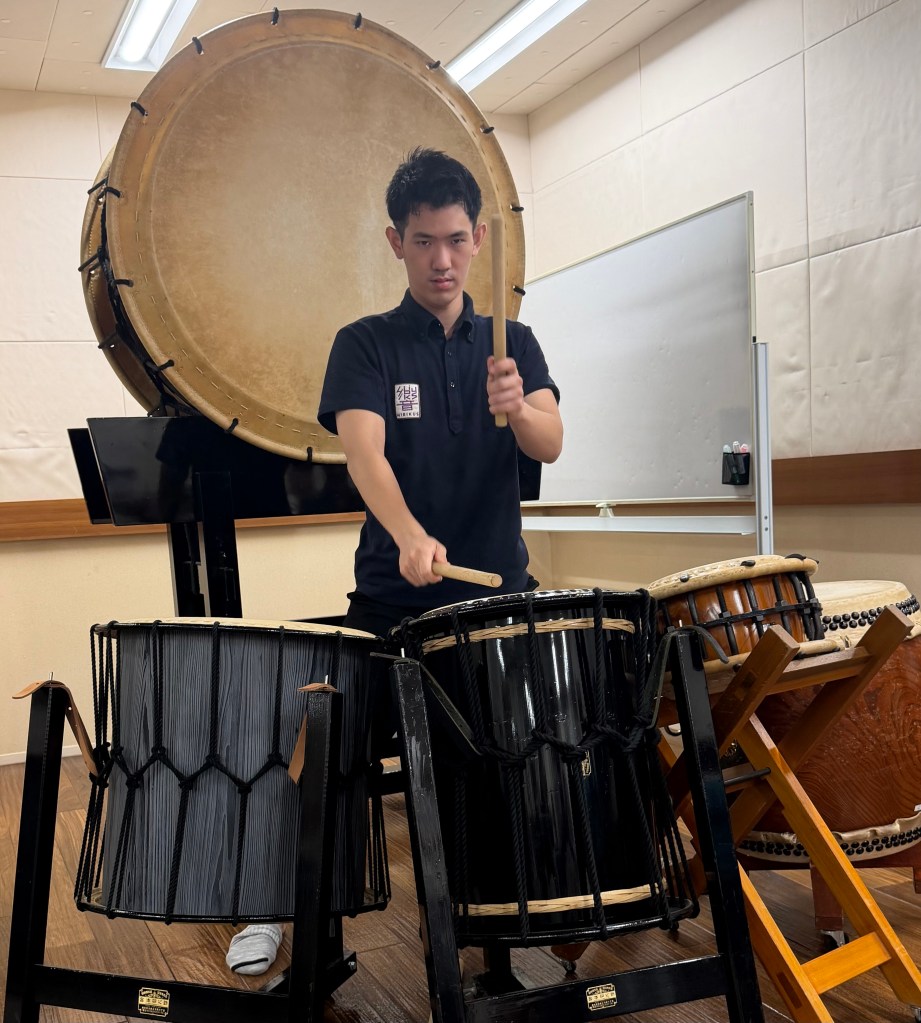
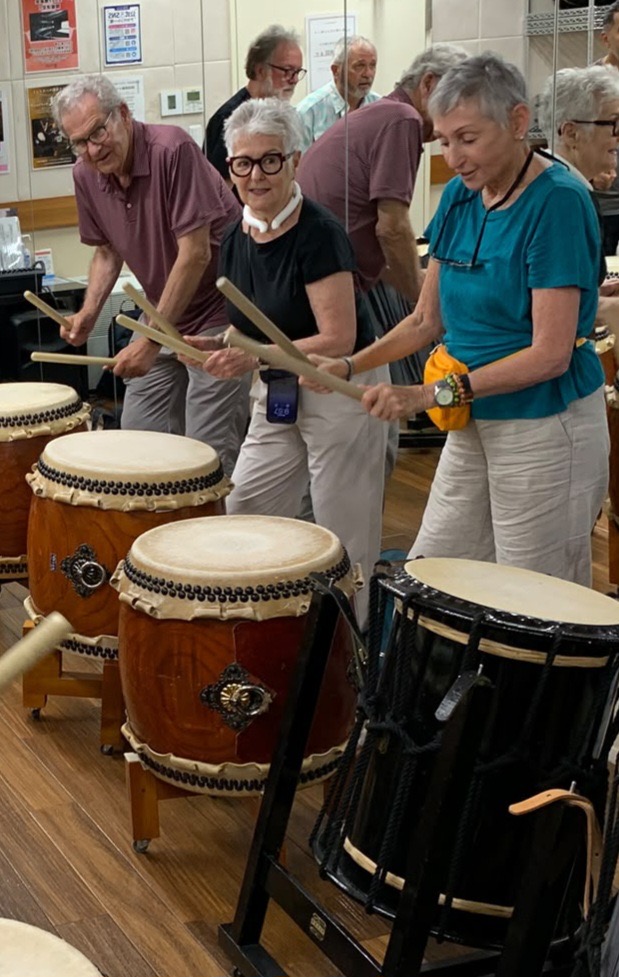
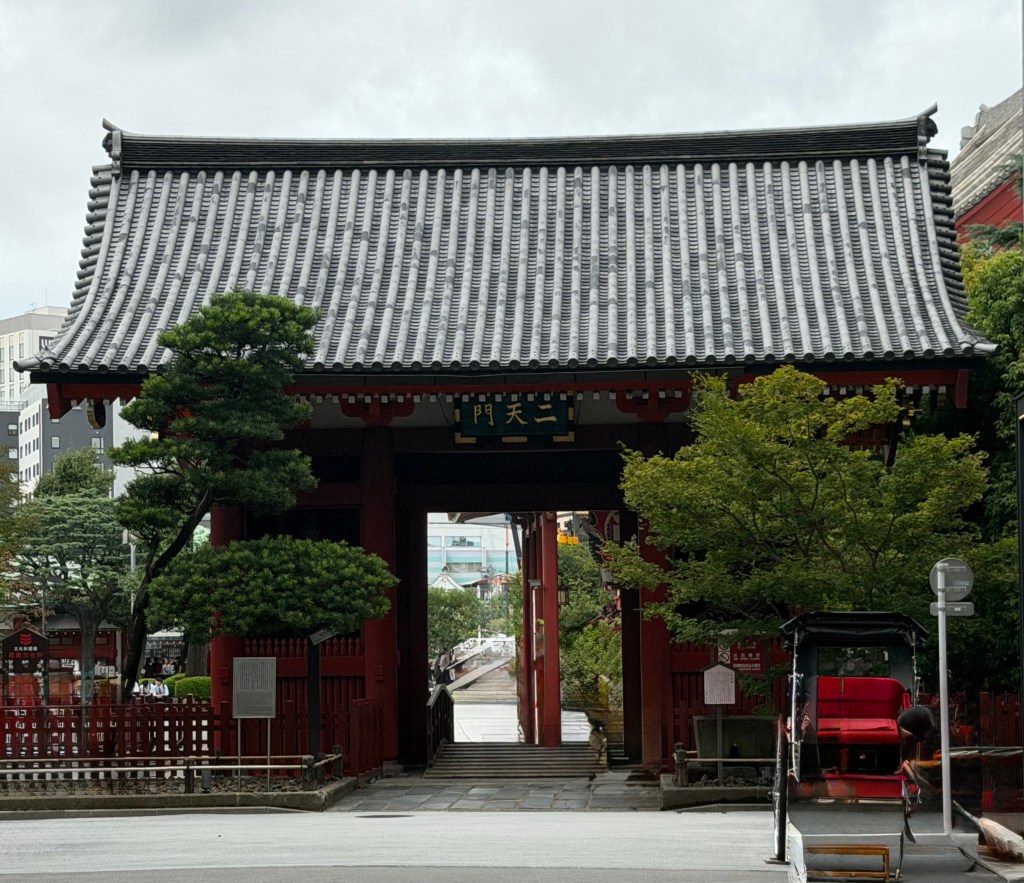
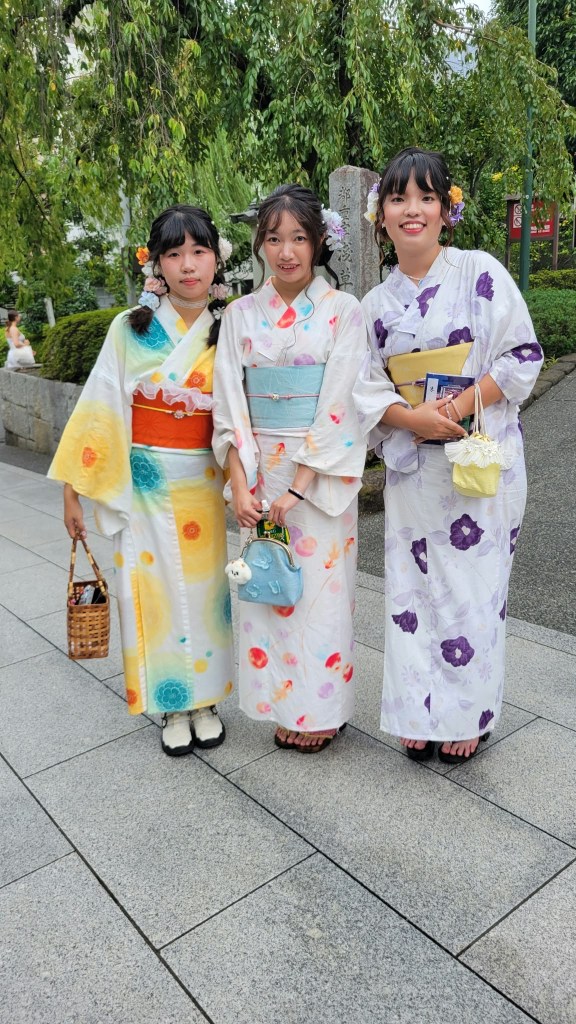
Street scene. Japan uses the left lane for driving because of British train engineers who introduced the practice when the use of trains was coming as a practical mode of transportation.View from the 10th floor of our hotel in Toyko, a huge city with over 13 million, while the metro area has a population of over 33 million.Asahi Beer building.Rickshaw taxi. Lots of work for the driver in this hot humid weather.Visited a sumo wrestling museum & learned from this retired competitor what it’s like to be wrestler. Sumo wrestling is the national sport of Japan. Tournaments, Hanbashos, are held 6 times/per year for 15 days; heavily attended major events. The heavier the better for a sumo wrestler who eats 6000 calories per day & trains for 6 hours. In a match, if any body part other than the bottoms of feet touches the ground, the wrestler is eliminated. Most wrestlers retire before 40.Photo op. Why not?Lunch: Hot pot of a variety of fish/seafood & vegetables. Traditional healthy dish of sumo wrestlers.Daniel, spending a minimum of 6 years with his Bonsai teacher learning this disappearing art form. He is from Puerto Rico & has been in Tokyo for 4 years. The most important part of Bonsai art is the tree trunk which is usually found in the mountains.Juniper from Northern Japan. Over 800 years old.Indoor display space at the Shunkaen Bonsai Museum a serene & peaceful world.Taiko drumming, a tradition that has been used throughout Japan’s history. Soundproof studio for obvious reasons.Trying our hand at Taiko drumming. Notice my “necklace”. Neck cooling device given to each of us by our guide, Noriko. It’s hot & humid in Tokyo right now.Entrance gate to the Asakua Buddhist Temple, the oldest Buddhist temple in Tokyo. Religion in Japan is a belief system rooted in the ideas of Shintoism & Buddhism. The two religions can coexist in Japan since the focus of Shintoism is on the spirituality of the living world or life, while Buddhism is more focused on the soul or afterlife.Altar at the Asskusa Buddhist Temple.As in Korea, these tourists rent the traditional dress when visiting the temple.
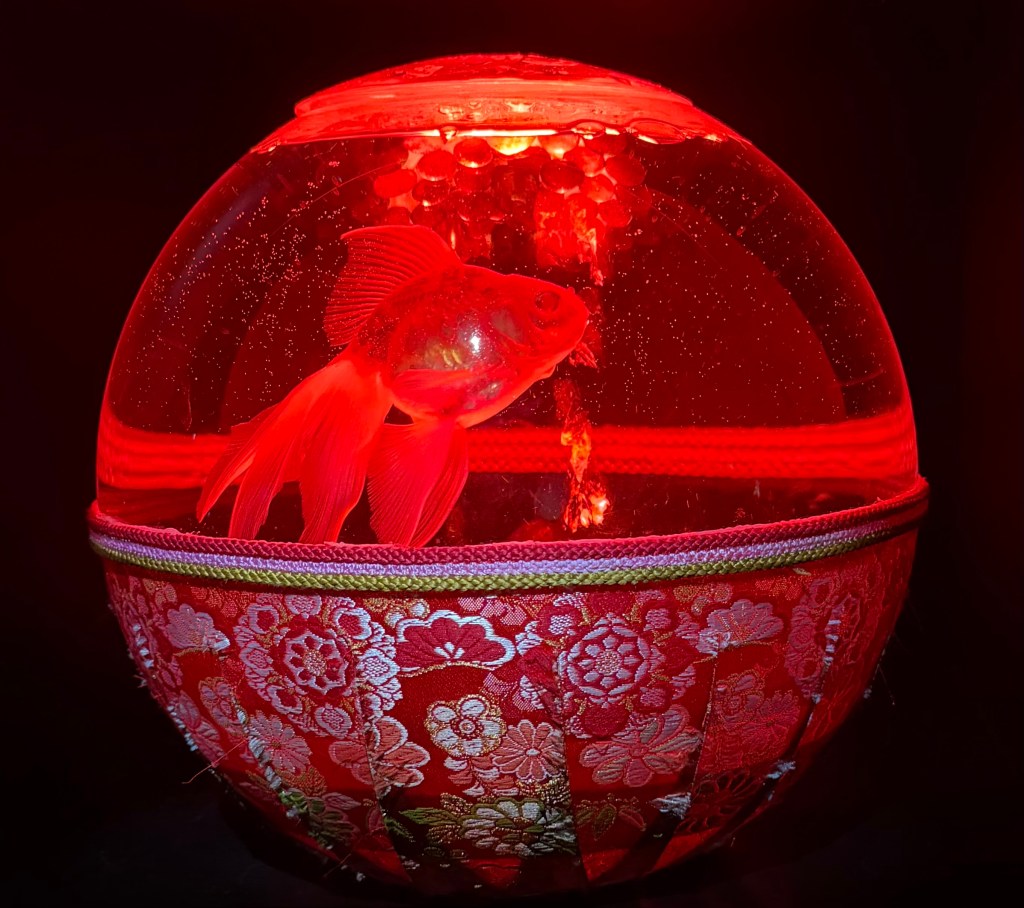
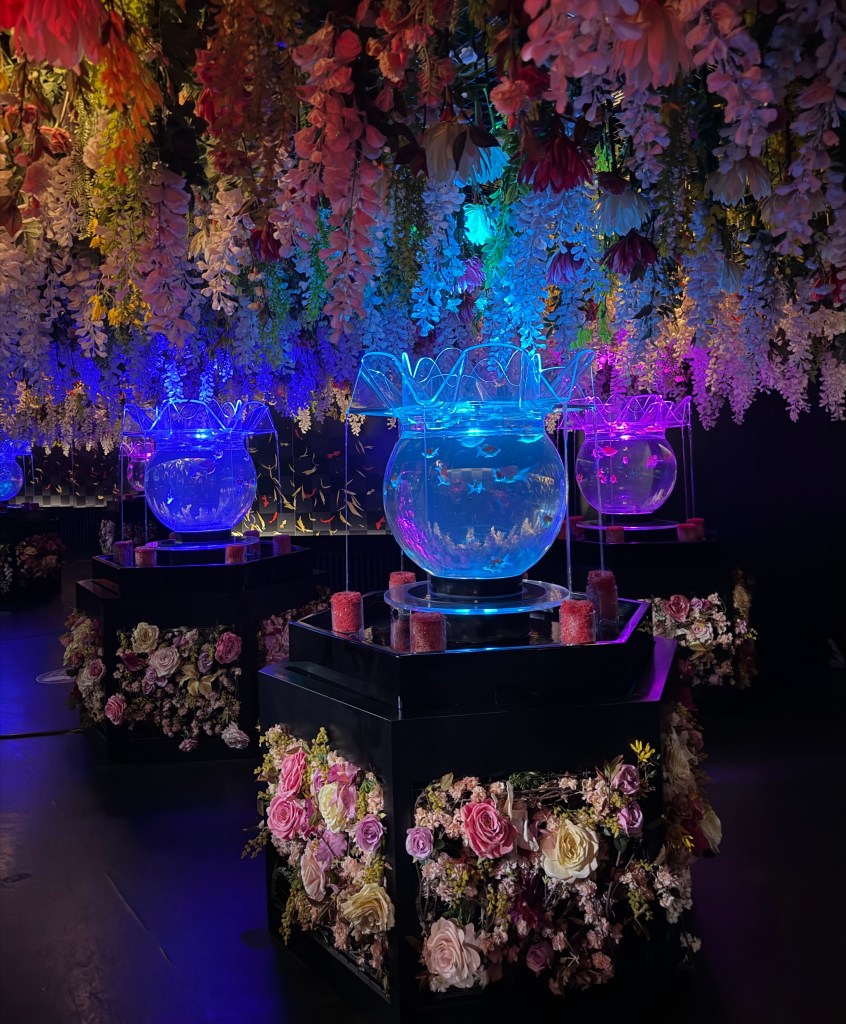
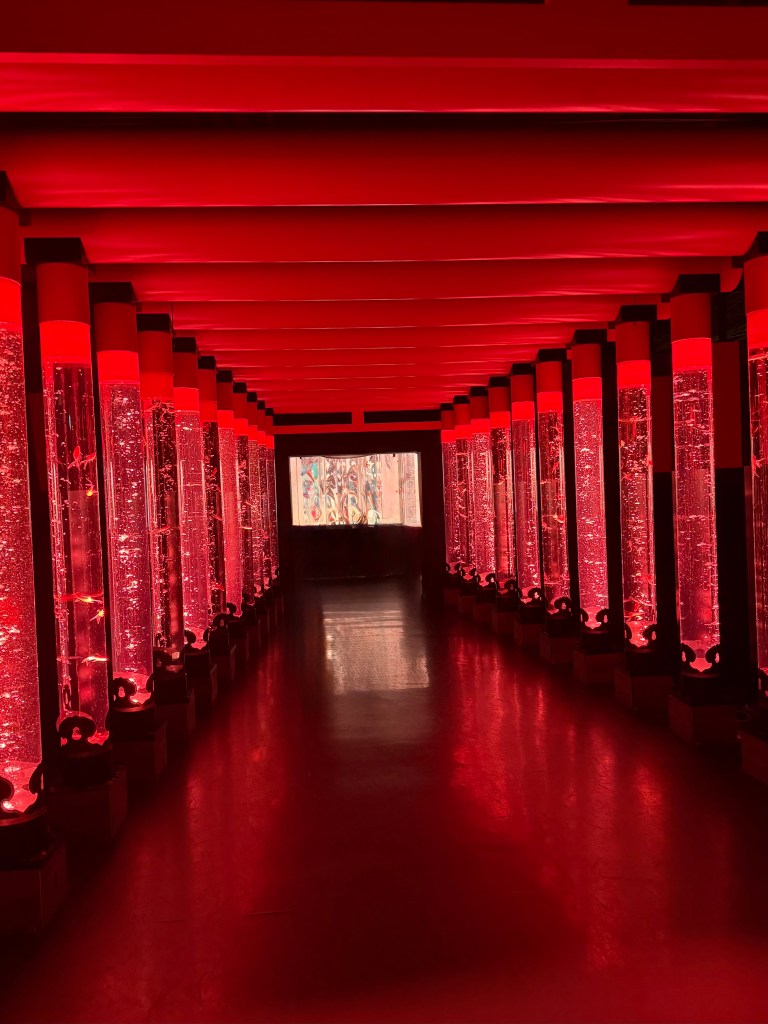
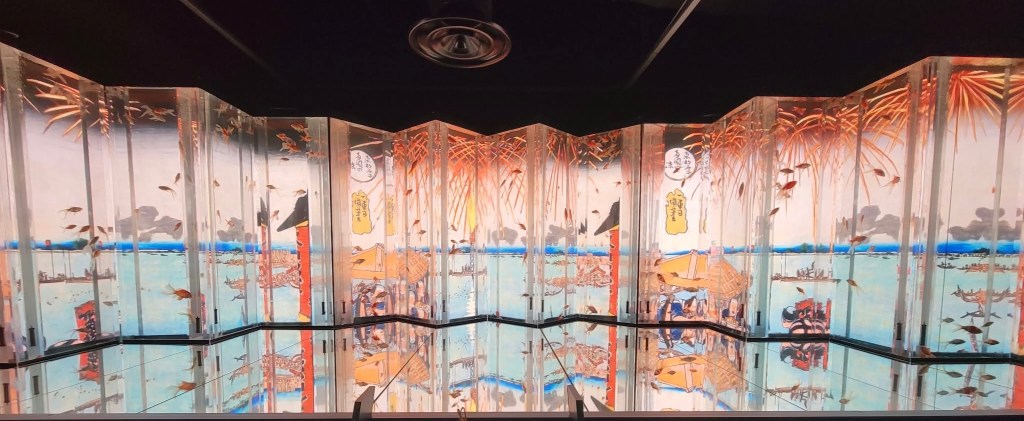
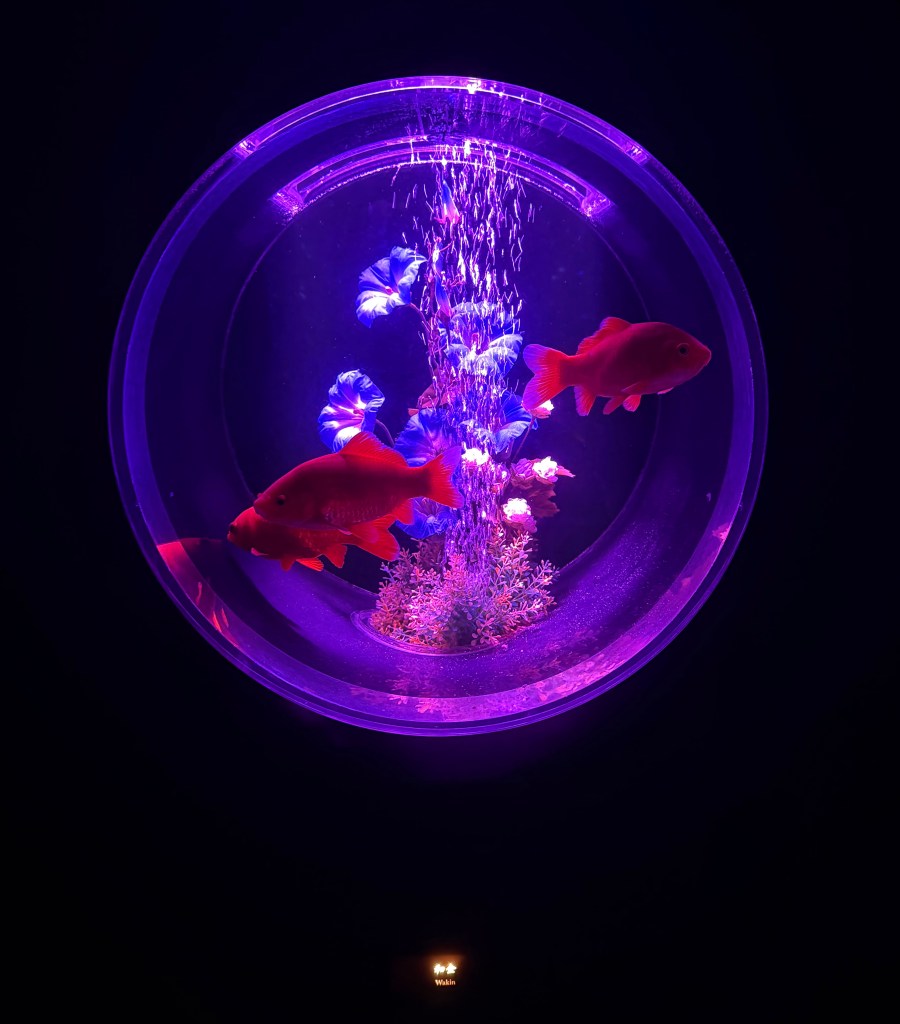
The following pictures are from the Art Aquarium Museum located at the top of a high end shopping center. Absolutely amazing display of goldfish which are important in Japanese culture because they symbolize good luck, wealth & prosperity.
Aquarium representing a story of Japanese life. Set to music with changing scenes & colors. Amazing.
Took an optional trip to see Mount Fuji, but weather conditions did not allow for us to see the highest mountain in Japan. On this excursion, we visited a restored silkworm farmer’s quarters, saw five beautiful lakes fed from the Mount Fuji snowfall and visited a beautiful kimono museum. Just a few pictures, & then I have to sign off. Very tired.
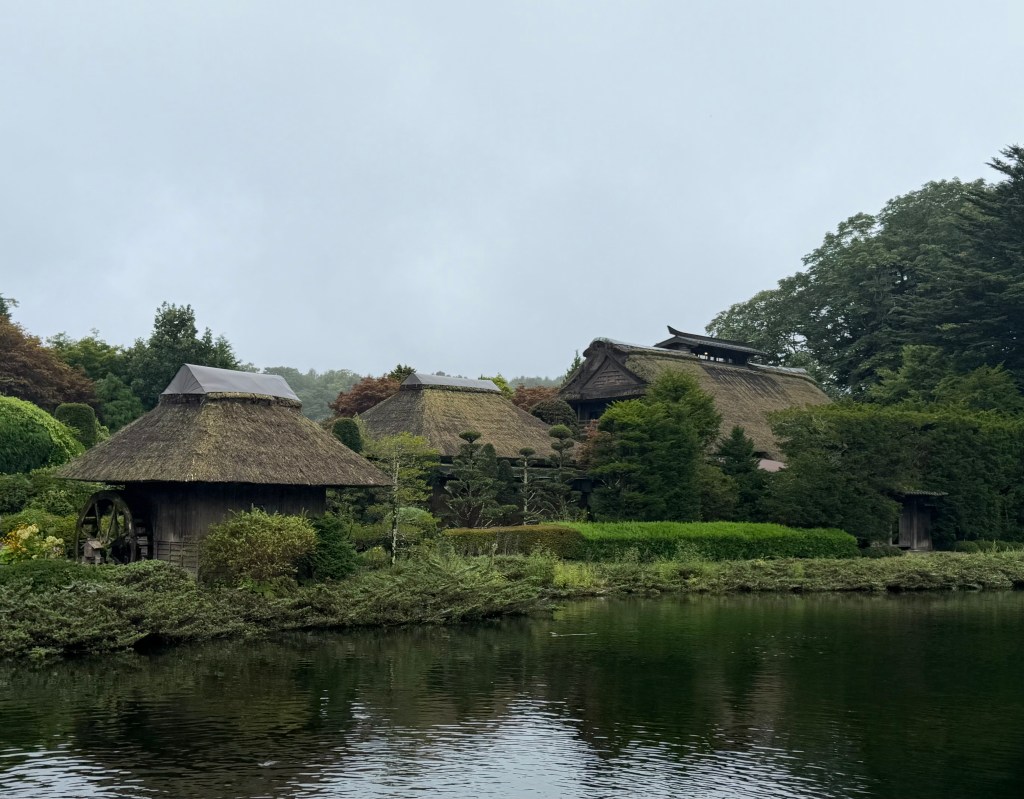
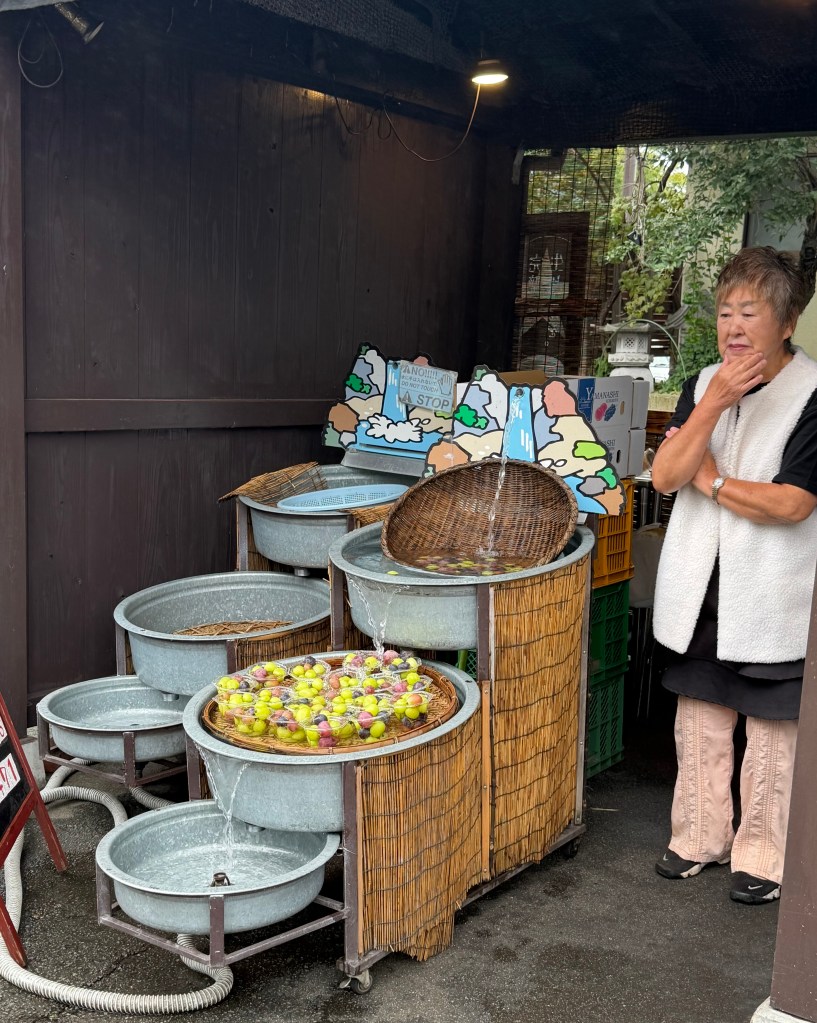
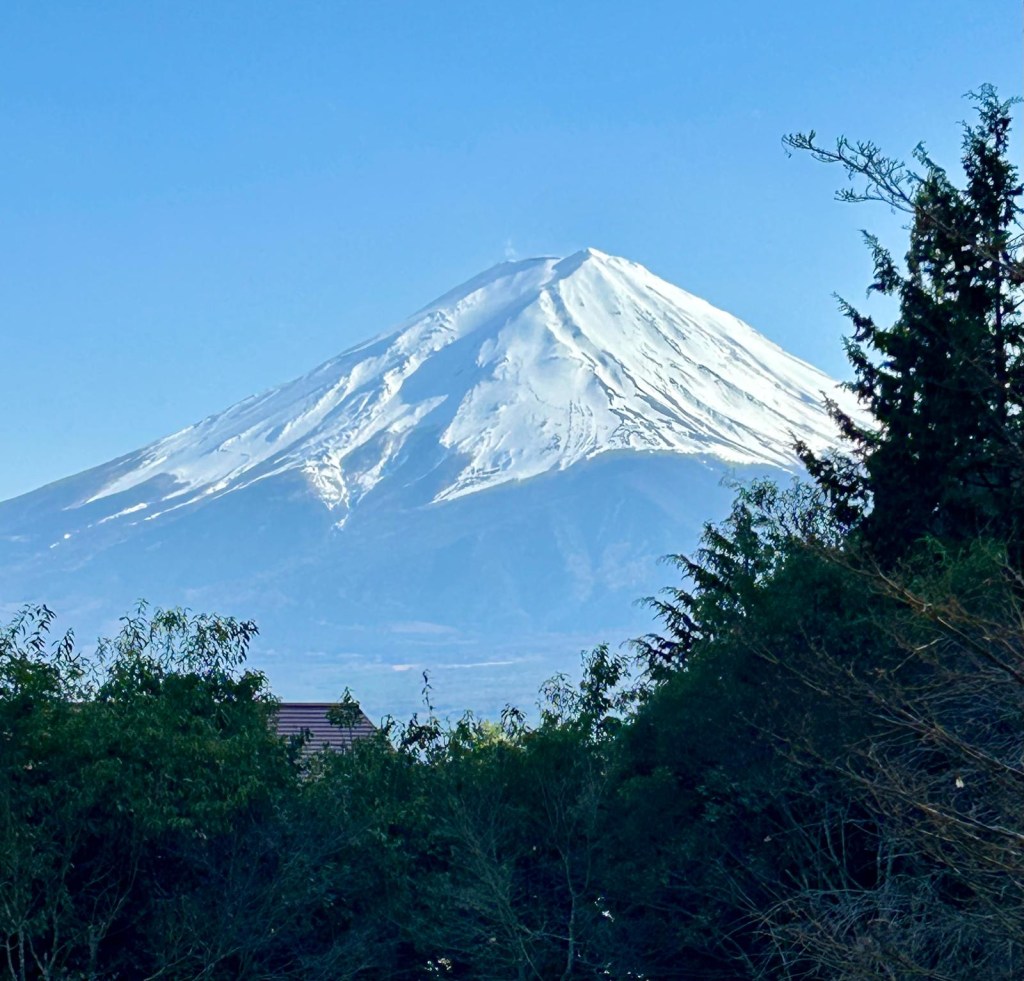
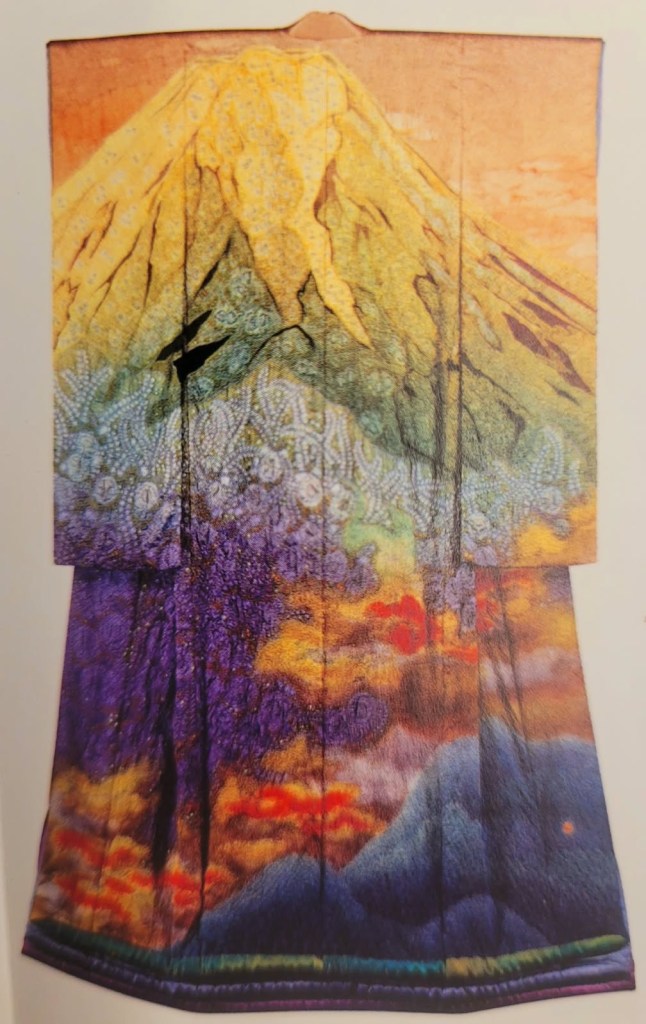
Oshino, a small village in the Fuji Five Lakes region, where we visited some of the 8 ponds fed by the snow melt from Mount Fuji.Mount Fuji is really there. Just can’t see it today because of the fog & heavy mist.King & Queen grapes sold from kiosk. No need to wash as that has been done. Can drink the water from the tap all over Japan.Did not see Mount Fuji today, but Melinda did 2 years ago in April.Another stop on this optional $300 tour was a visit to the Kubota Itchiku Art Museum. The museum is dedicated to the art of the kimono. Could not take pictures of the beautiful kimonos on display so had to resort to a brochure picture. The grounds were spectacular & also designed by the artist Itchiku Kubota.Grounds of the kimono museum.
Up next: Bullet train to Nagoya, train ride to Toba. More adventure.
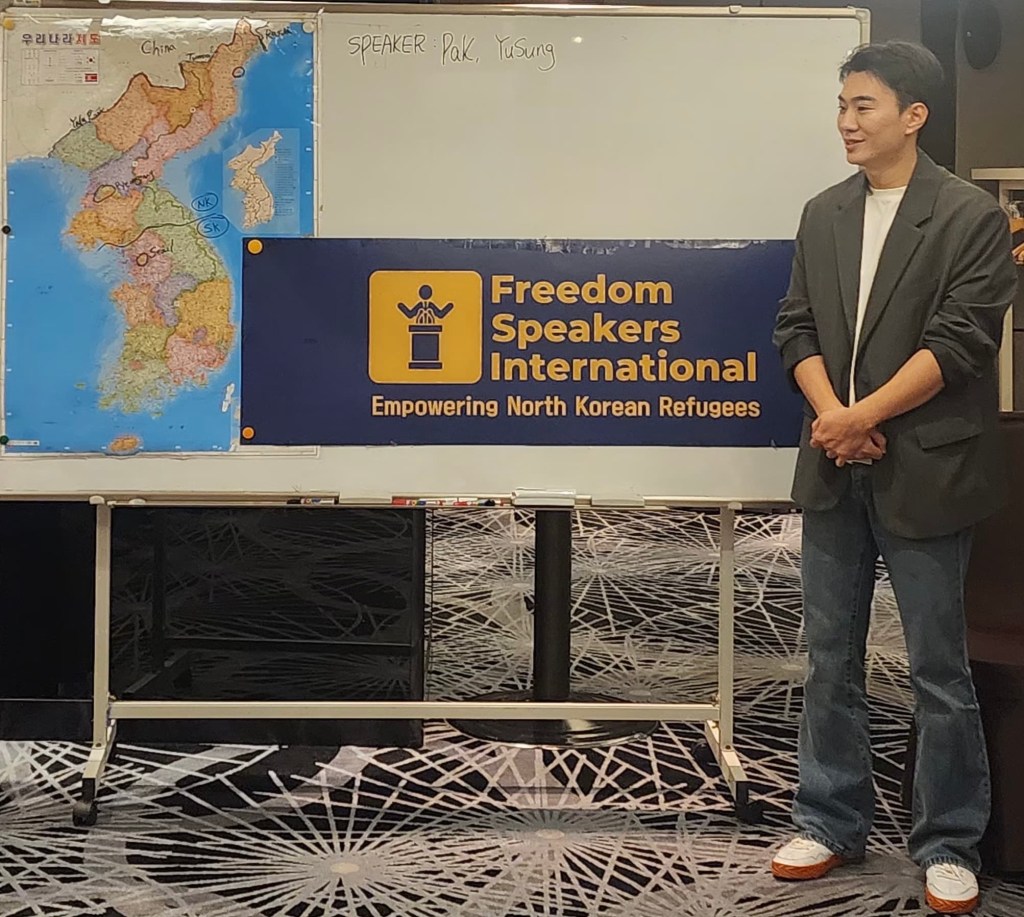
Our last two days in Korea can be described as a whirlwind of activity. On Saturday, 9/5, we were awed by a North Korean defector as he told us about his harrowing escape when he was a 9 year old boy. Then it was off to the DMZ (Korean Demilitarized Zone) which was created in 1953 to separate the Korean Peninsula into two zones. An agreement between North Korea (communist), China & the United Nations struck this deal without any input from South Korea.
Because there are no humans living here, the DMZ is one of the purest nature reserves in the world, home to thousands of species that are extinct or endangered elsewhere on the peninsula. The military presence on each side of the DMZ is heavy. The two sides remain basically at war. Both entering & returning from the Zone, a military official boarded the bus to ensure our passports matched what was provided to the military earlier. Only recently was the DMZ opened to the public.
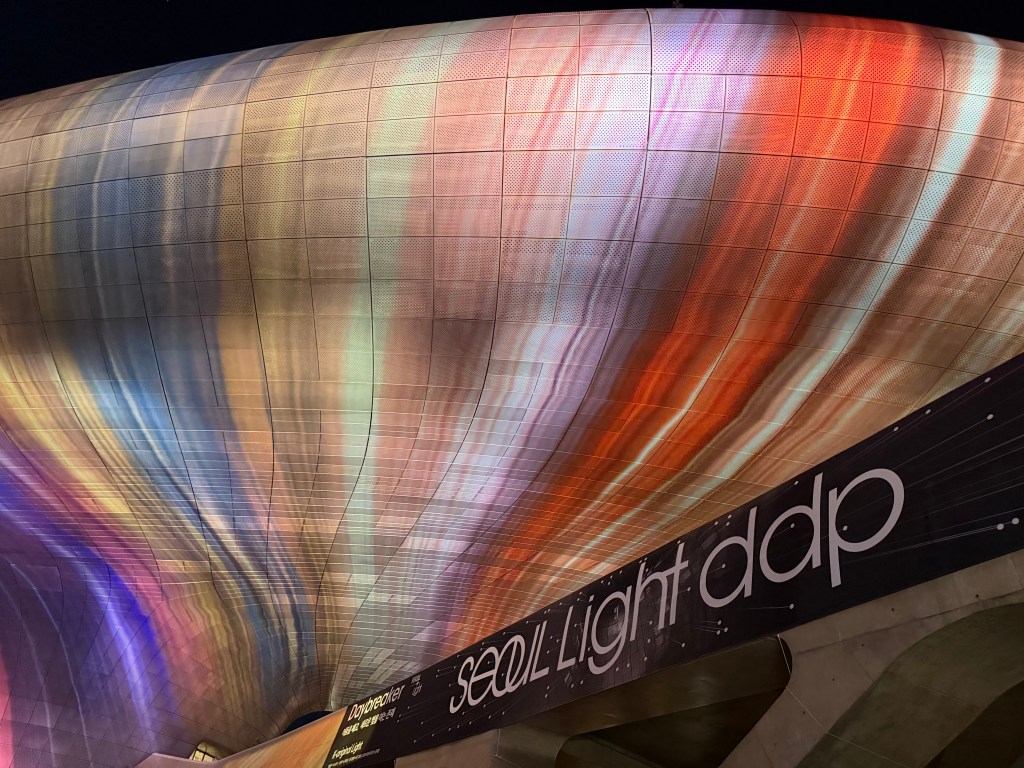
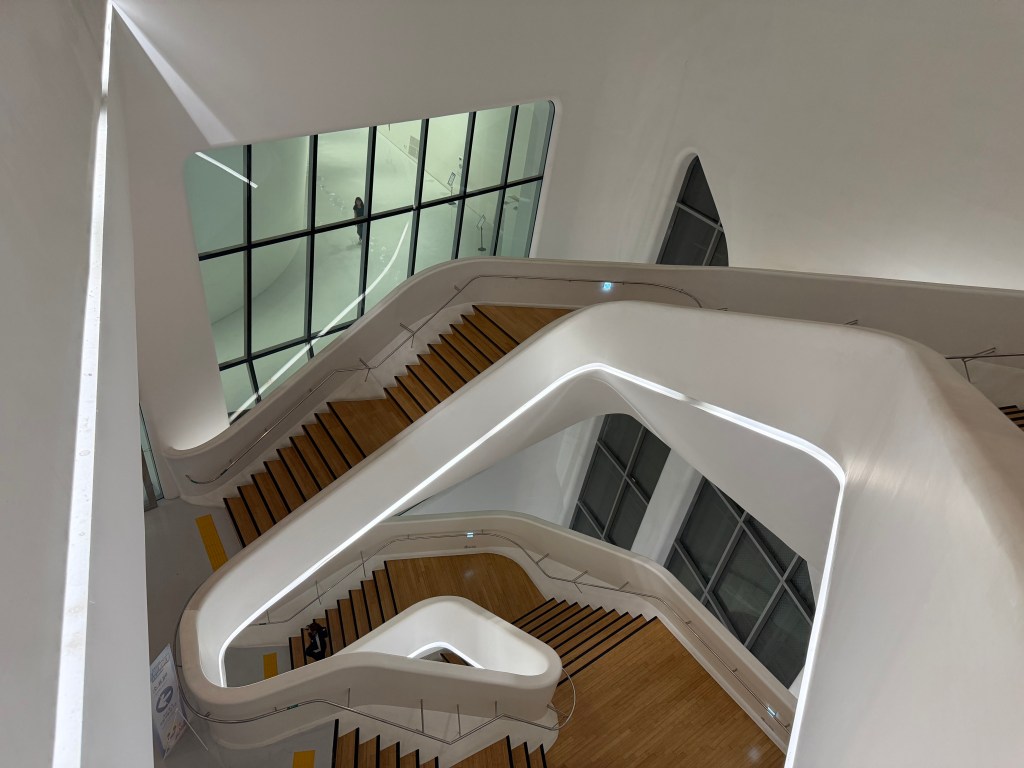
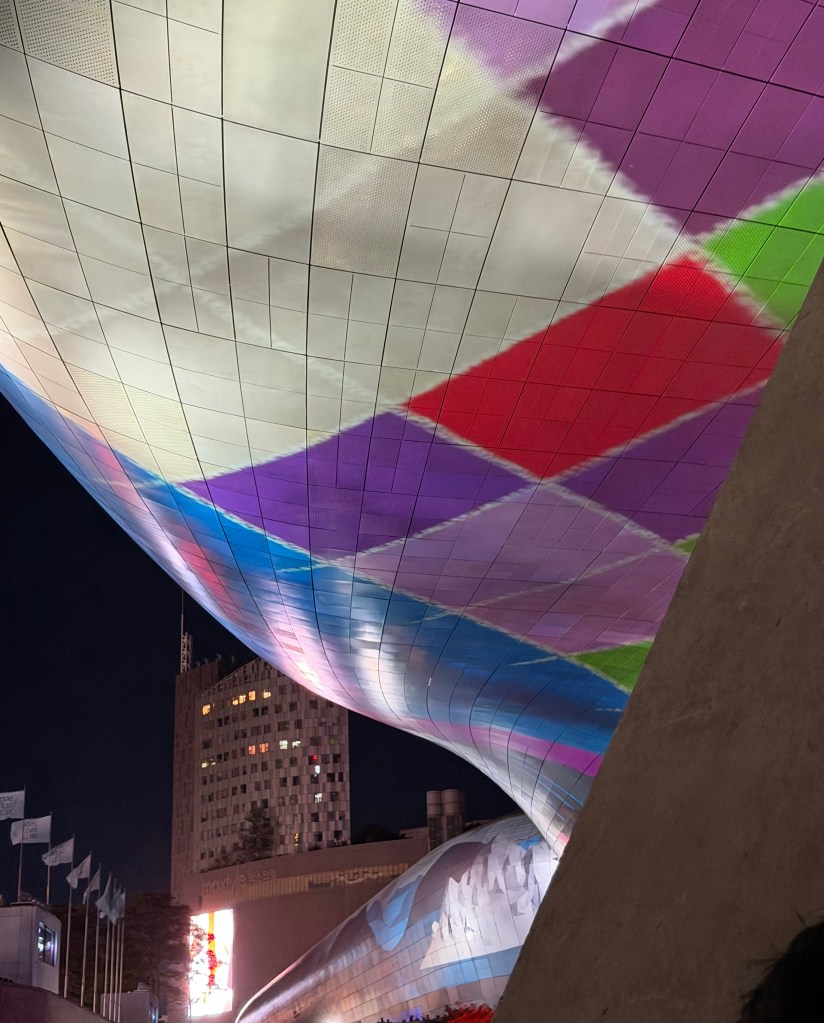
After returning from this long & emotional day, 4 of us joined Mini, to witness the most amazing light show, illuminated on the outside wall of an architectural wonder designed by an Iranian female architect in 2002. We navigated the subway to get to the light show which was a chaotic adventure in itself. A late Korean dinner afterwards.
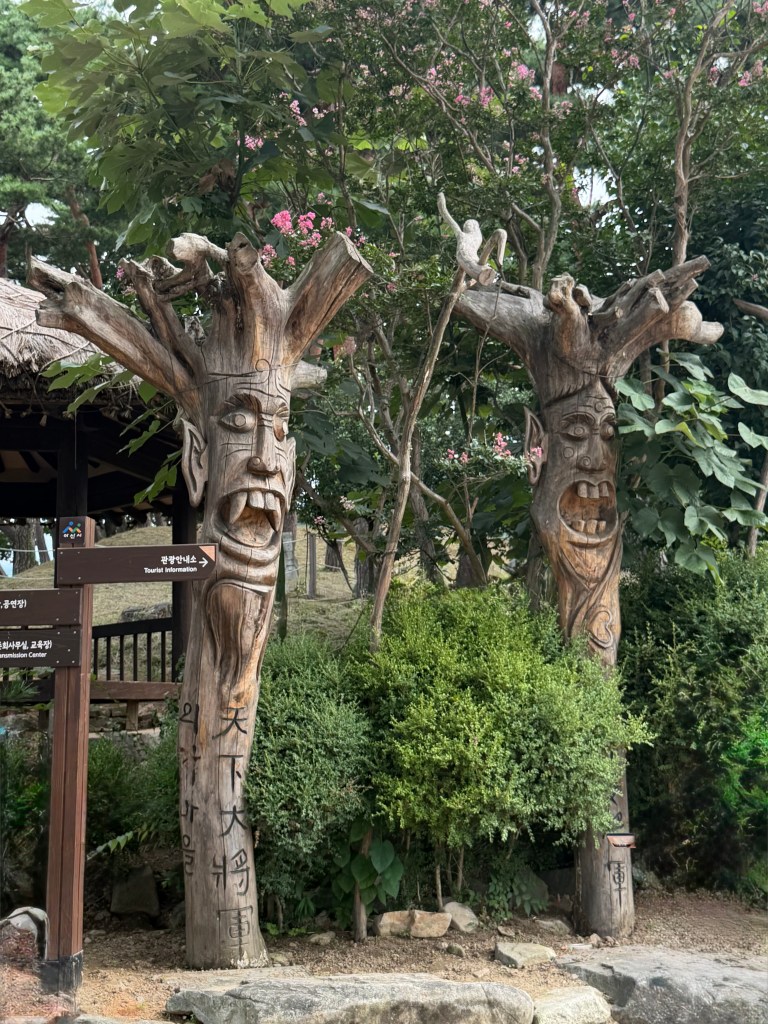
On Sunday, it was a bus ride to a folk village. Yea, an opportunity to get out of a high rise jungle. Another learning day both at the village & in the bus. Mini never stops her passionate educating.
We barely had time to get back to the room, before 6 of us departed for the most hilarious entertaining 1 1/2 hours I have spent in a long time. A group of 5 actors mimed a night in the kitchen of a Korean restaurant. It was a mix of percussion, think Stomp, comedy, spoofery. My eyes lost all moisture from laughing so hard. For me, this performance was a cross between Stomp & Blue Man Group, with lots of comedy. The show called Nanta does travel the world, including the US.
For our farewell dinner, we dined at a chain restaurant to experience Korean fried chicken with beer. Only our’s wasn’t fried, but still quite yummy.
The Korean won is quite favorable to the dollar, about 1400 won to the US $. The people are extremely polite, fashionably dressed, with the most beautiful skin ever. Such a pleasure to visit this small part of Korea. Wish the countryside would have been part of the itinerary, but then the trip would have been 4 weeks long.
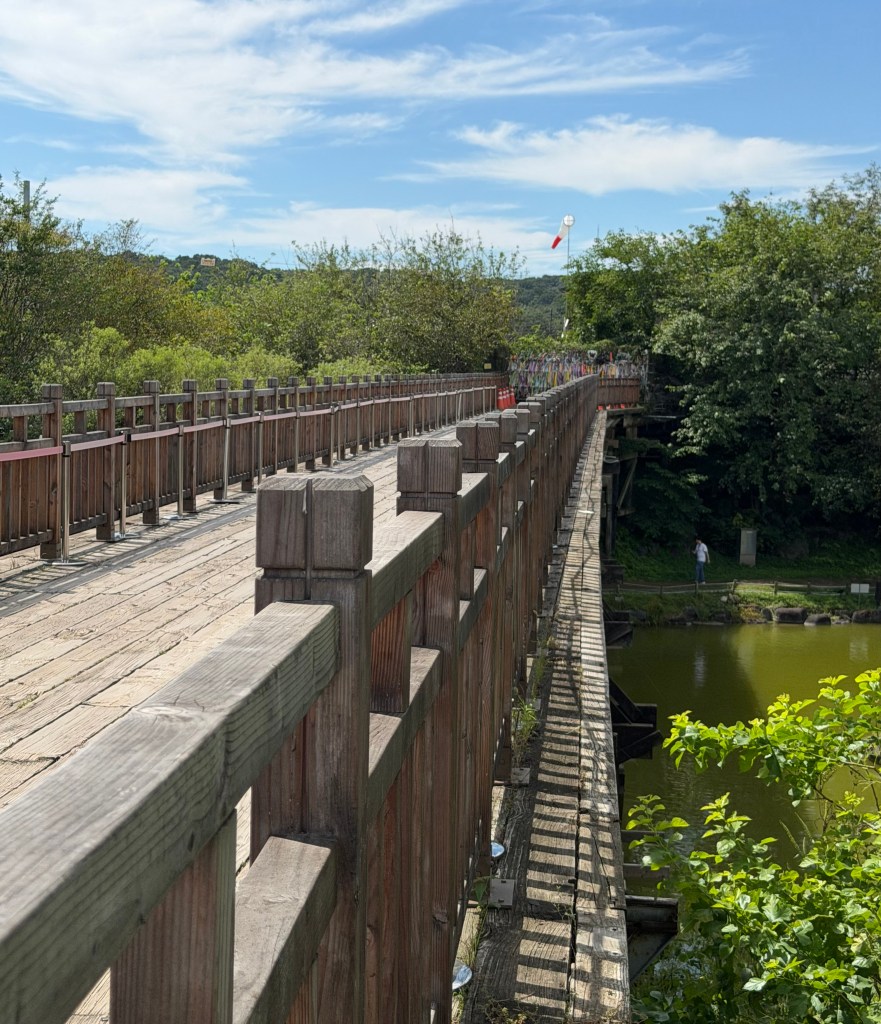
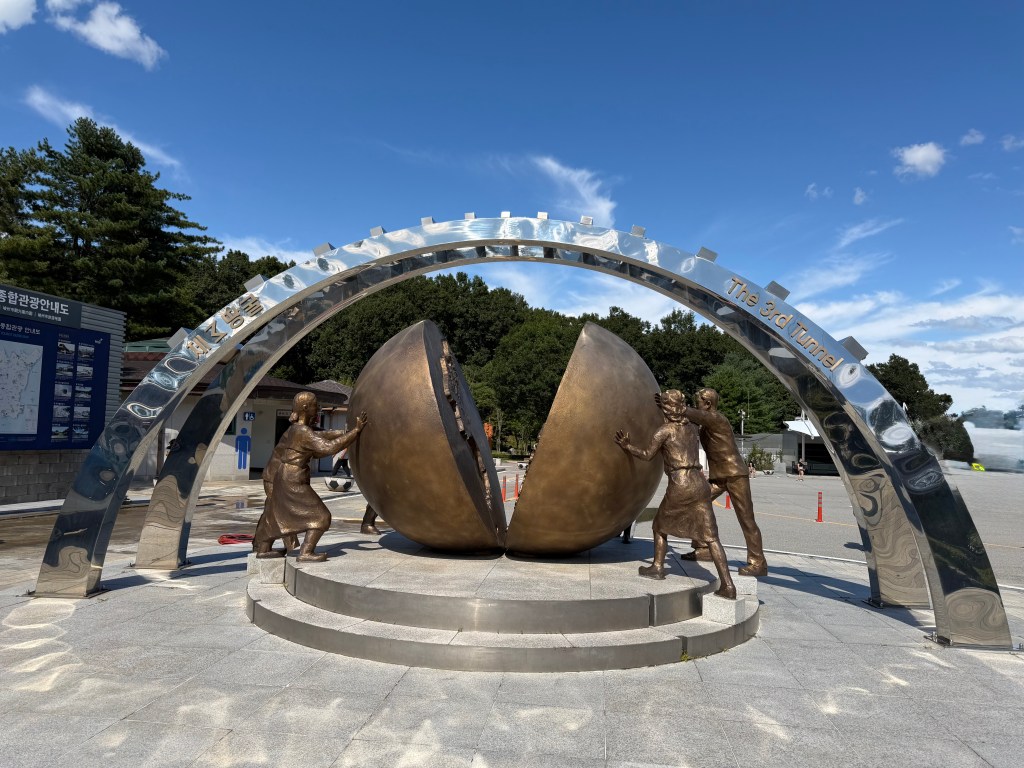
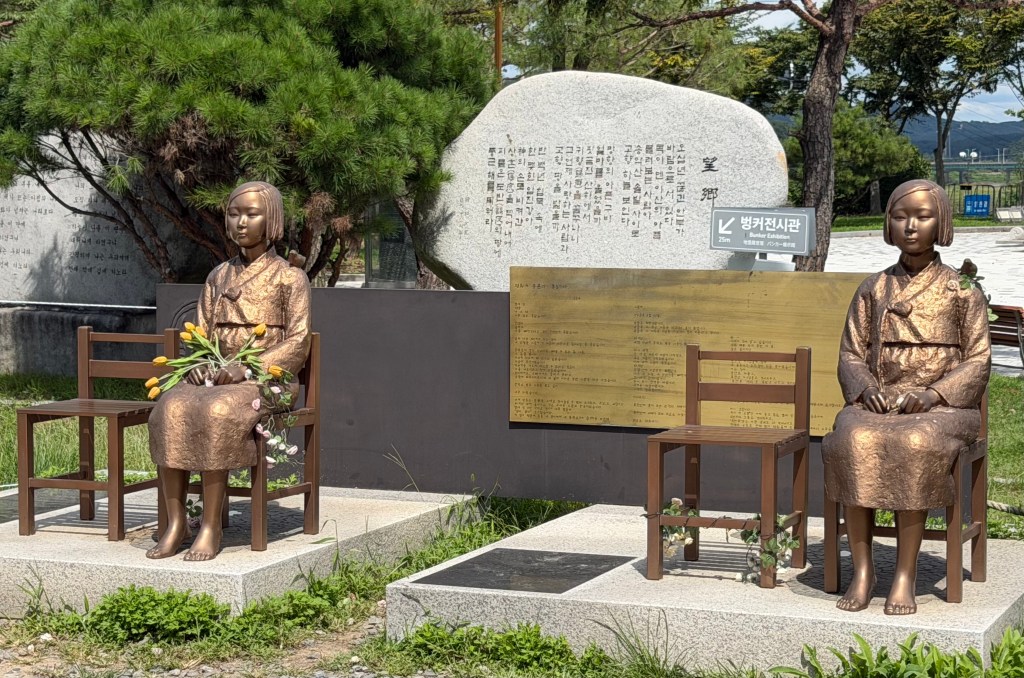
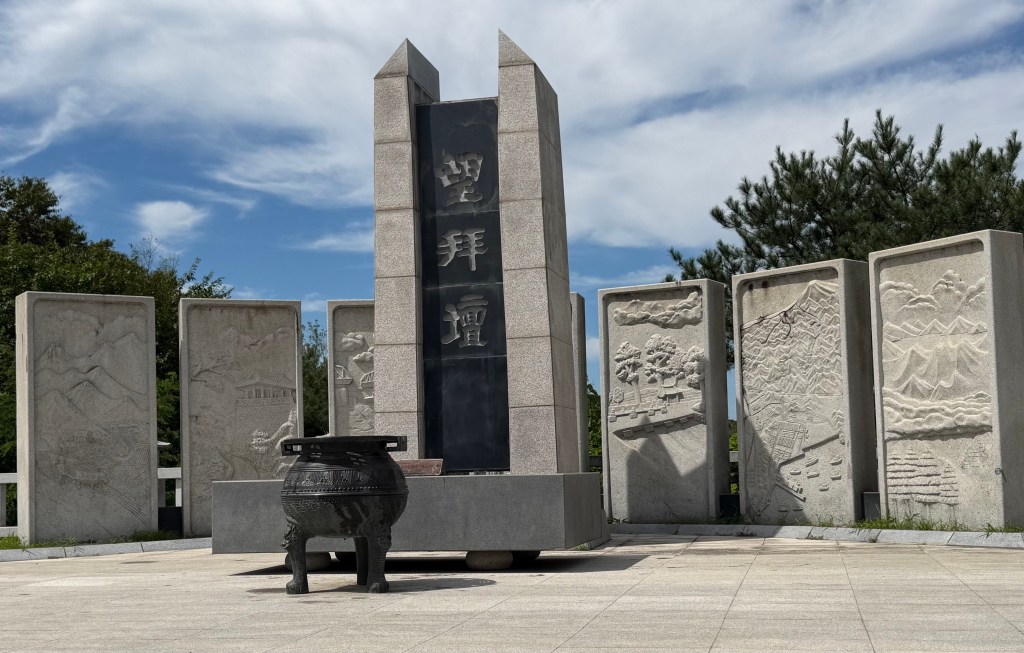
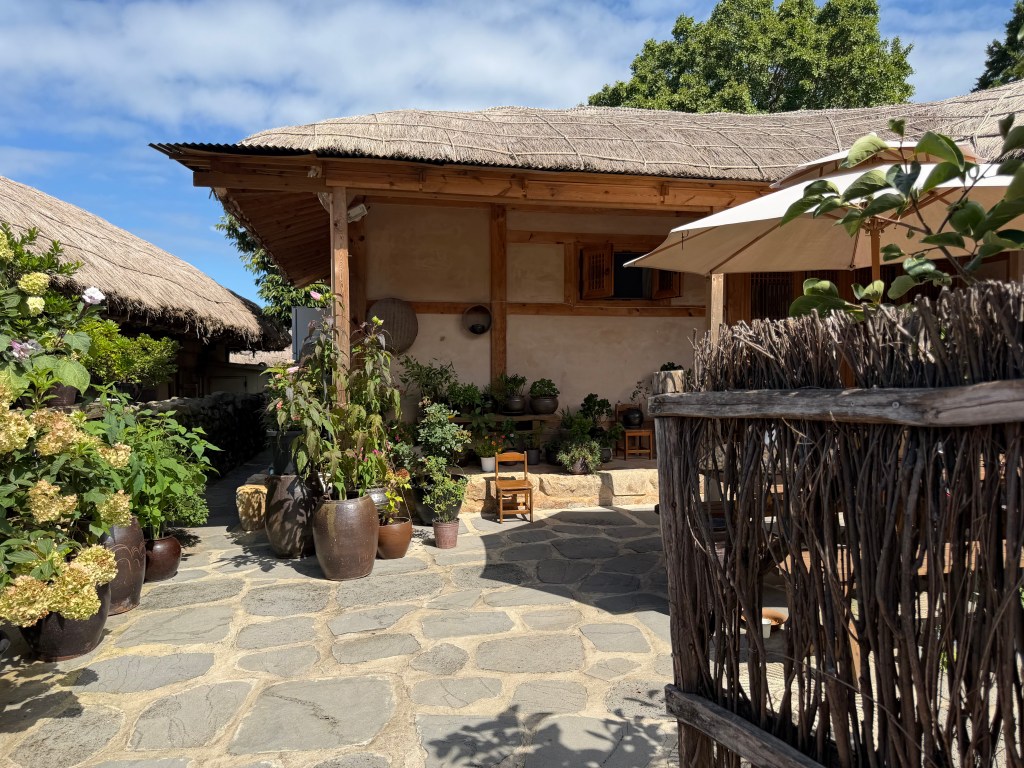
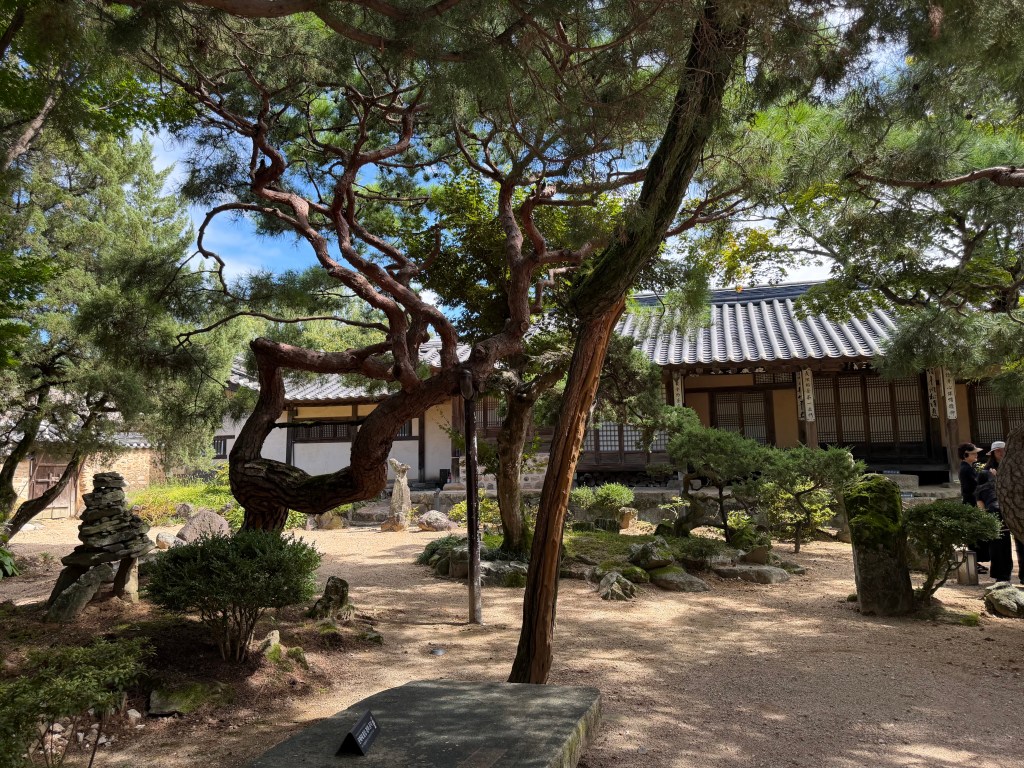
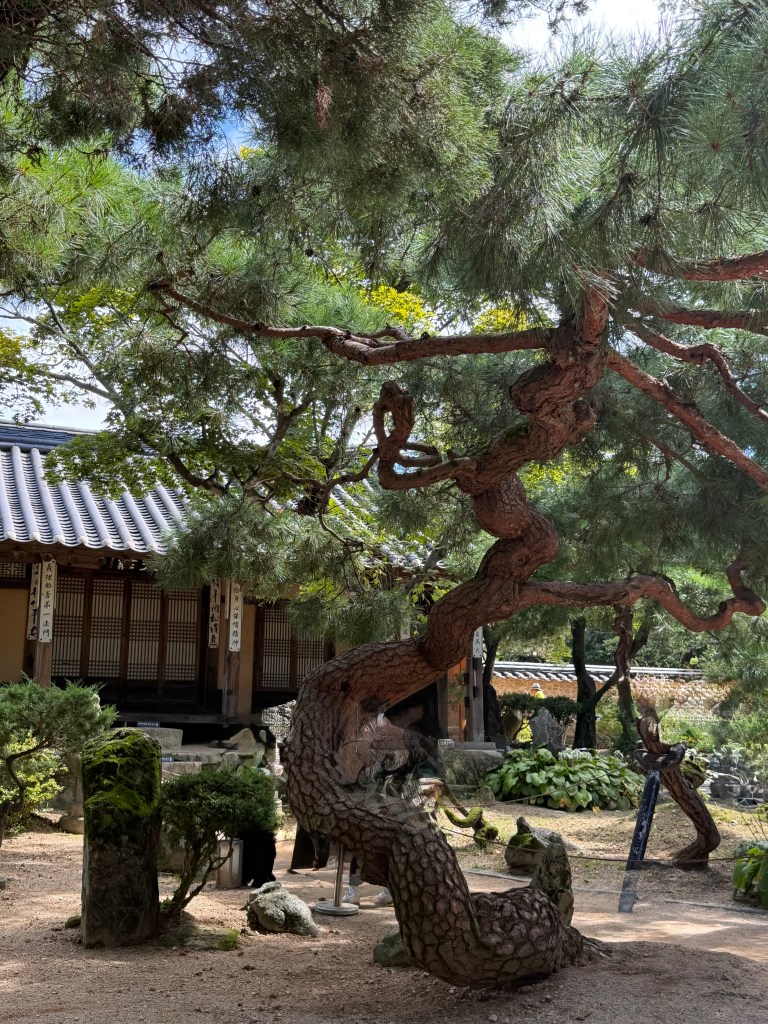
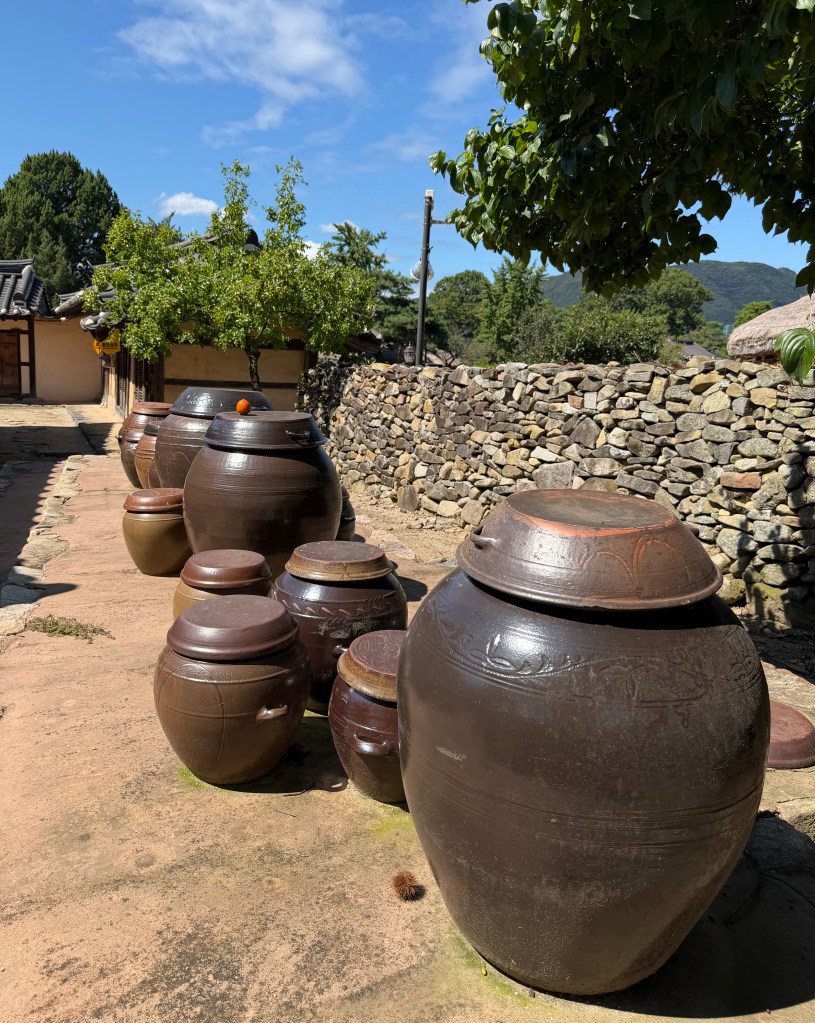
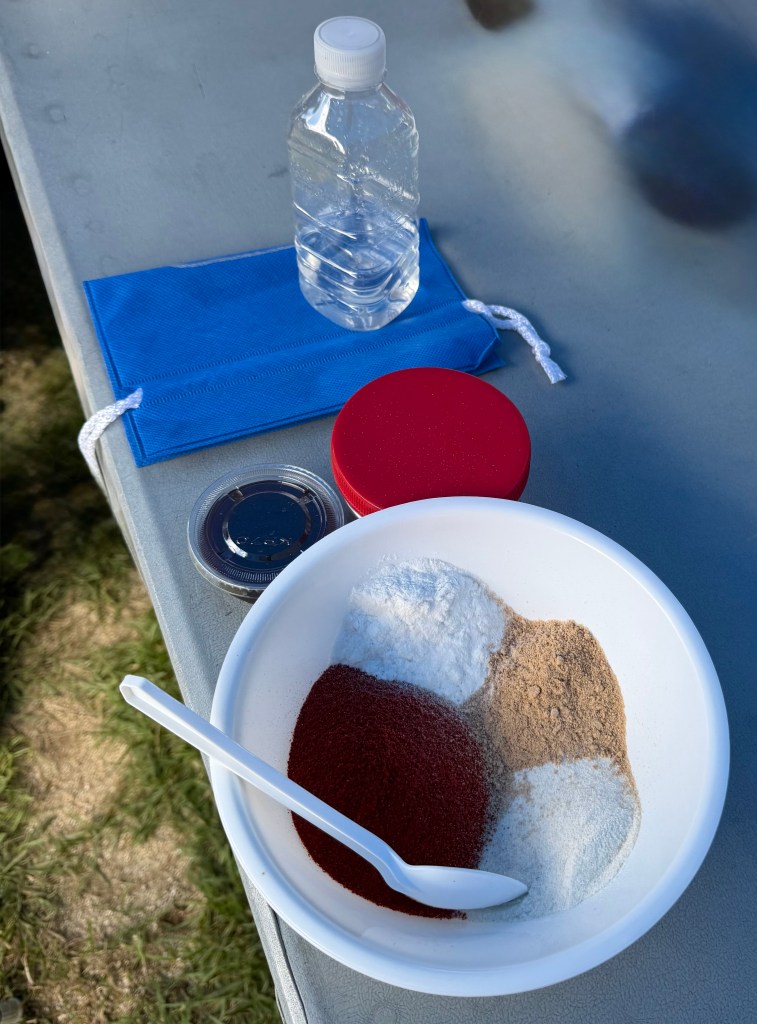
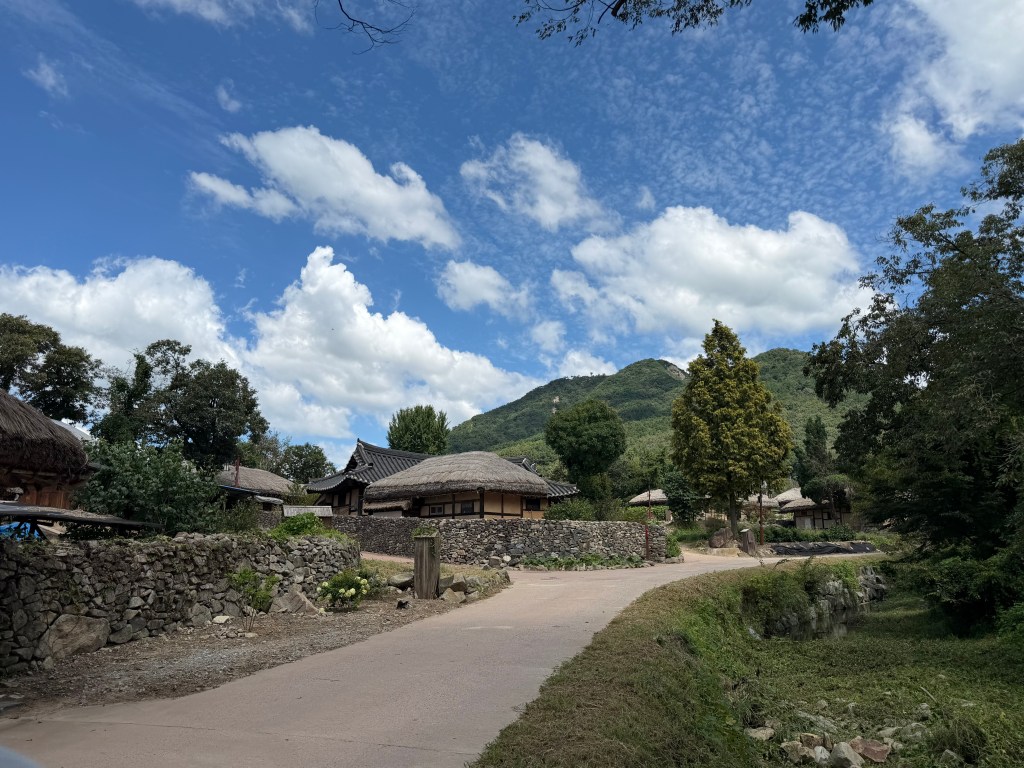
Each trip OAT, tour company, has someone discuss a controversial topic with us. This young man, Pak YuSung, is originally from North Korea. As a North Korean he was led to believe that South Koreans were poor, hungry & homeless. Because his father went to China frequently to buy black market goods, he was able to learn from films his father brought back that that was not the case. He was 9 when he convinced his mother they should escape. His mother, with money from his father, was able to hire agents to smuggle them out of North Korea thru China. The entire struggle to escape took two years; time spent on the physical escape, time spent in refugee shelters, time spent getting through the South Korean bureaucracy. After finally arriving, he learned he was not accepted. He was deemed uneducated & unemployable. Only after learning English in a Christian school in Tyler, TX & more time in Alaska, could he finally manage to begin to build a life in South Korea. He studied film & produced a movie about escaping North Korea. He is also on the lecture series. He recently married a North Korean escapee. Marrying South Korean would have been impossible as her parents would never approve. He proudly shared a photo of his new baby. As far as his parents are concerned, they moved closer to the border where his mother was born in hopes one day there will be a unified Korea & she can return to where she was born. THE POWER of the HUMAN SPIRIT!Freedom Bridge. Located in the DMZ.Depicting the attempt to unify Korea. Another monument along the DMZ.Statues commemorating the Comfort Women from the Japanese 30 year brutal occupation. After the occupation at the end of World War II, these women were shunned & rejected by their families. Read How we Disappeared, a heartbreaking account of how these women were captured & forced, at a very young age, into satisfying the sexual pleasures of their occupiers.Longing for My Hometown. After World War II, Korea was arbitrarily divided into North & South. Over 5 million people left their homes because they did not want to live under communism. This monument was built on the border of North Korea in honor of the ancestors who were left behind. Every Thanksgiving, this year in late September, North Koreans living in the South come here to pay respect to their ancestors. By the way, in Korea Thanksgiving is giving thanks for the rice harvest.Seoul light show on the outer walls of the Zaha Hadid Exhibition Hall.Stairway in Zaha Hadid Expedition Hall where illumination was shown on outside of building. Architectural marvel. Couldn’t capture the descending stairway scene from 6 levels, but did my best.Modern Seoul from the light show.Today’s visit took us about 60 miles outside of Seoul City Center for A Day in the Life experience: Oeam Folk Village. Greetings from carved folk figures as we begin our walk through the village.Typical village home with thatched roof & charming little gardens.Example of one of the Western style exteriors of a home in the village.Village visit: 600 year old tree experiencing a bit of rebirth.Persimmon resting atop one of the jars used to store seasonings.Preparing to make red chili paste (Korean Gochujang). Ingredients: Dried chili pepper, sticky rice powder, fermented soy bean powder, yeast, rice syrup, salt water. Mix & ferment for one year. Mix with butter (80/20) to use on barbecue. Yes, I am using the jar & blue bag to take my creation home. We’ll see how it ages.Thatched roof dwelling in this charming farm village which has been somewhat commercialized. About 140 mostly elderly people live here, no longer farming, but attempting to maintain their heritage. Fun interactive visit.Our host pouring lotus leaf rice wine she made from a secret family recipe. Served with a delicious rice cookie with sweet filling. Mini making sure everyone gets a fair share. Lotus leaf wine ingredients: Rice, sticky rice, yeast, lotus leaf, pine tree needles & water. We did try our hand at making the wine.Farm wife spent the morning preparing our lunch: Fish cake, eggplant, fried anchovies, acorn jelly, chili leaf, dried pollack, fried fish cake, fern, kimchi radish stem & radish soup.
The weather, for the most part, has been warm & humid with just a hint rain. Forgot to mention that shoes off in all cases of entering a private home, shrine or temple. Have experienced this custom in many Asian cultures.
Off to Japan on a 2 hour Nippon Airlines flight in the morning. More to come.
Left home on Monday to make my way to San Francisco for the night, before boarding our 12+ hour flight to Seoul, South Korea on Tuesday. Arrived mid afternoon on Wednesday as Seoul is 14 hours ahead of Chicago time.
We are staying in a lovely hotel in the heart of Seoul within walking distance of everything we need. It’s a bustling place with lots of shopping, dining & nightlife. Not that I or either of my traveling companions, Joan or Melinda, will be partaking of. Traveling is tough & sleep is paramount to us.
Our group leader, Mini, is delightful. She is extremely knowledgeable & keeps the 14 of us on our toes. In addition to seeing the sites, she is making sure we are learning the history of Korea, experiencing the culture, especially as it relates to food, & exposing us to some of the significant sites of Seoul. I got off on the right foot with her immediately as she needed to give me a tutorial on how to flush the toilet. It’s a toilet/bidet combination & most complicated.
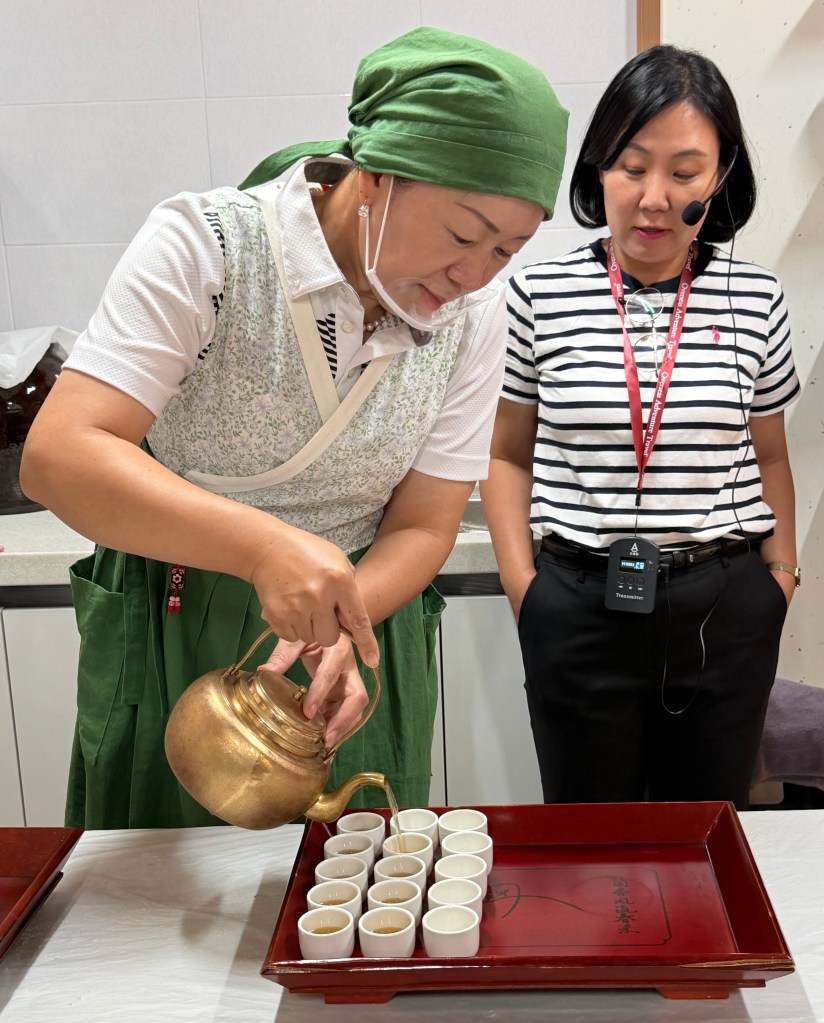
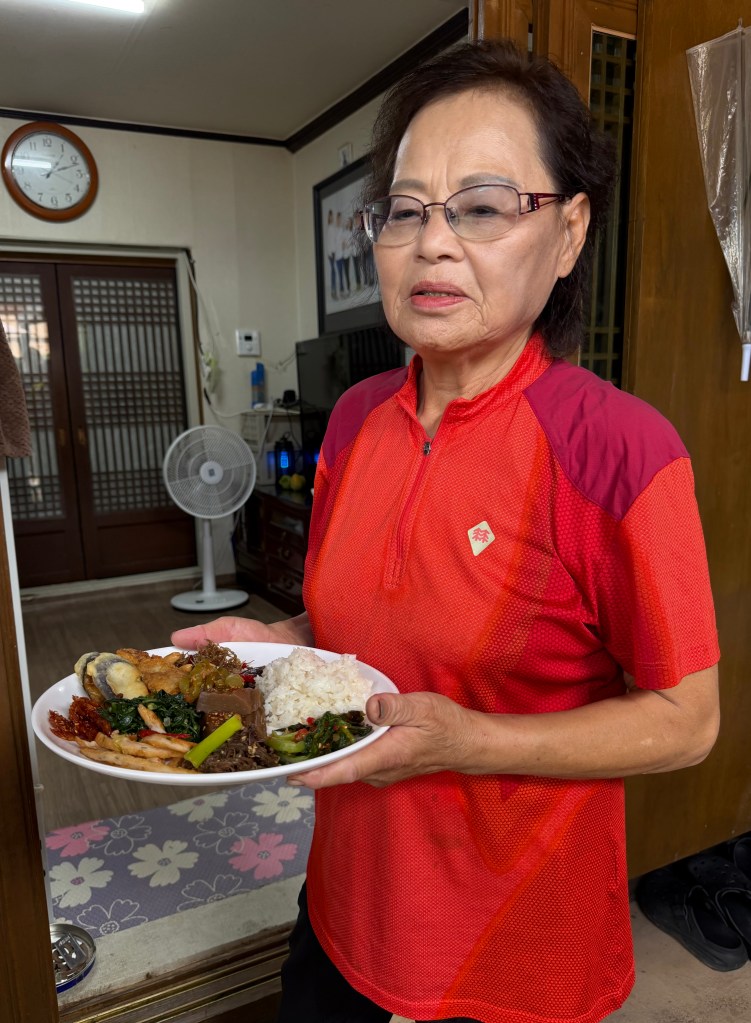
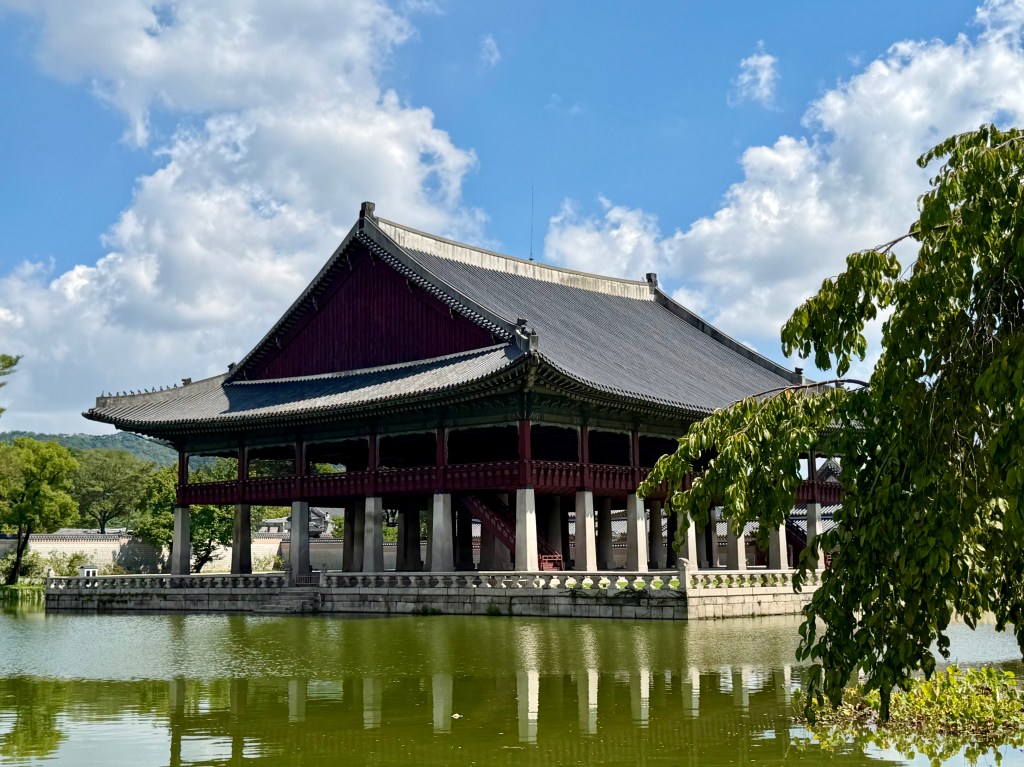
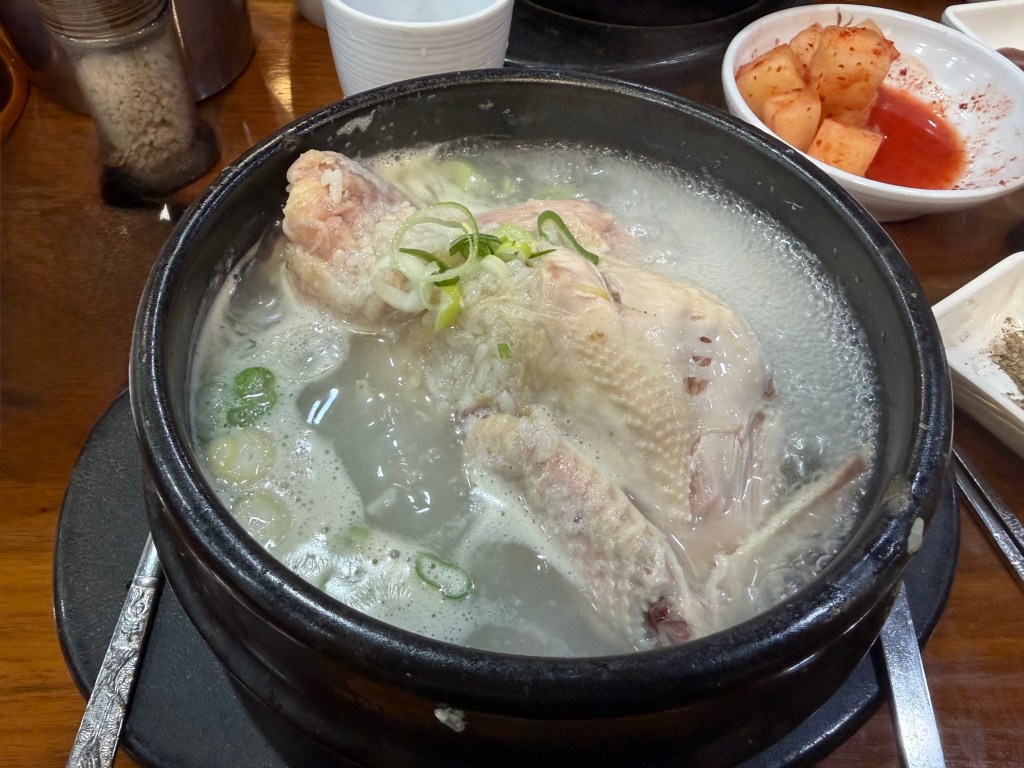
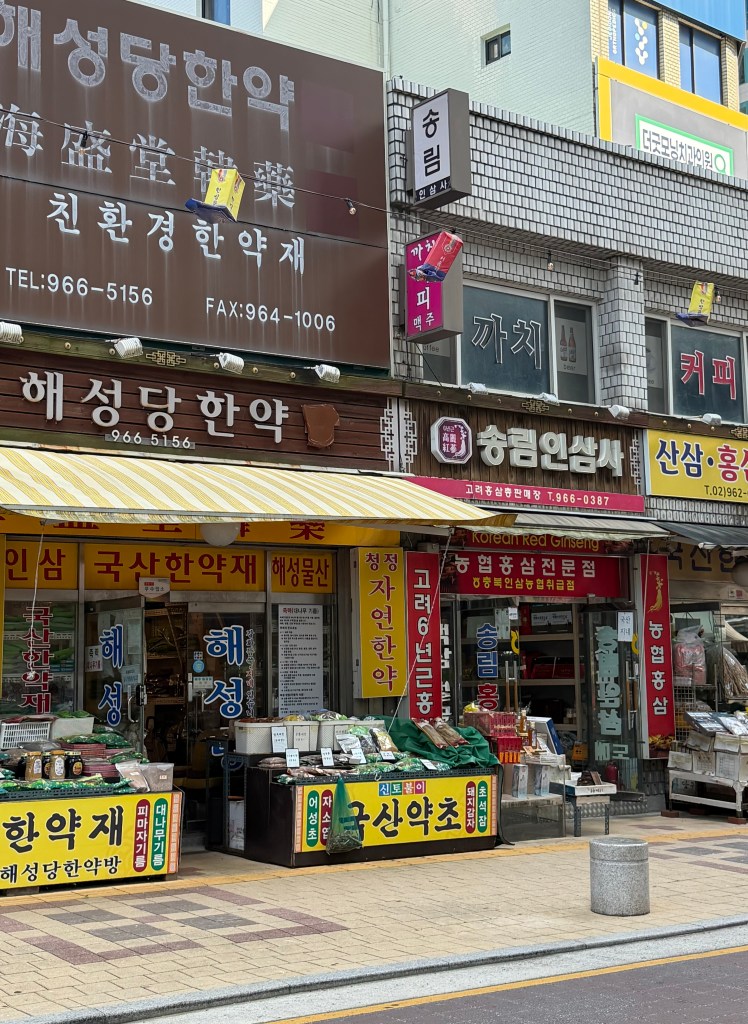
In just two days, we have visited a Royal Palace, had a traditional Korean chicken soup, trudged many steps to the Seoul Tower, partook of a Korean barbecue, visited the Museum of Korea, enjoyed a home hosted dinner of Bibimbab, visited a Herbal Medicine Market & the Gyeongdong Food Market. Explains why bed time is before 10 pm.
How about some pictures to tell a bit of a story.
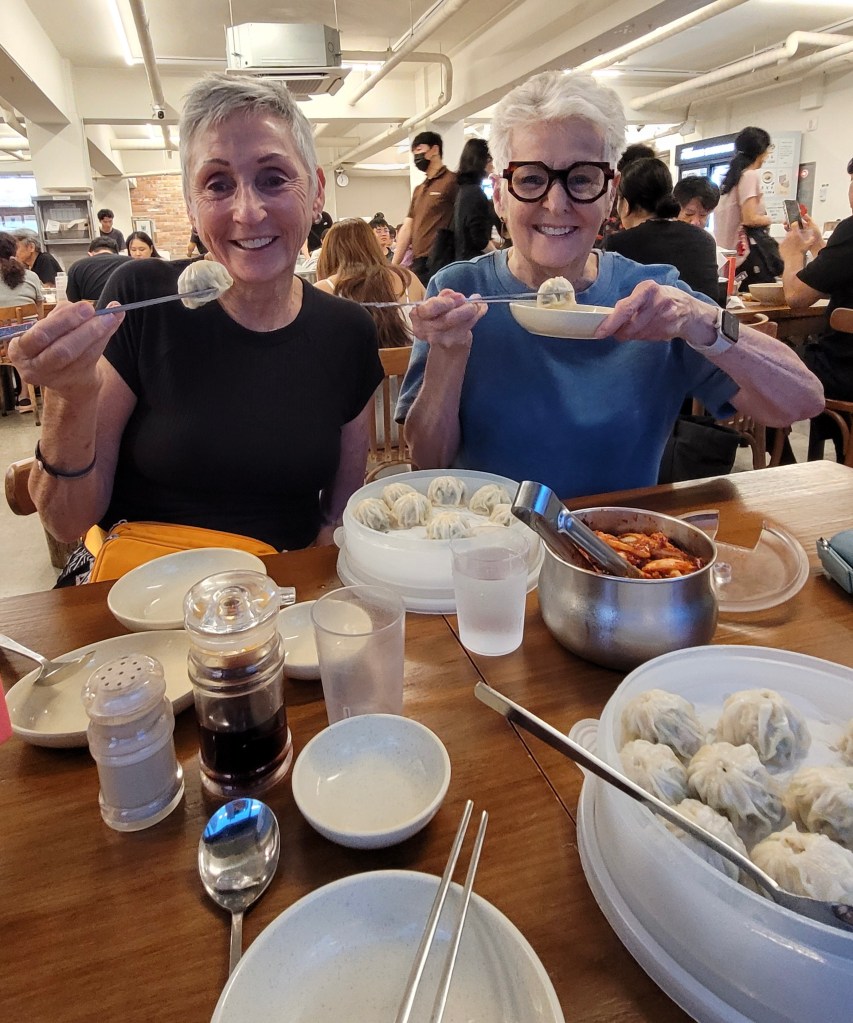
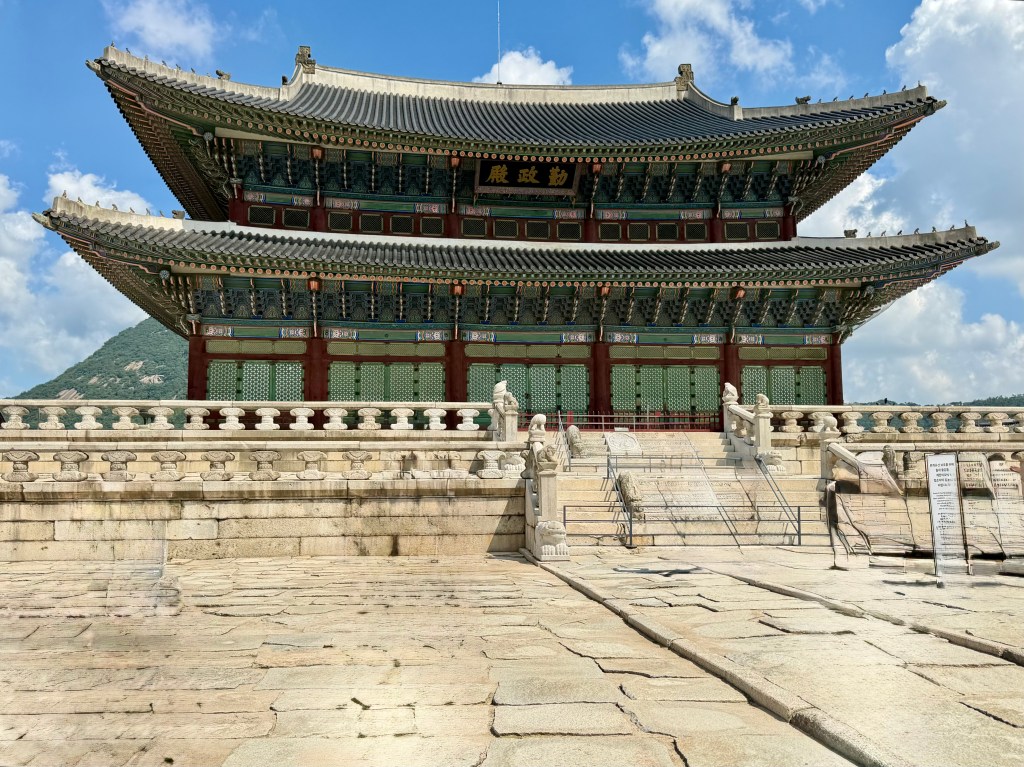
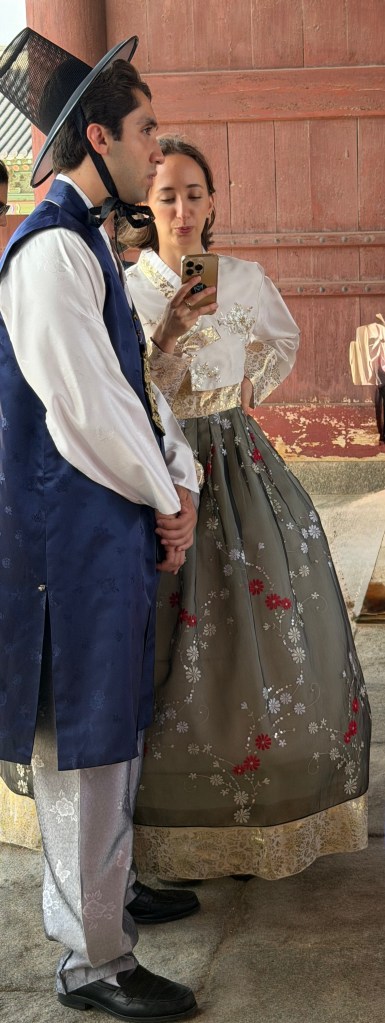
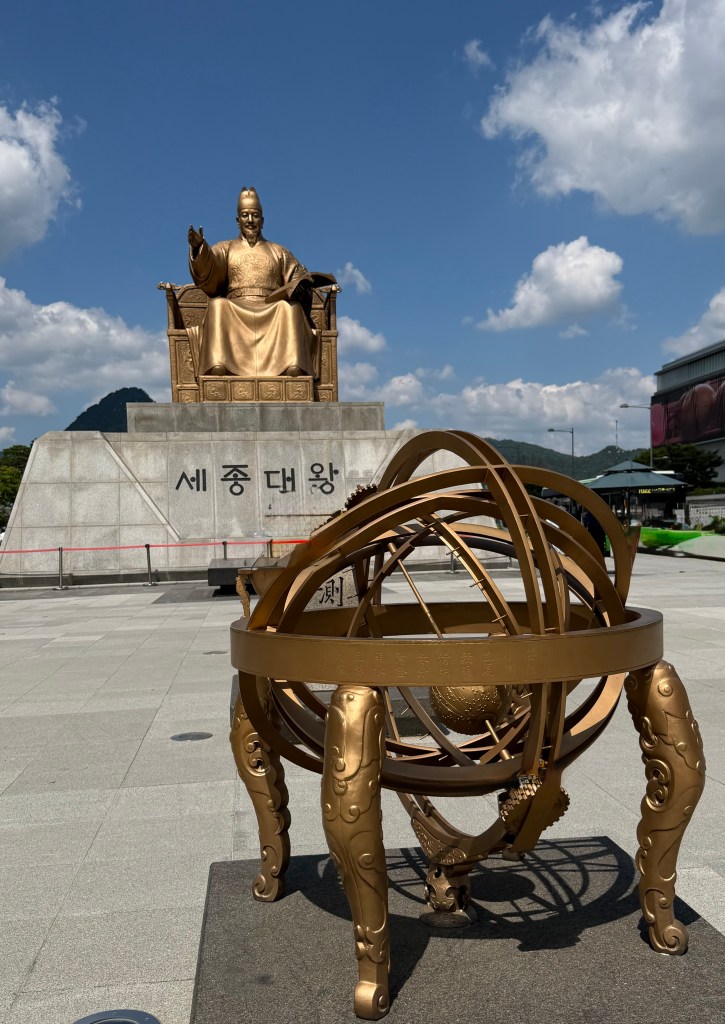
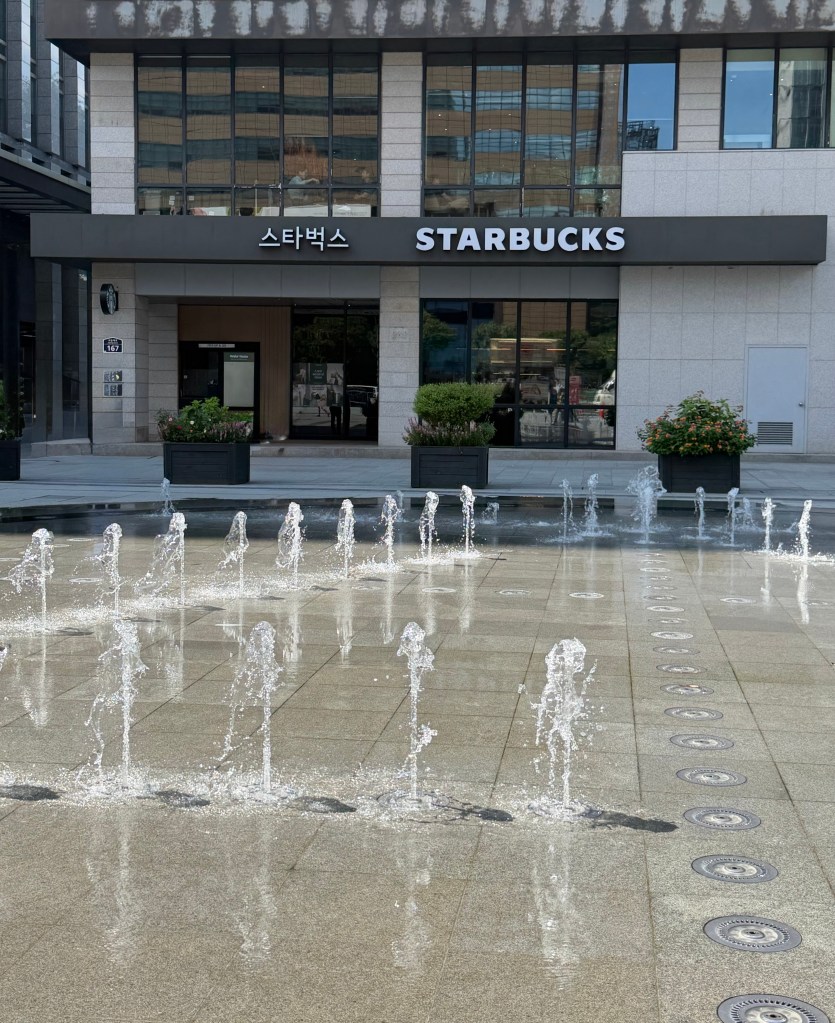
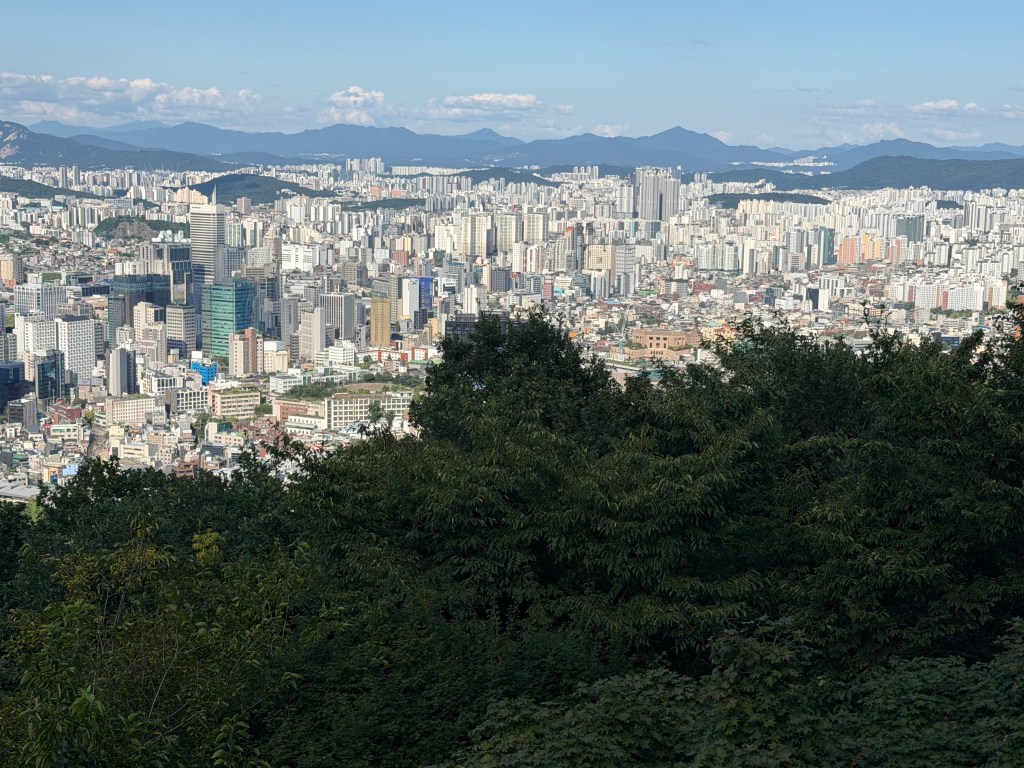
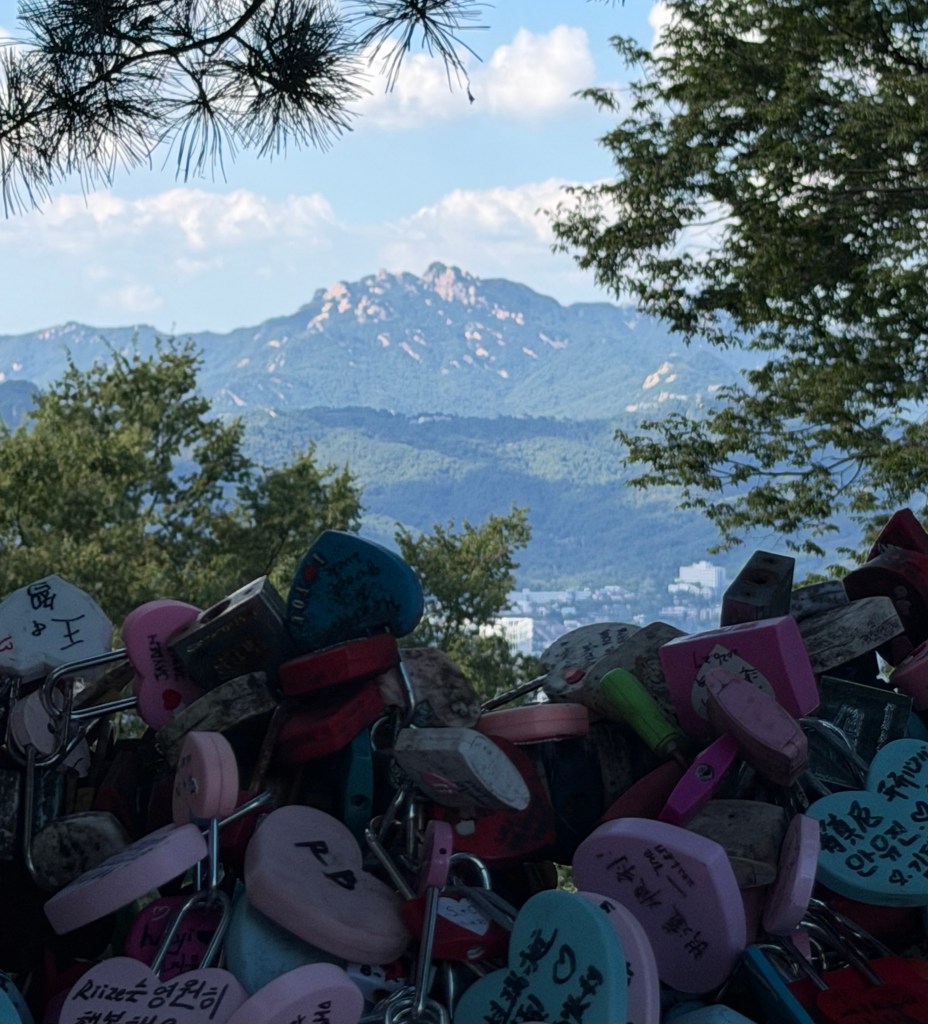
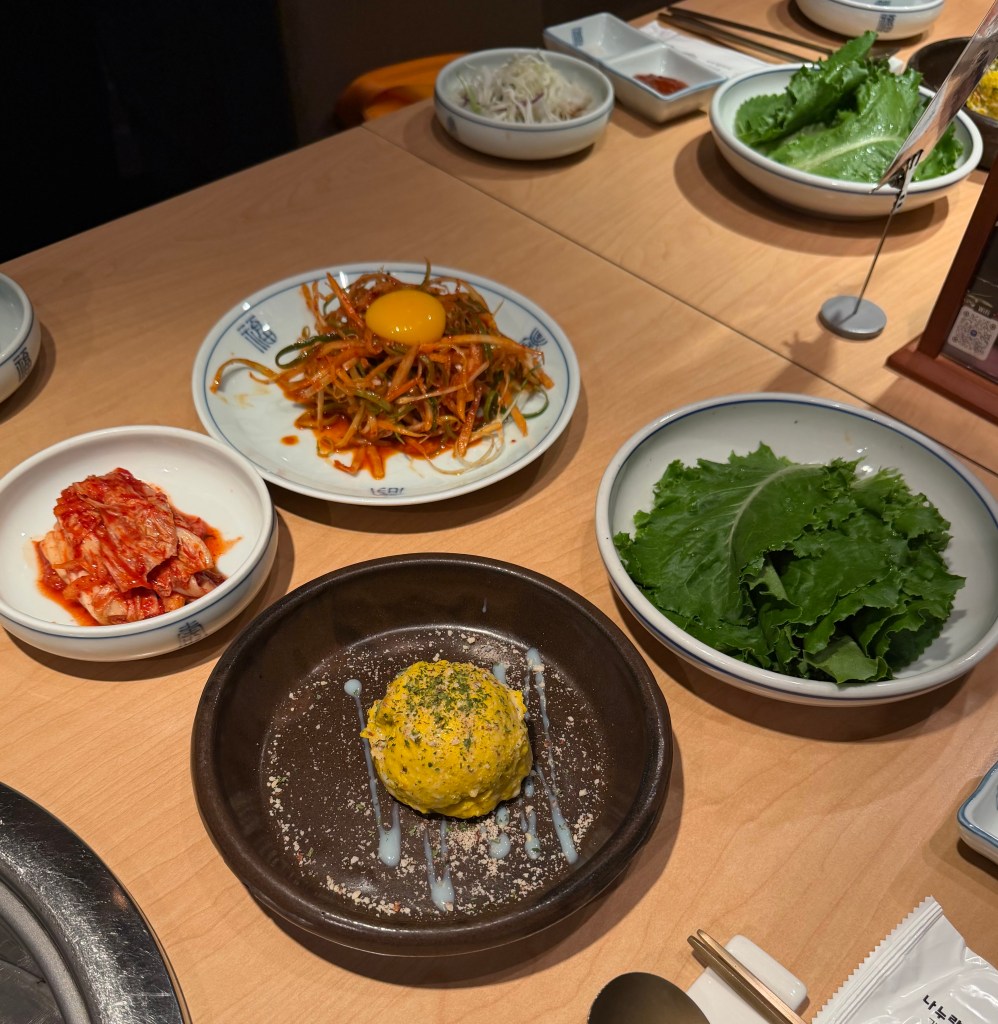
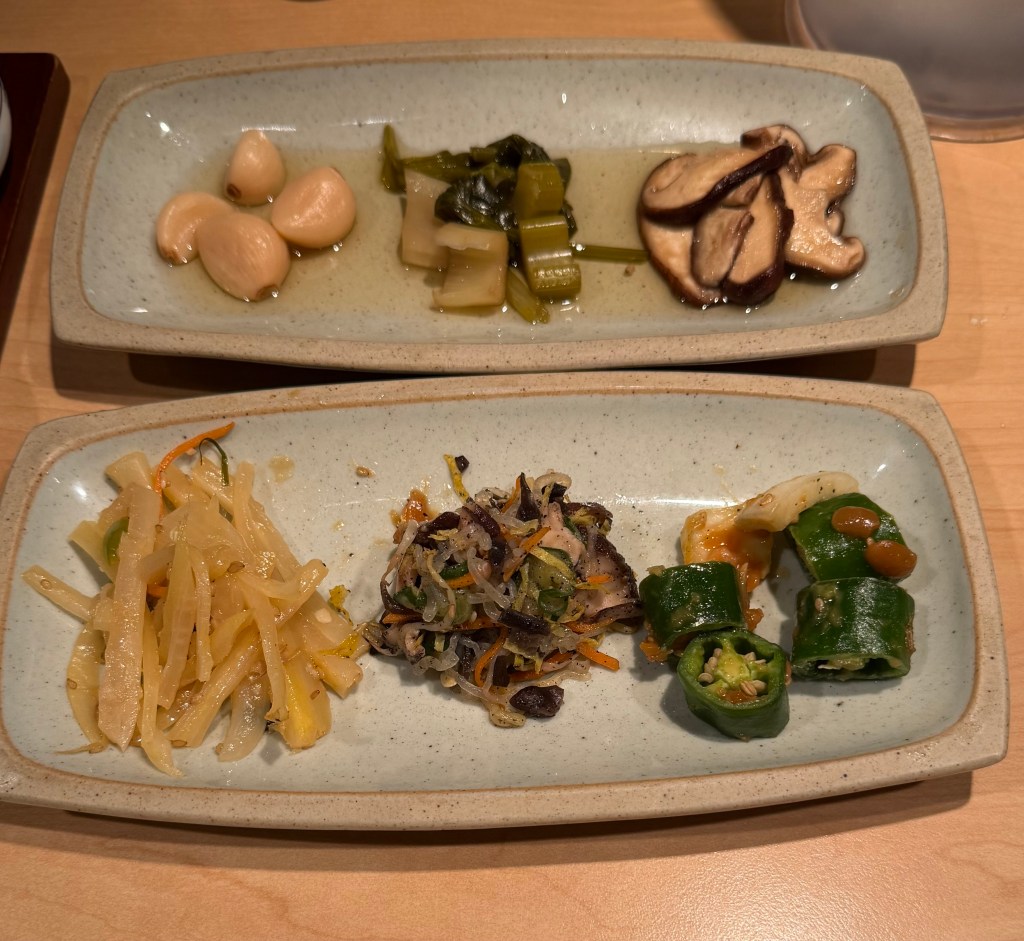
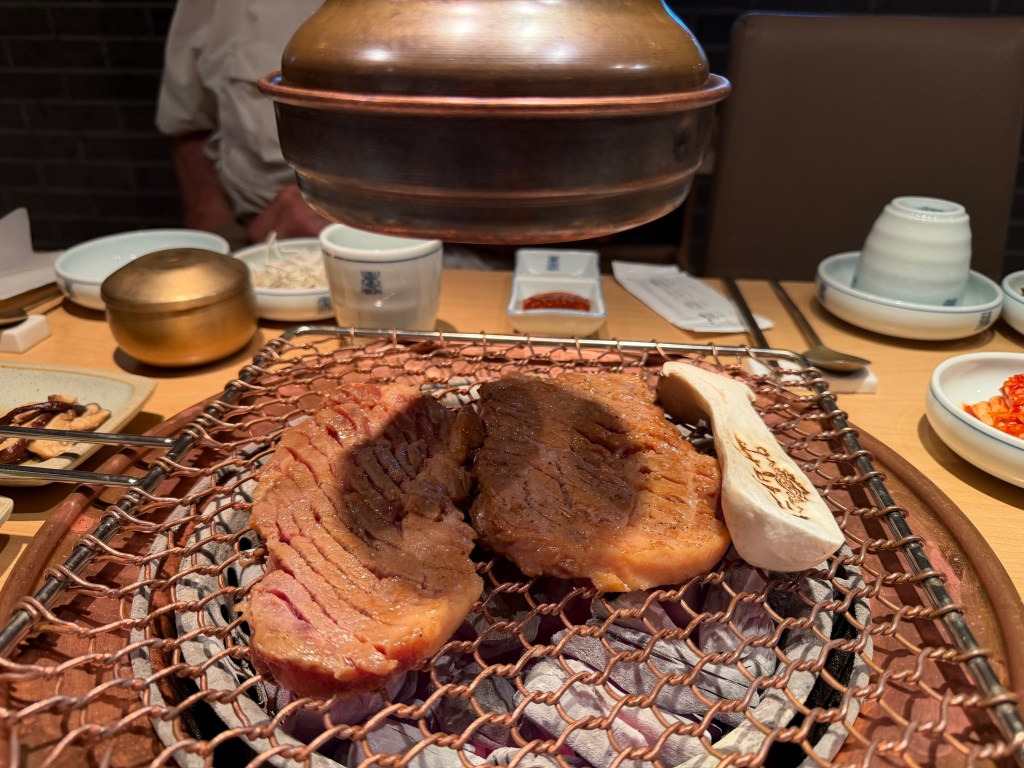
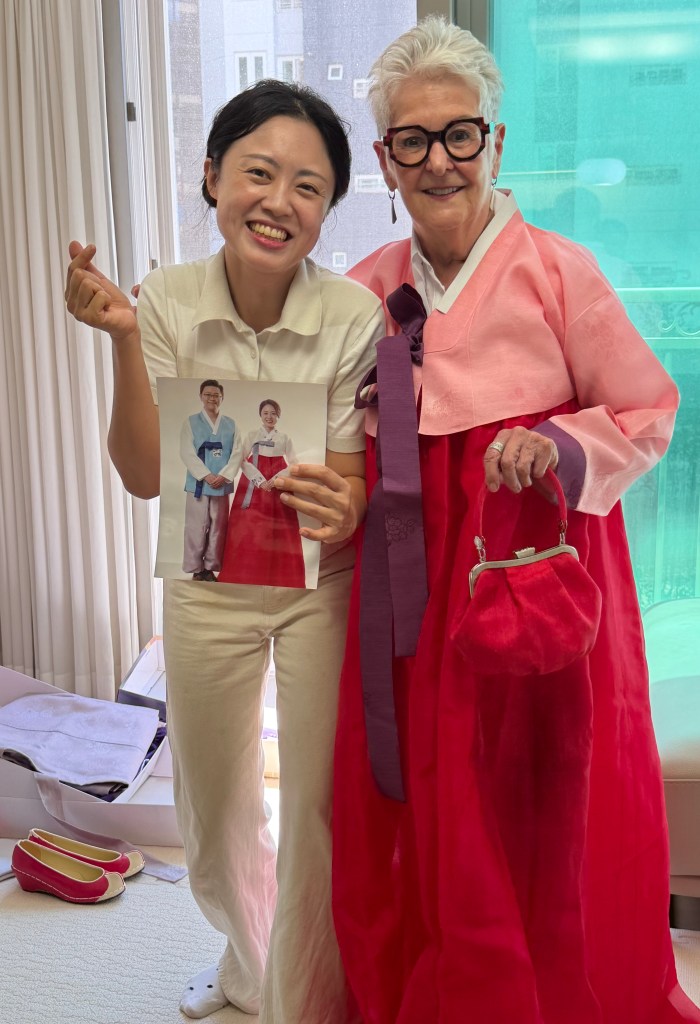
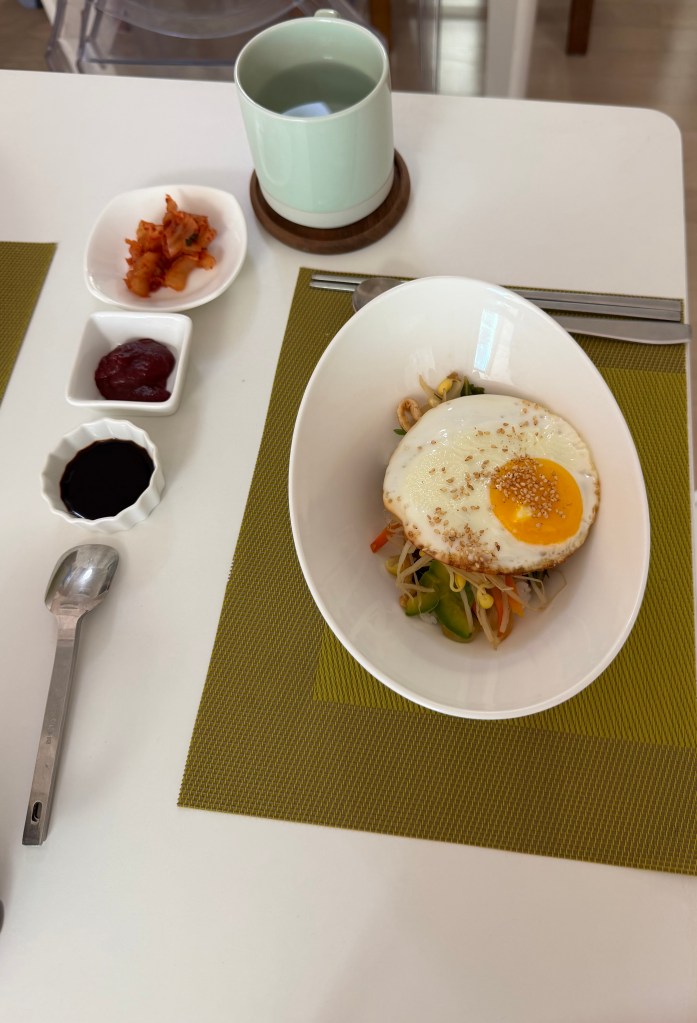
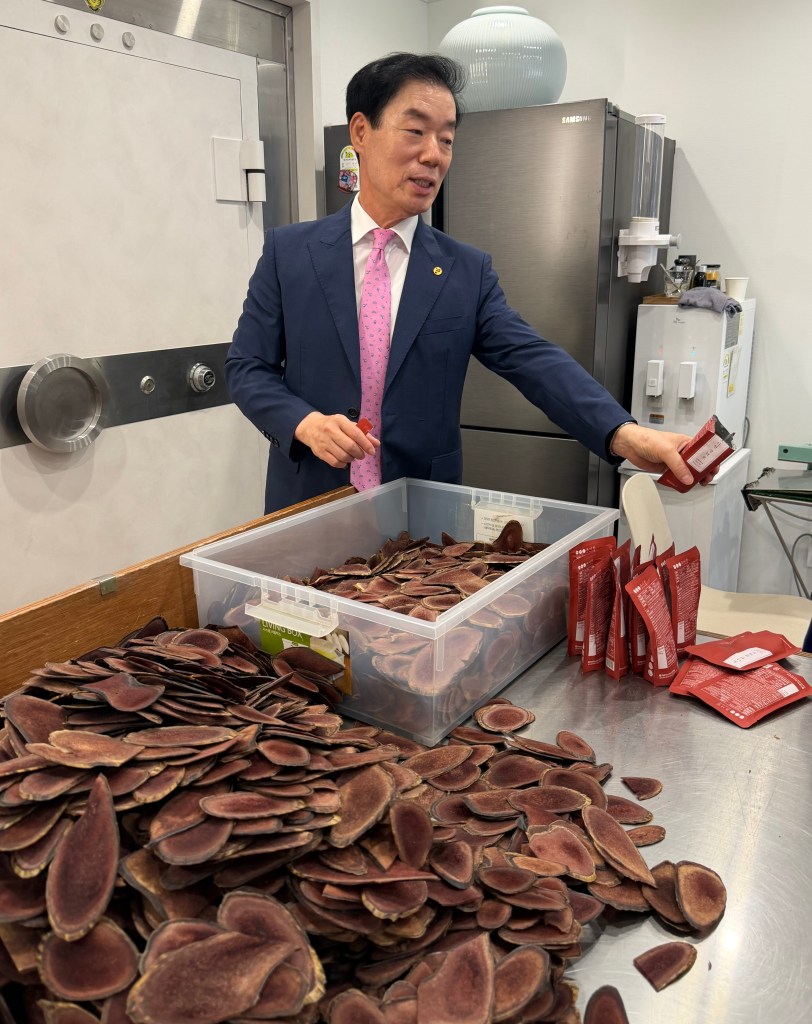
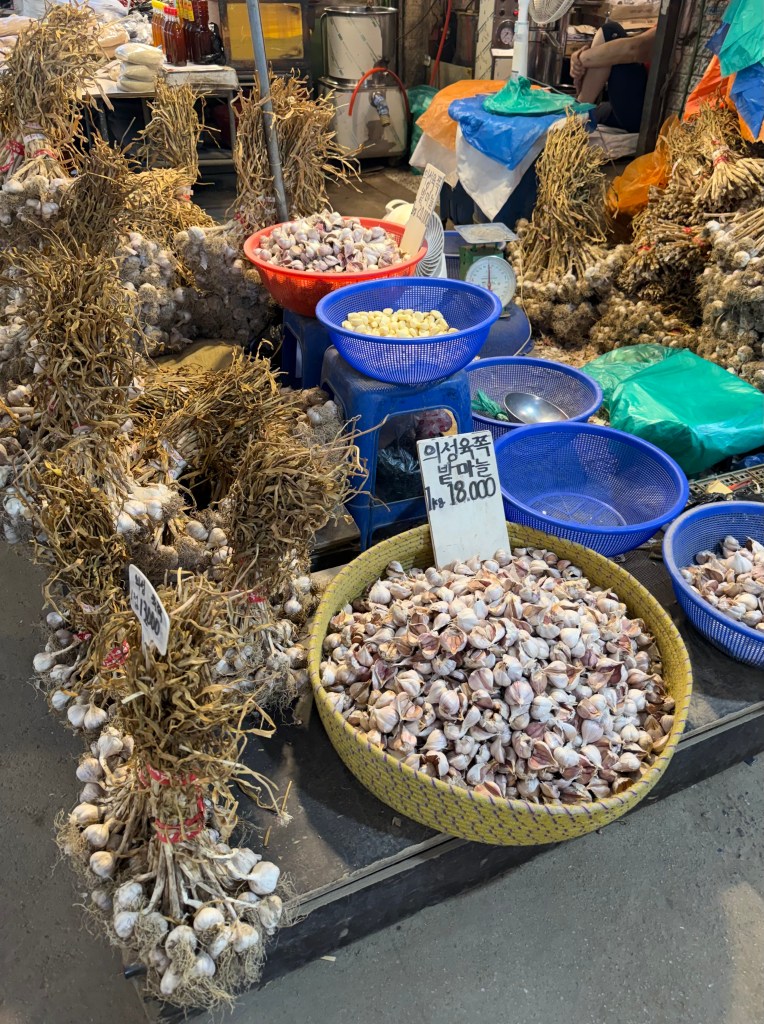
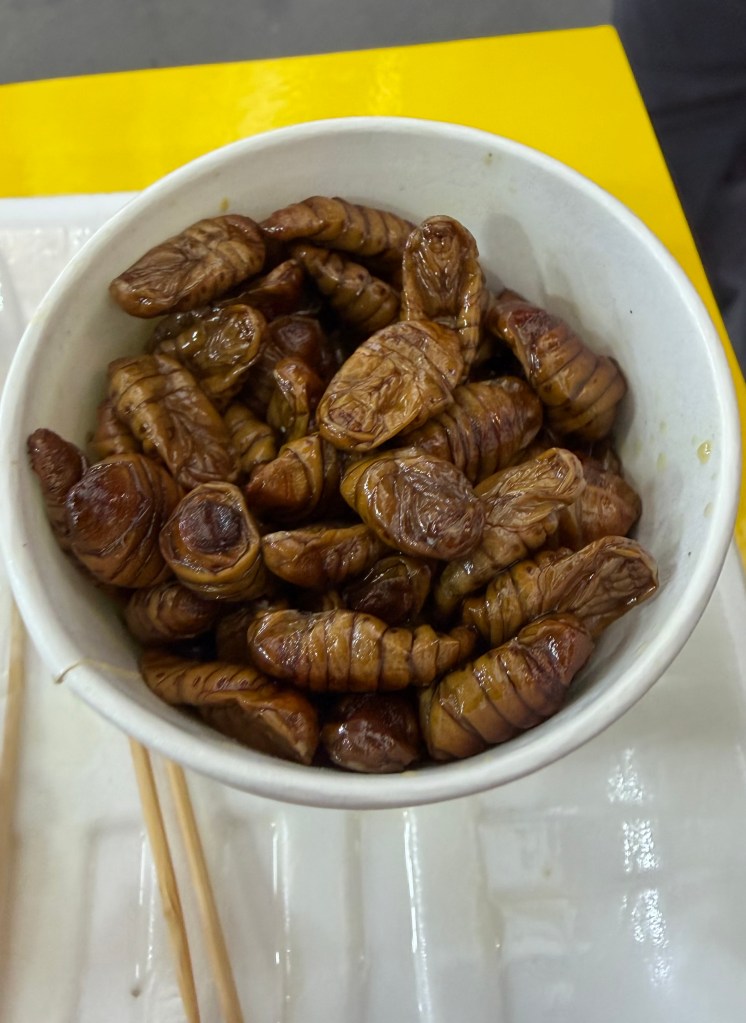
Our first meal after arrival: Pork Dumplings with kimchi, of course. A Michelin starred fast food restaurant very popular with the locals & tourists alike, & close to our perfectly located hotel.The Main Hall of the Palace of Geunjeongjeon, one of the 5 historic Sites in the compound. First established in 1395 when a unified Korea was ruled by Kings.Royal banquet hall of Geunjeongjeon Palace.Traditional Korean dress(Hanbok & Gat). Many individuals who visit the Gyeongbokgung Palace rent these outfits so that the Korean culture can be celebrated. Mostly, given the number of cell phones, I do believe the motivation was photographing or being photographed. Plus, if wearing traditional dress, entry into the museum is free.Ginseng chicken noodle soup with glutinous rice. Served with kimchi cabbage, kimchi radish & garlic with chilly paste. Very yummy, & came bubbling to the table. We were shown how to break the chicken from the bone, mix with the glutinous rice, season with salt, pepper & chili paste. Enjoy.Father of the Korean alphabet, King Sejong. Mimi reads Korean, Japanese & Chinese each with different characters. So complicated. Starbucks abundant in Seoul. Koreans drink coffee, not tea. Even have Starbucks Reserve, one of few in the world.Seoul is a city of 8.2 million with 26 million in the metropolitan area. Almost everyone in Seoul lives in a high rise. It is a very modern city, surrounded by 4 mountains & known as the “Miracle on the Han” for its stunning rebirth after near destruction in the Korean War. Couple that with a brutal Japanese invasion for over 30 years, & one realizes how far this population has come. Tech & the auto industry are big in Korea.View, from the area of Seoul Tower, of North Mountain. Interesting juxtaposition: Love locks which line row after row of fencing along the walkways. Here we have love locks representing love & harmony, & North Mountain with North Korea just on the other side.Tonight’s condiments for our Korean barbecue. Pumpkin salad, cabbage kimchi, green onion kimchi with raw egg, lettuce.Side dishes to be eaten with our barbecue, all pickled.Pork belly cooking over charcoal at our table-top stove. After the meat was cooked, it was sliced thinly. We then wrapped it tightly in a lettuce leaf with rice, added condiments, then popped into our mouths all at once; the traditional way to eat Korean barbecue. Had a sweet local fruit wine & local saki to round out the festivities.Our home hosted host, Suelki, who was kind to share the native dresses from her wedding with us. We each donned a costume for pictures. Note the matching shoes in the background. Five of us enjoyed lunch with Suelki who is an artist, has one son & a lawyer husband. Bibimbab: Rice, pickled vegetables, topped with egg. Season to taste with soy sauce, chilly paste, kimchi. Suelki had prepared all of the ingredients, we just needed to assemble. She makes this traditional dish for her family several times a week. Herbal market. At one time, ailments were treated primarily using herbs. Seoul still is home to a large herbal market.Antler horns, imported from Russia & New Zealand, used to make a vitality drink which we tasted. Have to keep an open mind & just experience.Want garlic from the produce market, it’s plentiful along with numerous fruits & vegetables from the countryside.Silkworm, another delicacy we tasted. Full of protein & probably healthier than eating a bowl of popcorn.
Today is Wednesday, March 25, & we are now back in Kolkata where we have some time to regroup before very long flights home. I will arrive at O’Hare on Thursday at 6 pm after flying from Kolkata to Mumbai to London to O’Hare. I refuse to calculate the travel time, but instead will use the serenity I have learned from the Bhutanese to make it all agreeable. The trip has been amazing even with its challenges. But most importantly, much was learned primarily in Bhutan. In Bhutan, happiness is not a fleeting concept but is woven into the fabric of their everyday life. It is a joy to behold, & a lesson for each of us. Live life to its fullest joyfully everyday, because time is so fleeting.
Now for some last pictures.
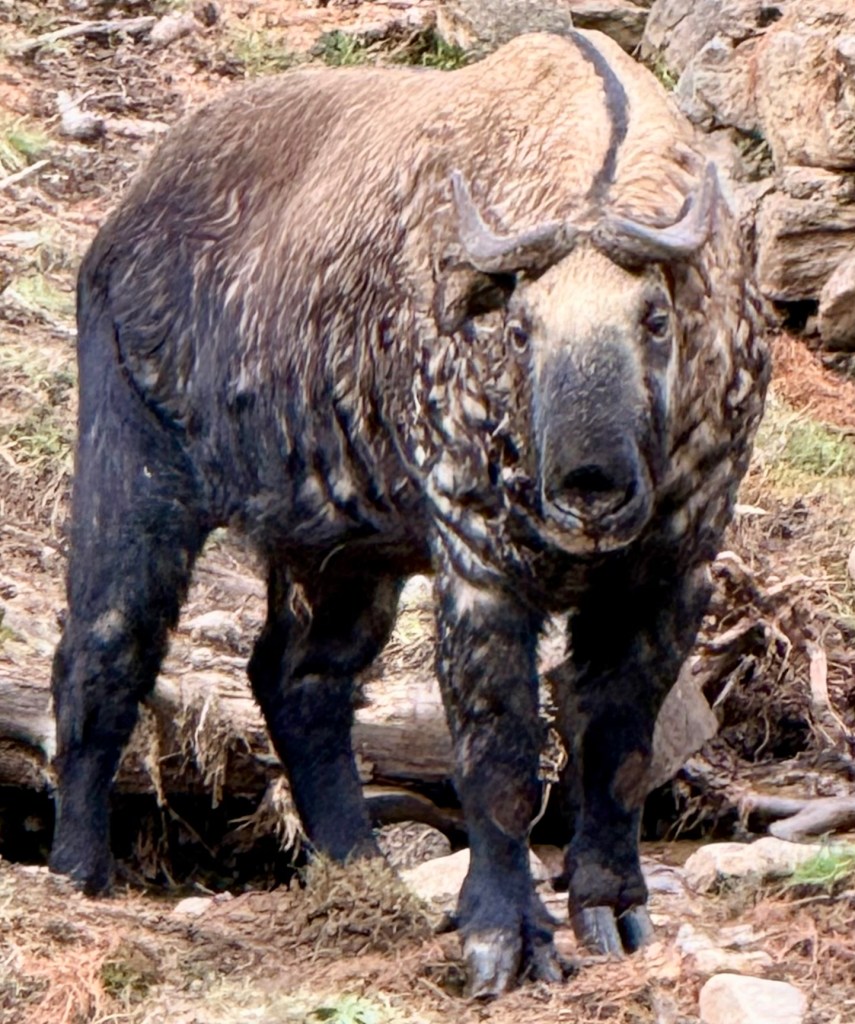
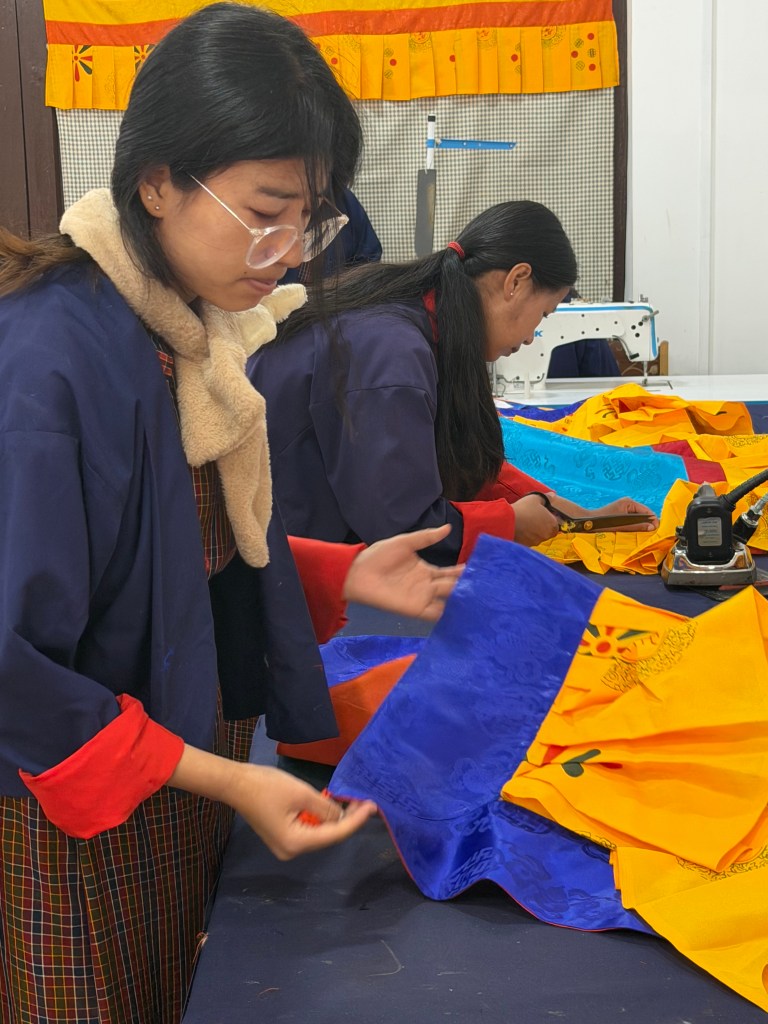
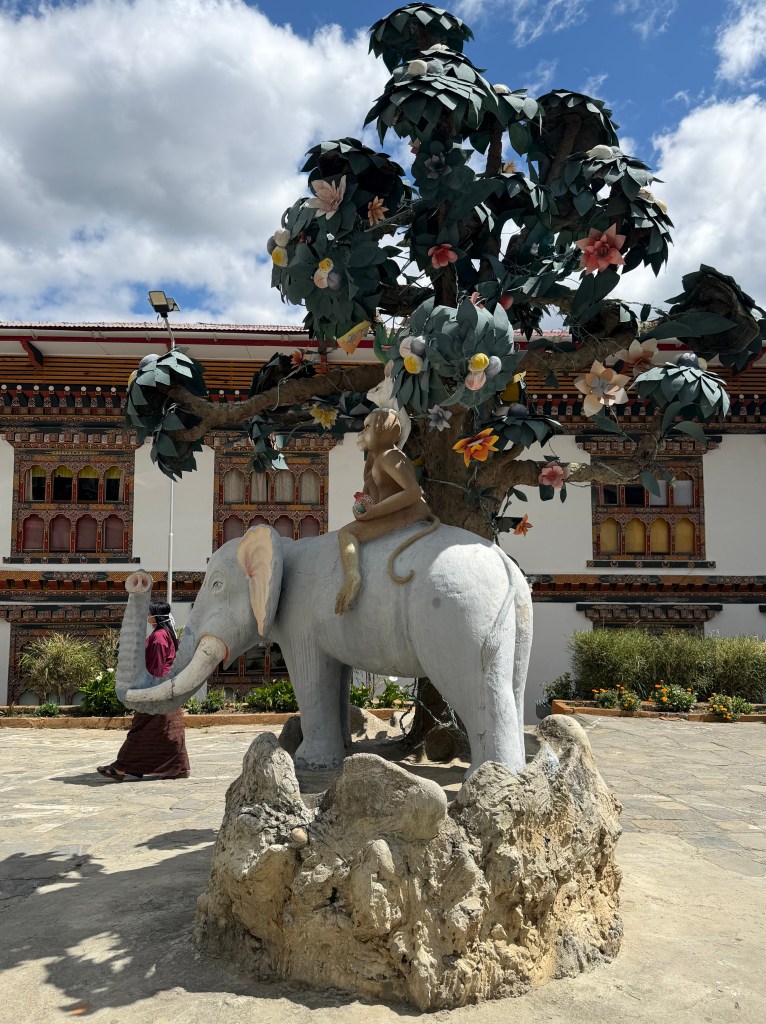
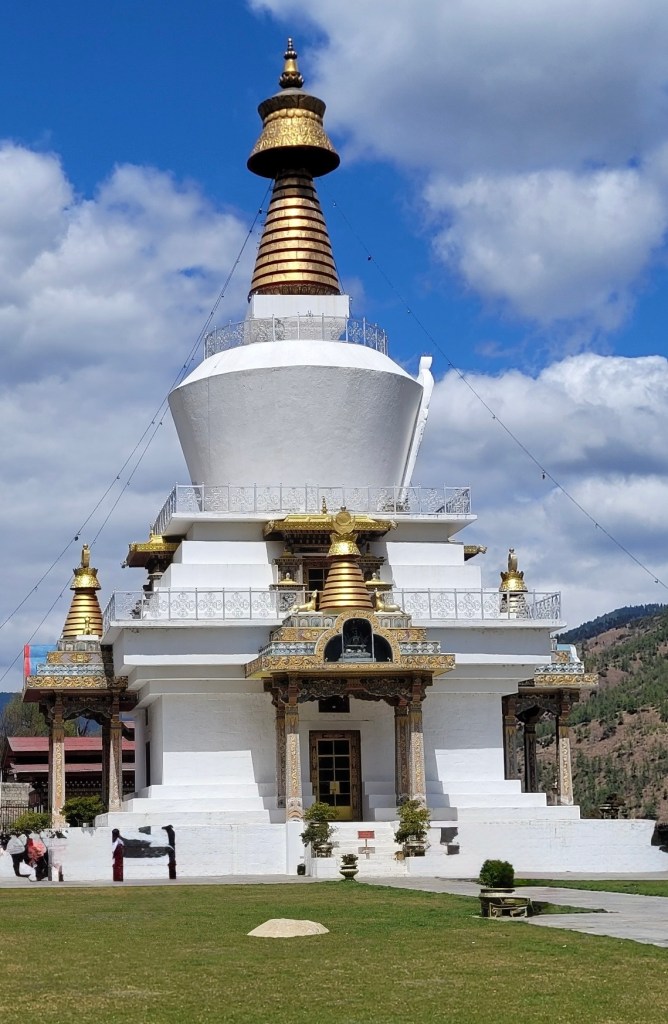
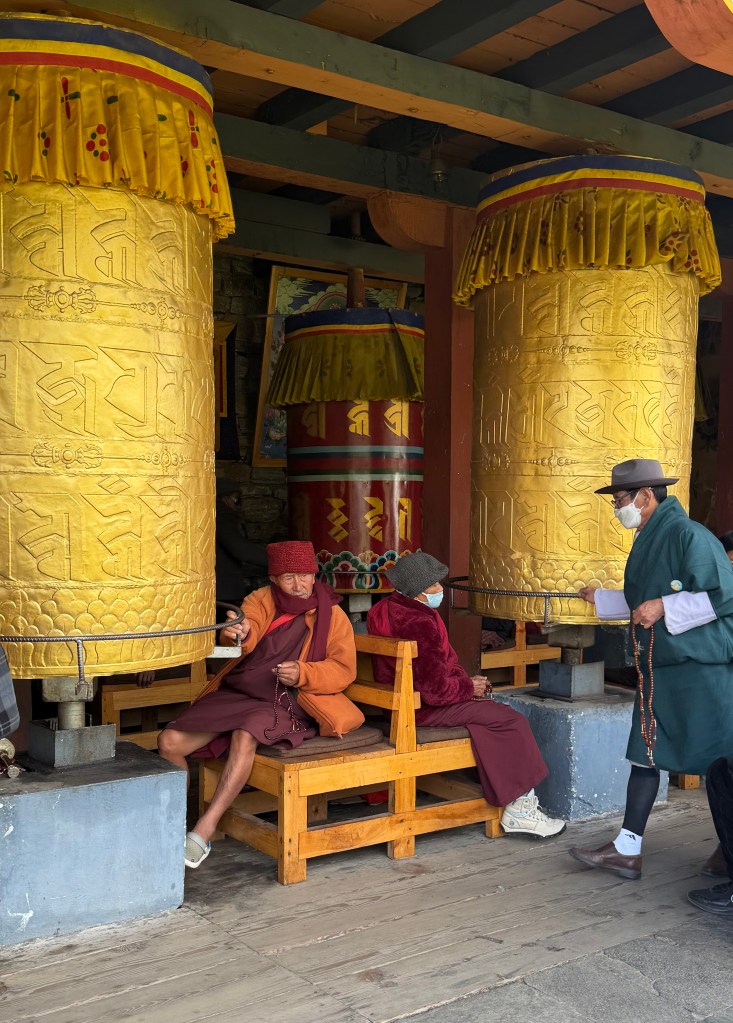
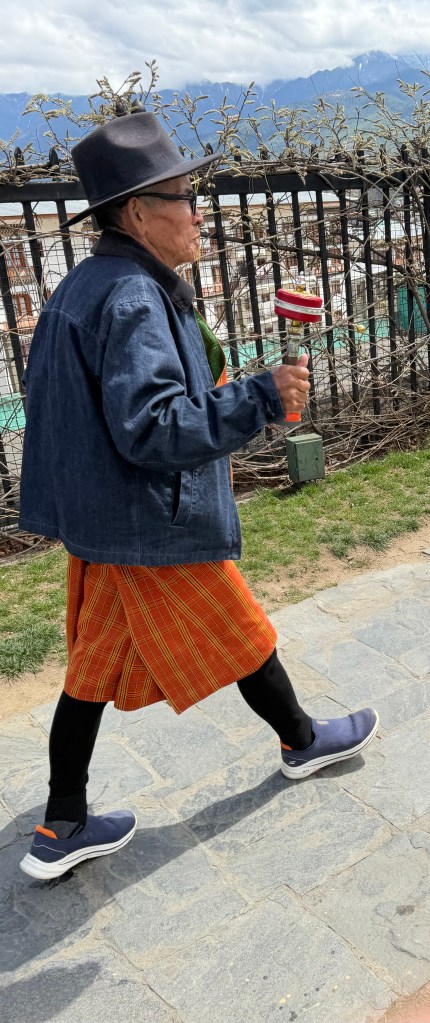
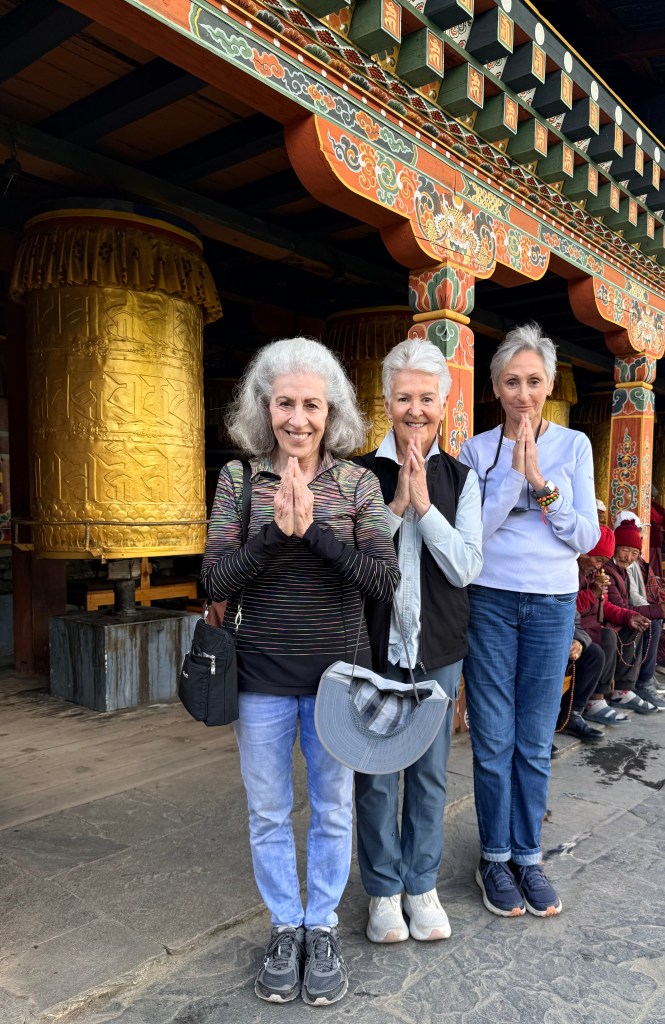
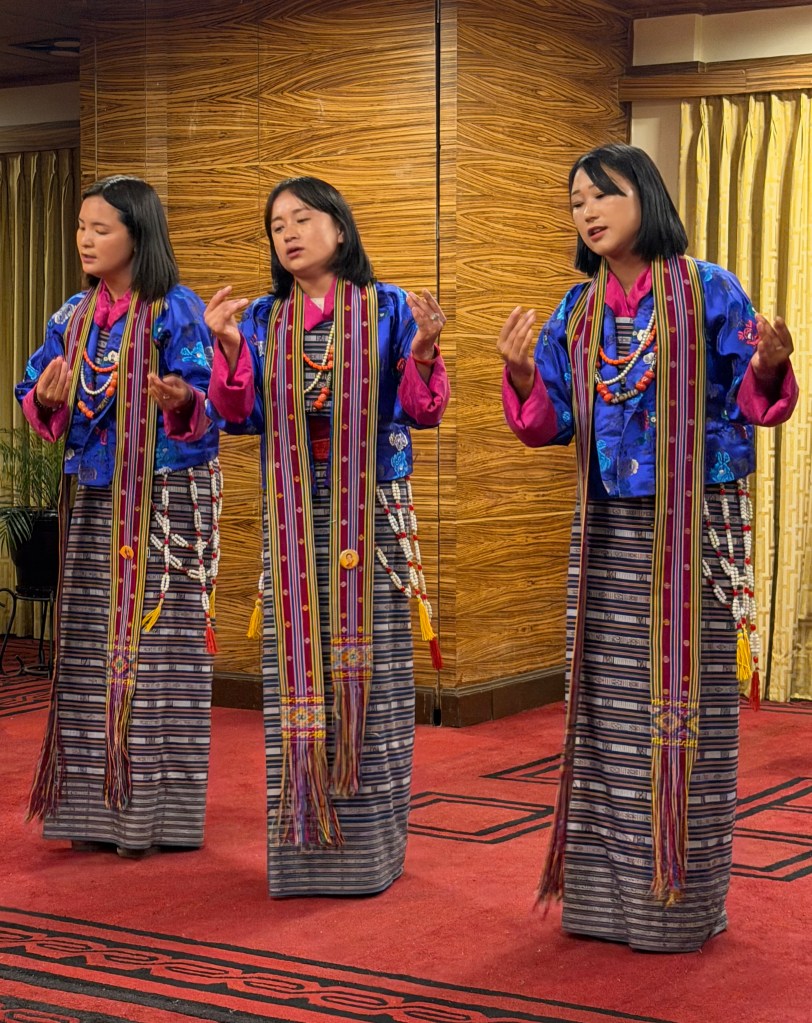
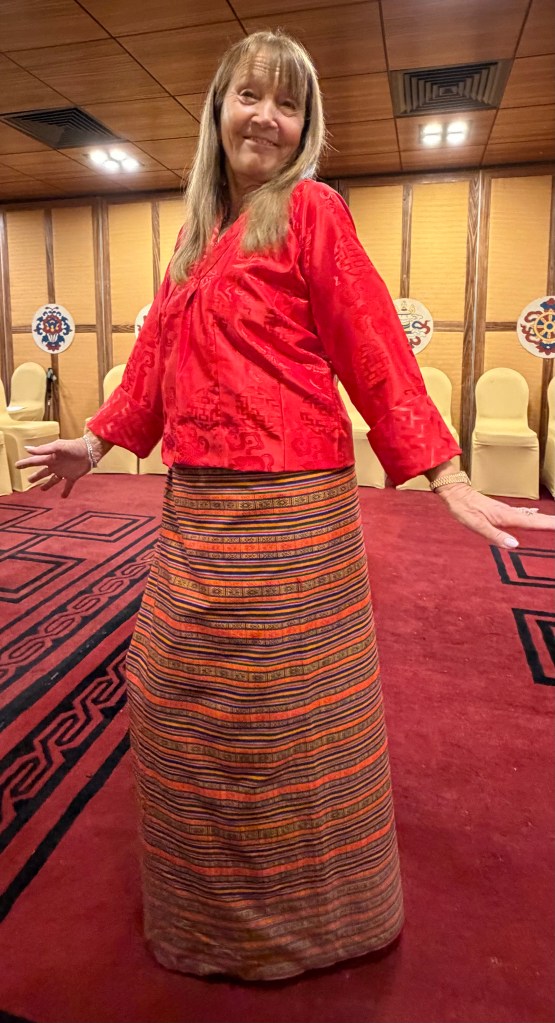
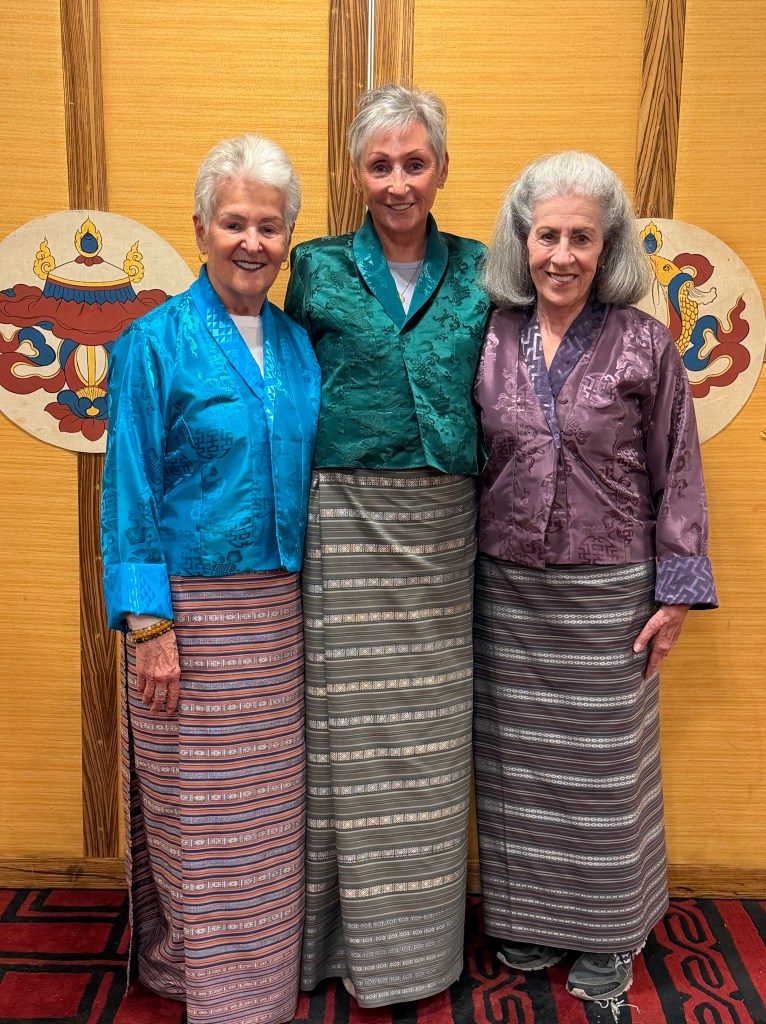
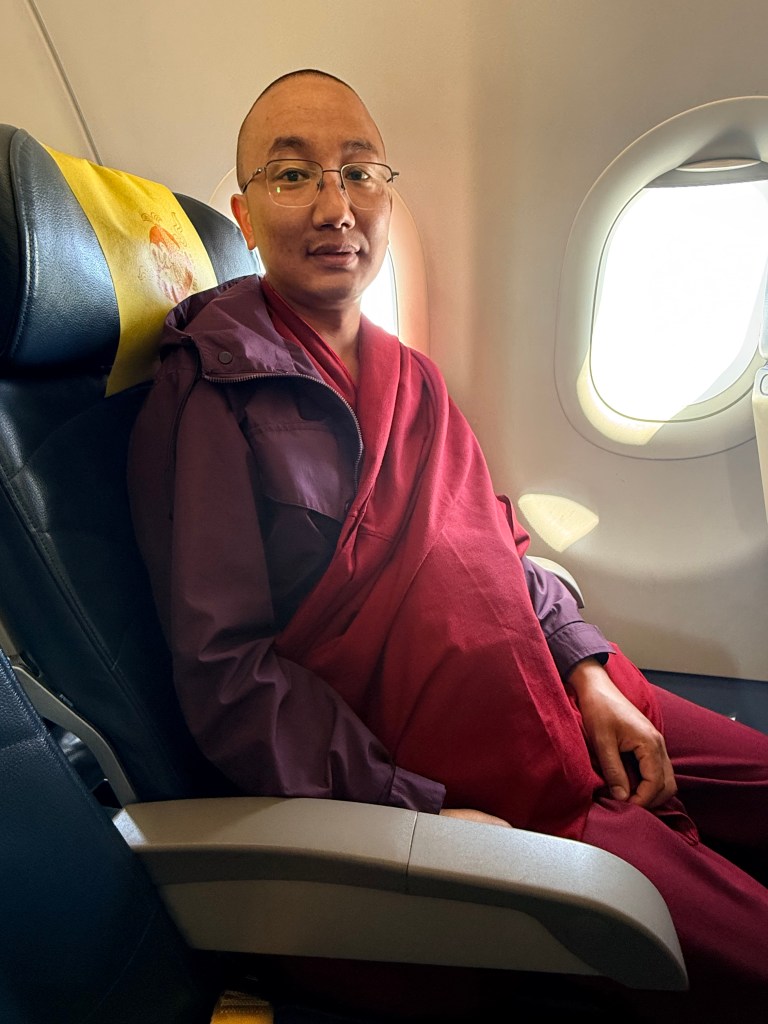
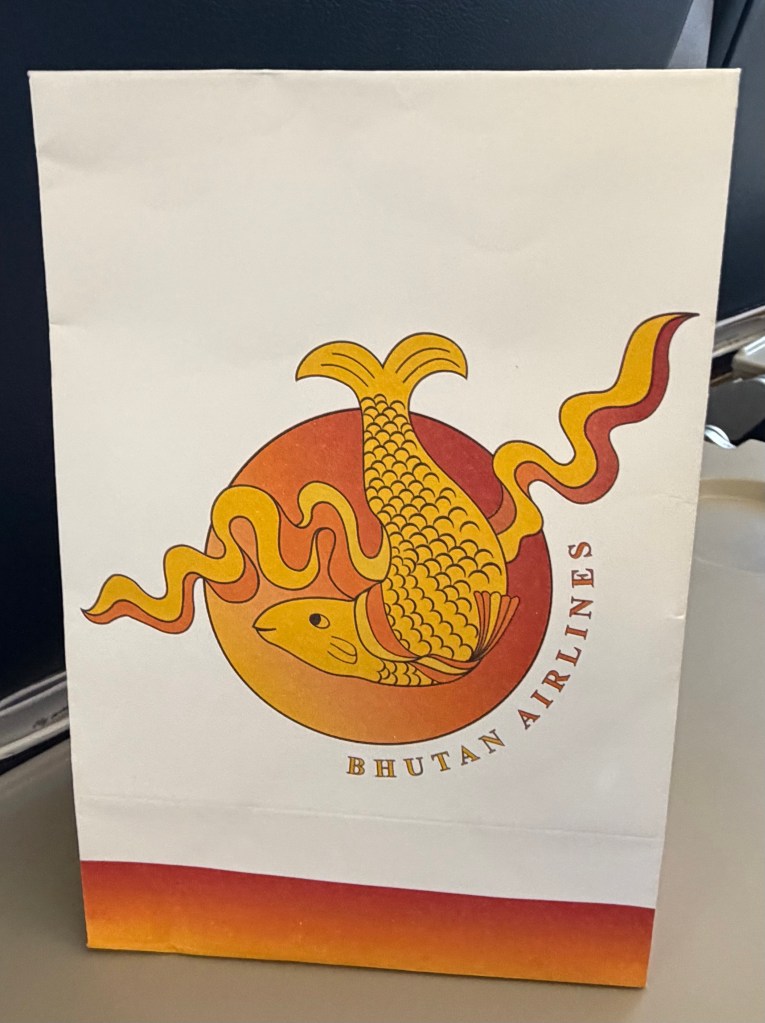
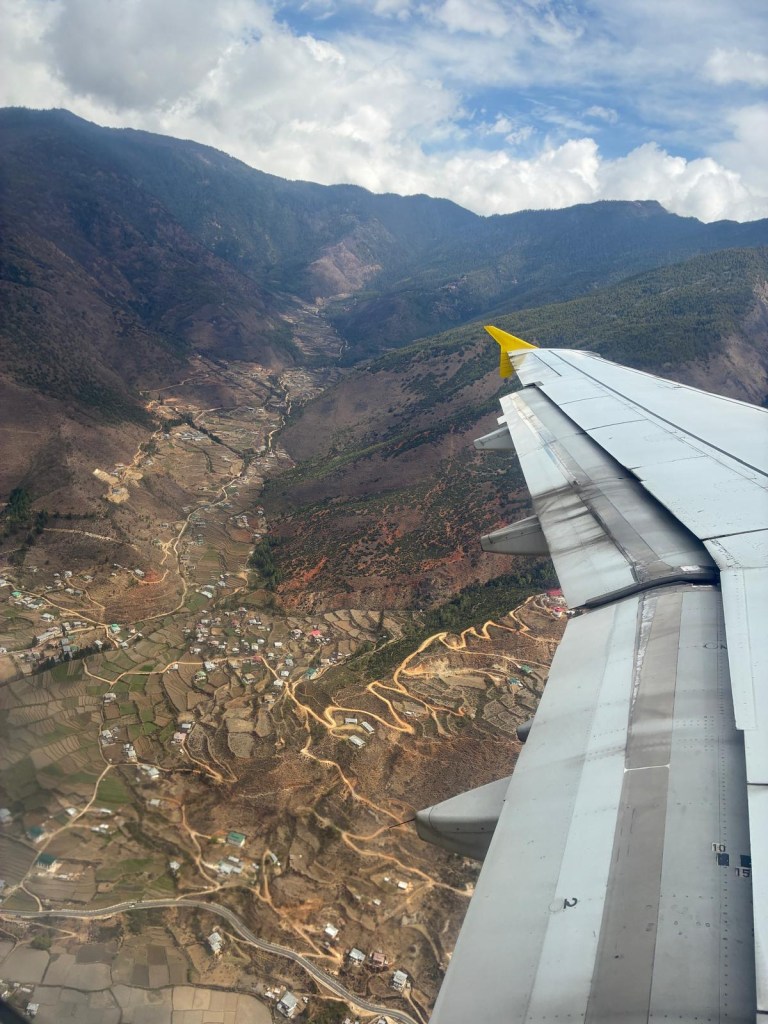
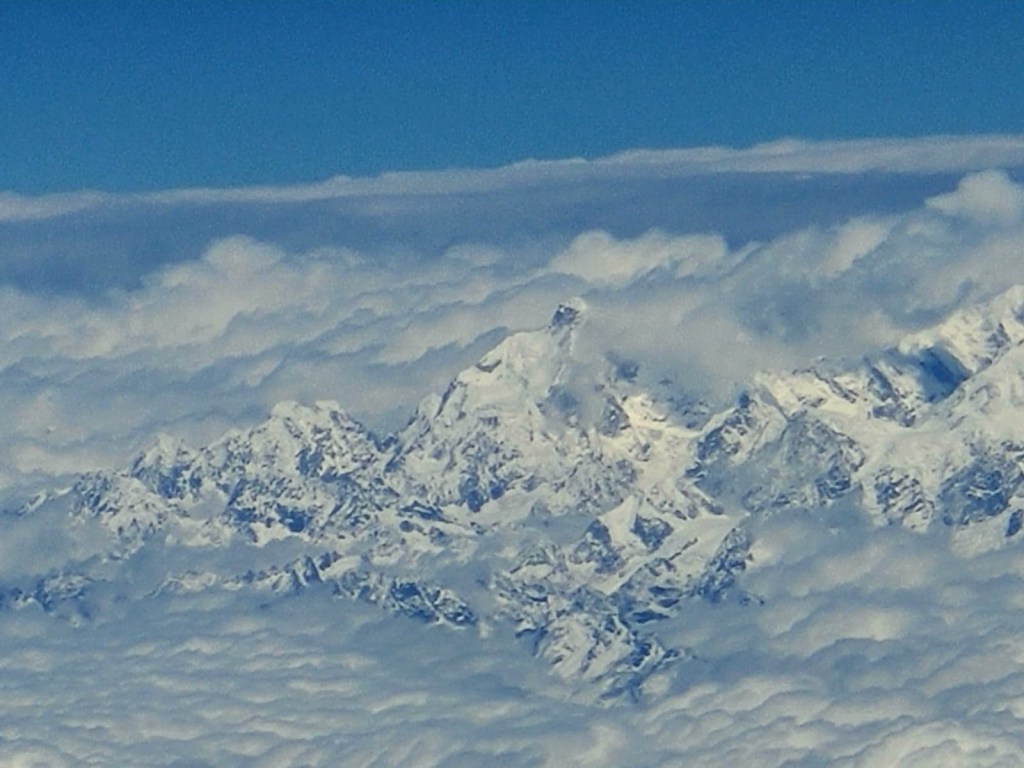
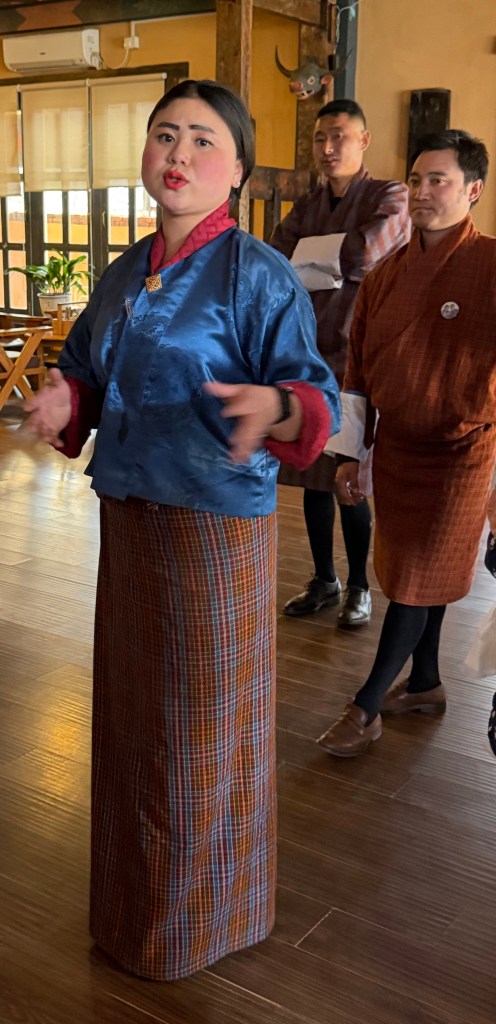
Visited the Takin Preserve where we saw a variety of animals from Bhutan. This one is the national animal of Bhutan, the Takin. Not a very attractive animal, & is often called a cross between a gnu & a goat.Visited what we would call a trade school where young people who are not university material learn a trade in order to carry on the culture of Bhutan. The school provides education in textiles, carving, painting, sculpture, gold smithing, calligraphy, etc.The Four Harmonies: Elephant, Monkey, Rabbit, Bird. They each have to live together peacefully in order to enjoy the fruits of the tree. Represents cooperation, peacefulness & respect of elders. Which would one think to be the eldest of these 4 animals?The Memorial Chorten built in 1974 in memory of Bhutan’s 3rd King, the founder of modern Bhutan. This stupa is unlike other stupas as it does not contain human remains.This is taken on the grounds of the Memorial Chorten. Elderly folks from the mountain regions have moved into Thimphu to live with their children. They are dropped off here when their children go to work, spend the day praying, visiting & eating their boxed lunches. At the end of the day, their children pick them up; an adult daycare. Here two women are sitting turning the prayer wheel while the gentleman is circumnavigating the grounds praying his rosary.This gentleman is carrying his mini prayer wheel as he walks the grounds of the memorial. The goal is to walk around the Memorial 108 times. He was “moving”, so I am sure he attained that goal. The number 108 is a sacred number in Buddhism because it represents the 108 imperfections that must be overcome to realize enlightenment.Using the prayer wheel provides good karma. Not sure standing in front of them does the trick, but hopefully, with our exposure to all of these rituals we, too, will realize enlightenment.Entertained before dinner with 9 different dances telling us the stories of local life & lore.Our illustrious tour leader, Anne, from Scotland.Last night in Thimpu, we donned the native costume called the Kira. Lots of fabric wrapped around to make a shirt & tied with an attached belt. Beautiful matching jackets. Wore these for the evening of entertainment & dinner.Kuenga Rinchen: Chose to become a monk at the age of 8 under his own volition. He is now 32, & on his way back to Vietnam after visiting his family in Bhutan. He has been studying in Vietnam, & returning for additional schooling. After leaving Vietnam, he will return to Bhutan to do his three years of mediation before becoming a full fledged monk. Often times families send their sons to become monks because they are incorrigible. The same can happen with the girls. In Bhutan there are 12,000 monks & 4,000 female nuns (monks). The female monks must shave their heads, so sometimes it is difficult to distinguish between monks & nuns.Snack bag on Bhutan Airlines featuring the National Flag of Bhutan.Saying goodbye to Bhutan, & our last look at the valley of Paro.Joan took this from her window seat as we were flying from Paro to Kolkata. We think it’s Mt Everest. Certainly is beautiful.
Another adventure coming to a close. The world is a beautiful place, just need to enjoy it. Back to Asia in September when it is on to South Korea & Japan. Have to do these difficult long haul trips while I can.
It’s been quite some time since you have heard from me, but we are most busy travelers. It’s up early for a full day of adventure with some hours of bus time. By the time we get to our hotel to settle in, it’s time for a 7:30 dinner. Crawling into bed at 10 or 10:30 affords little time or ambition to think about a blog.
I am having a most fascination adventure to this beautiful small country with beautiful people. It is becoming more modern as time goes on, but the Bhutanese are trying hard to retain their culture. We see it in dress, cuisine, architecture, & their strong religious beliefs. We have seen our share of monasteries, monks, idols & deities; sometimes hard to grasp the mythology. Probably no different from Greek or Roman mythology or the statues of Catholicism. Actually, when one stops to think about it, religion is universal worldwide with the same aims of unity, love, peace & tradition.
Now on to some pictures to tell the story of what I have been seeing.
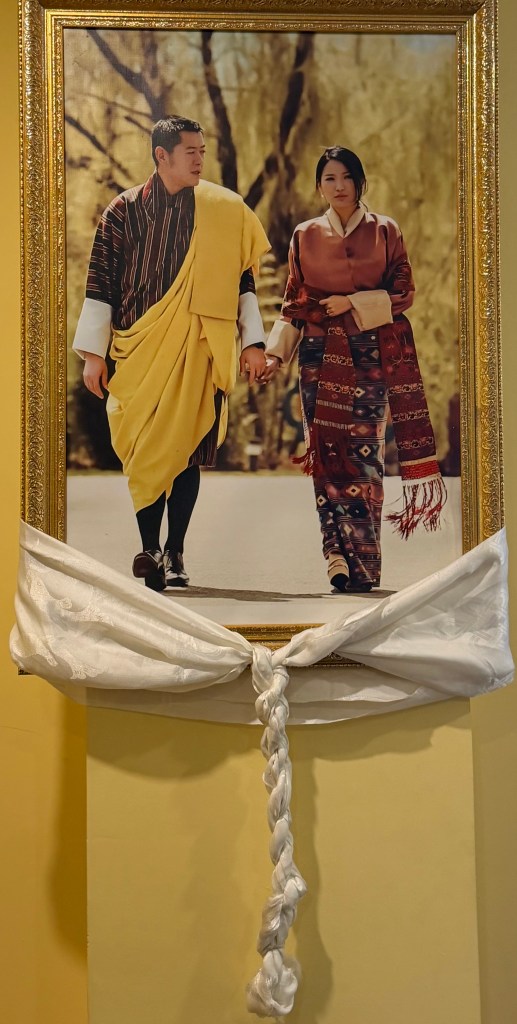
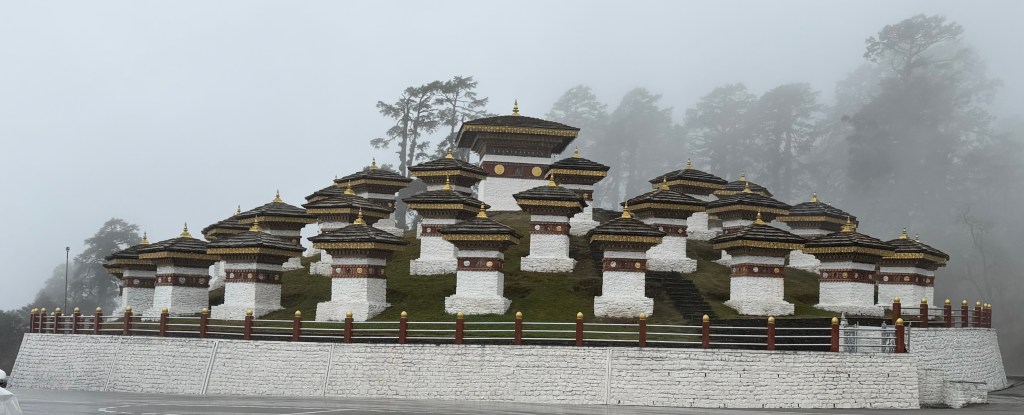
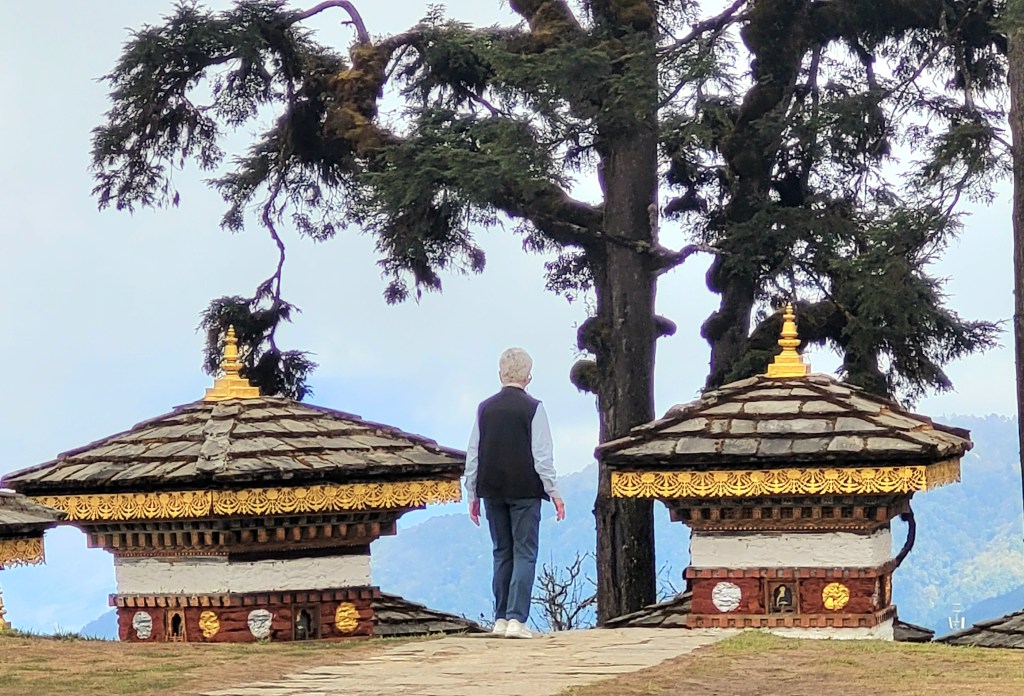
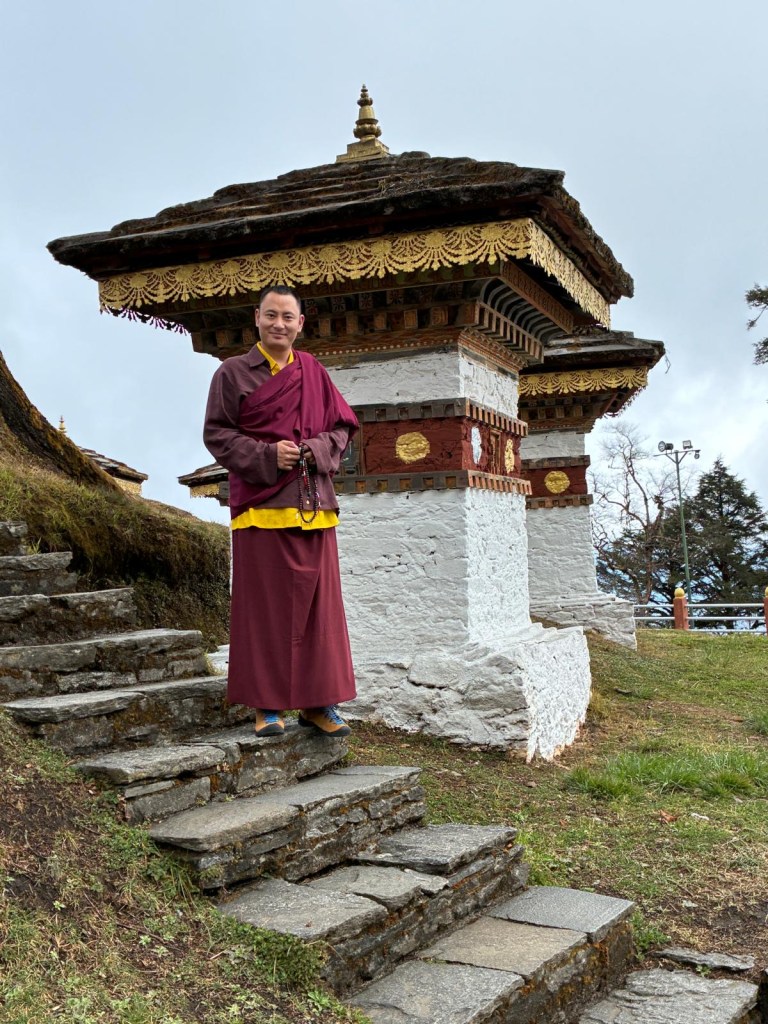
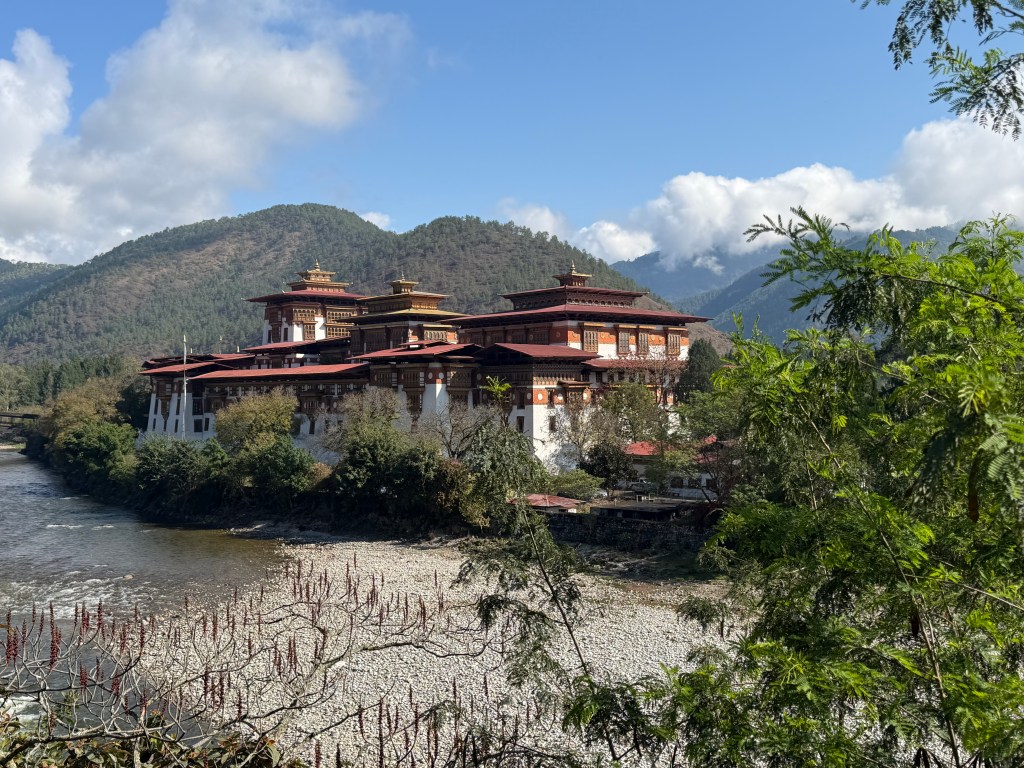
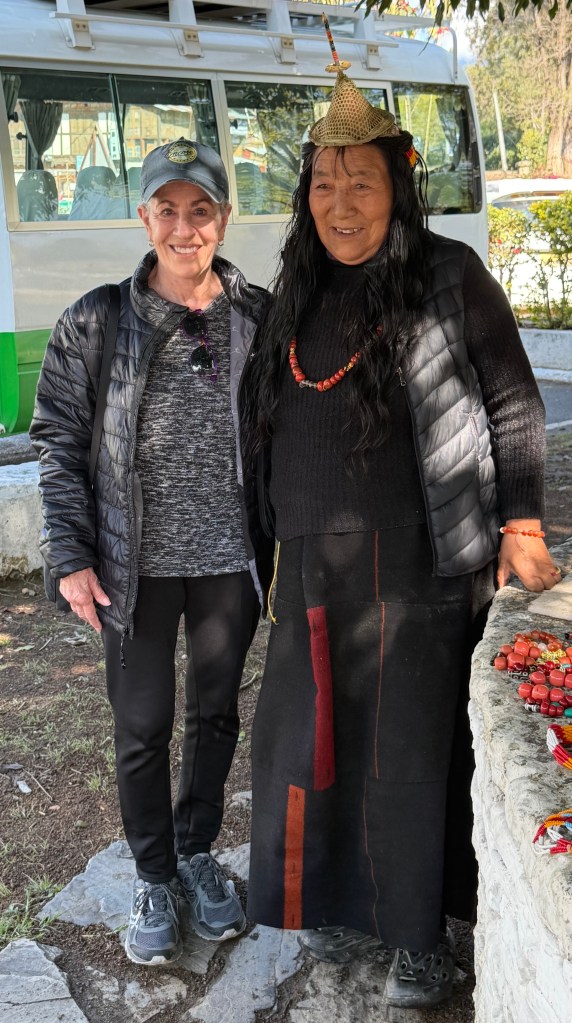
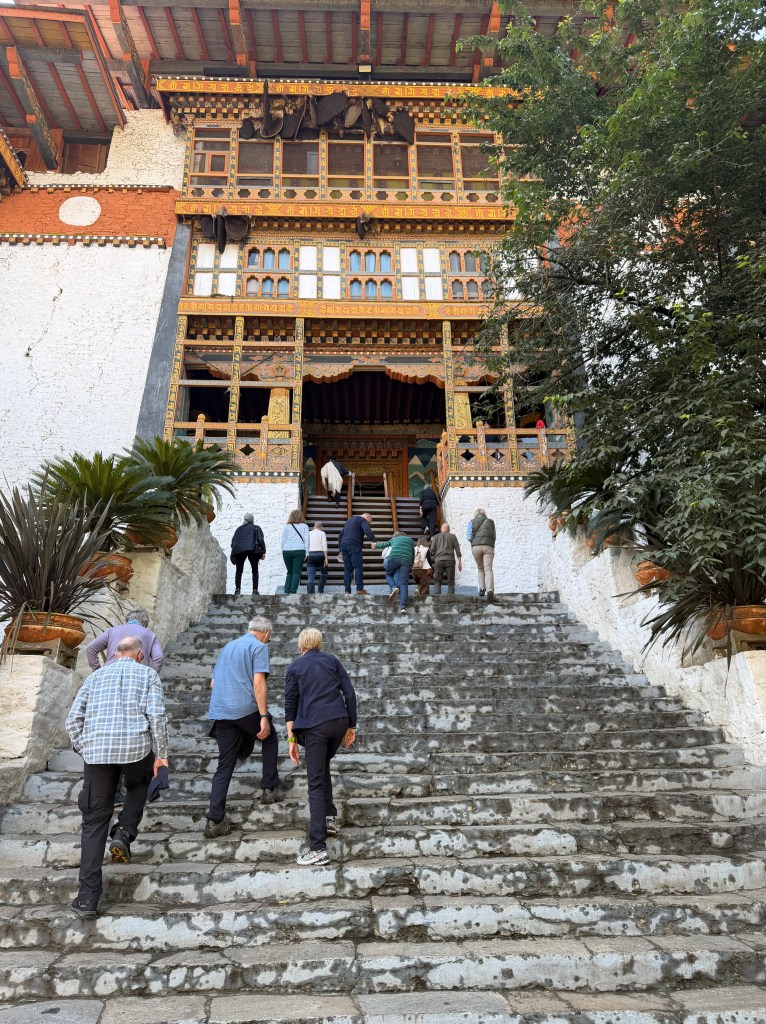
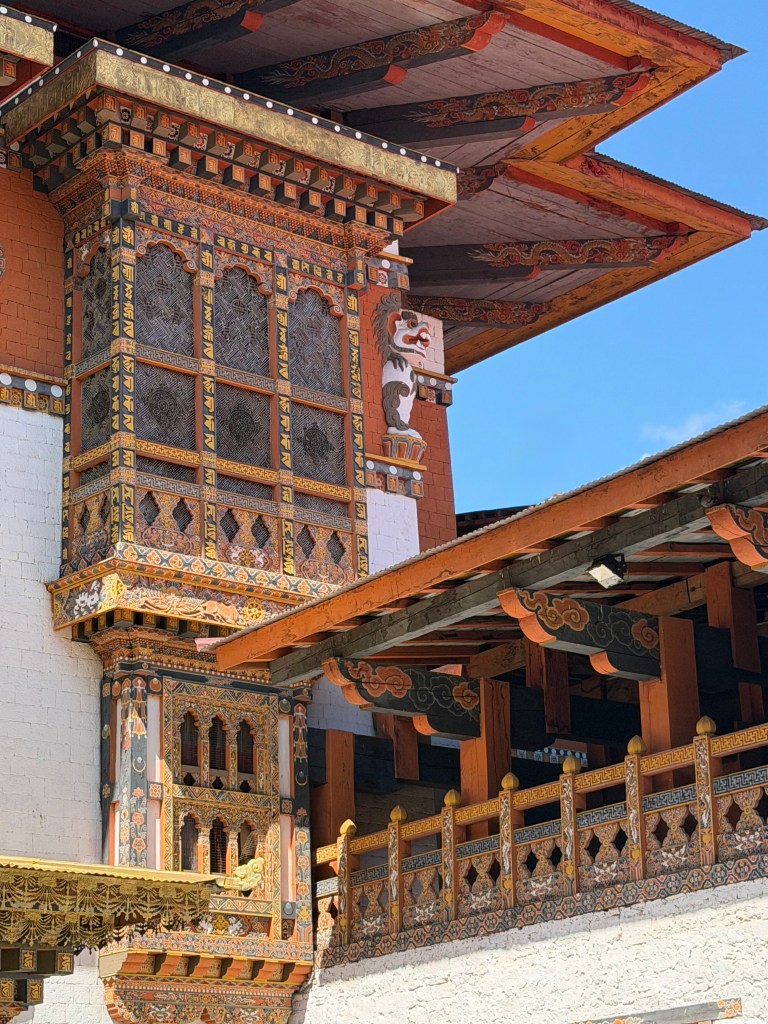
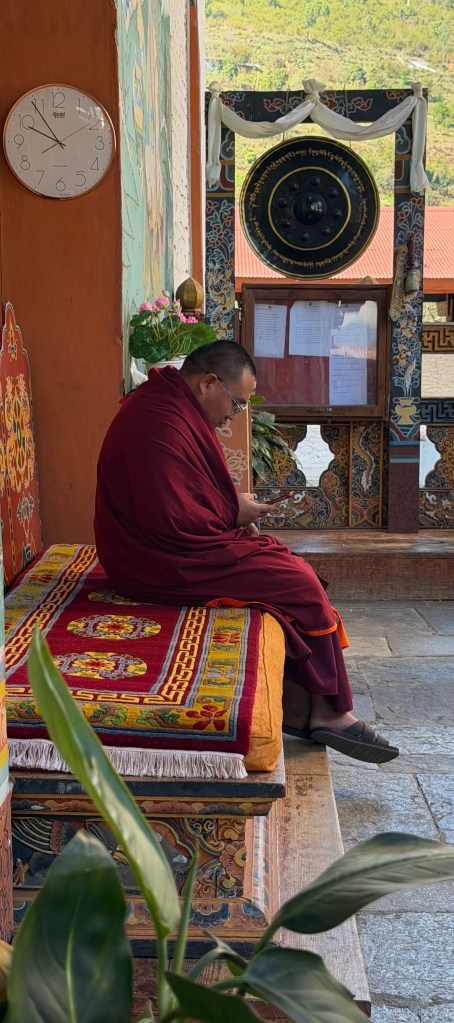
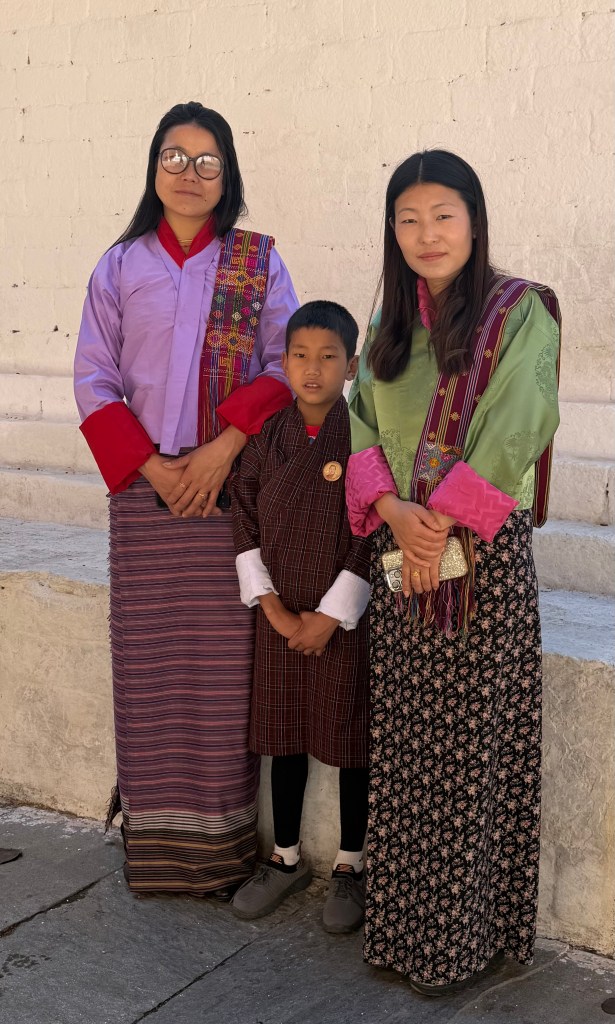
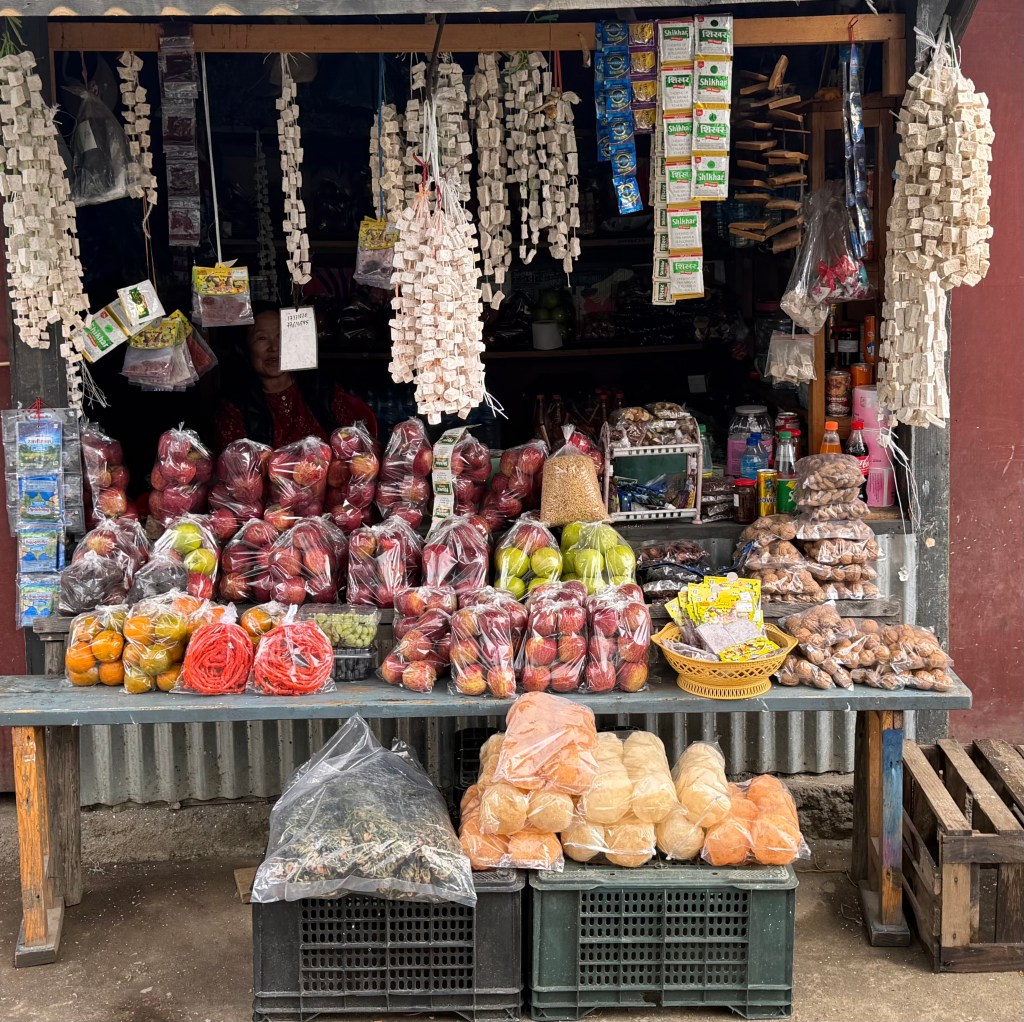
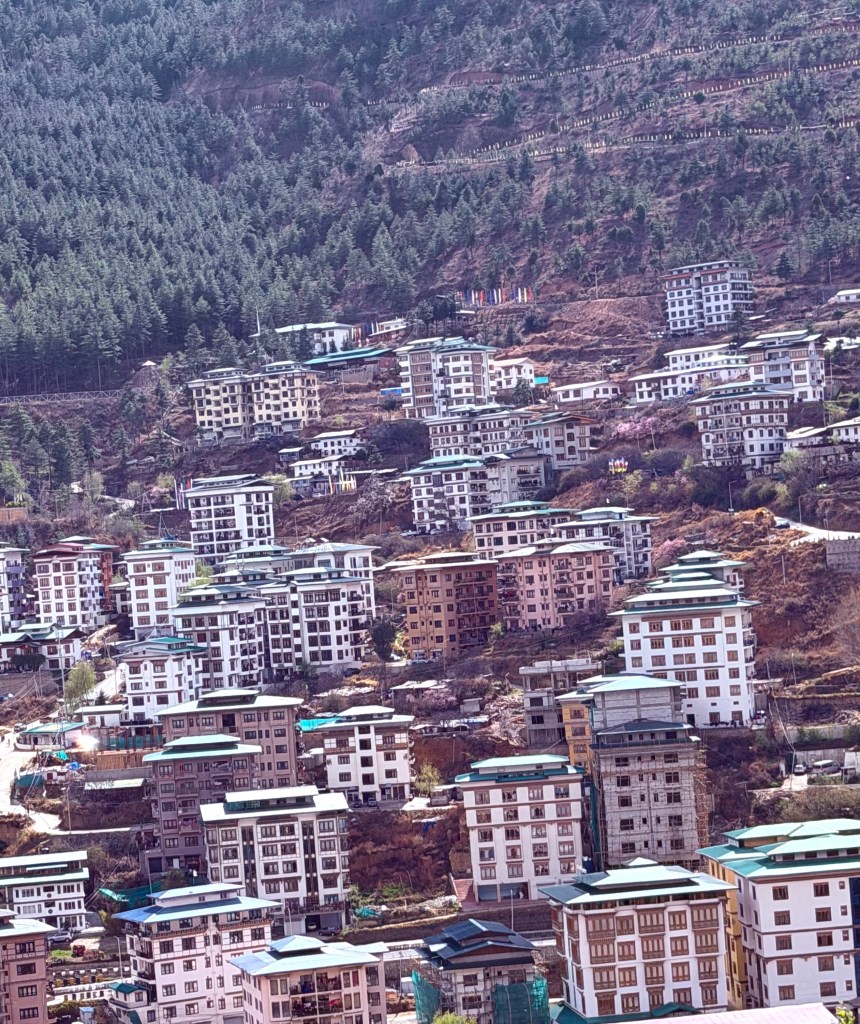
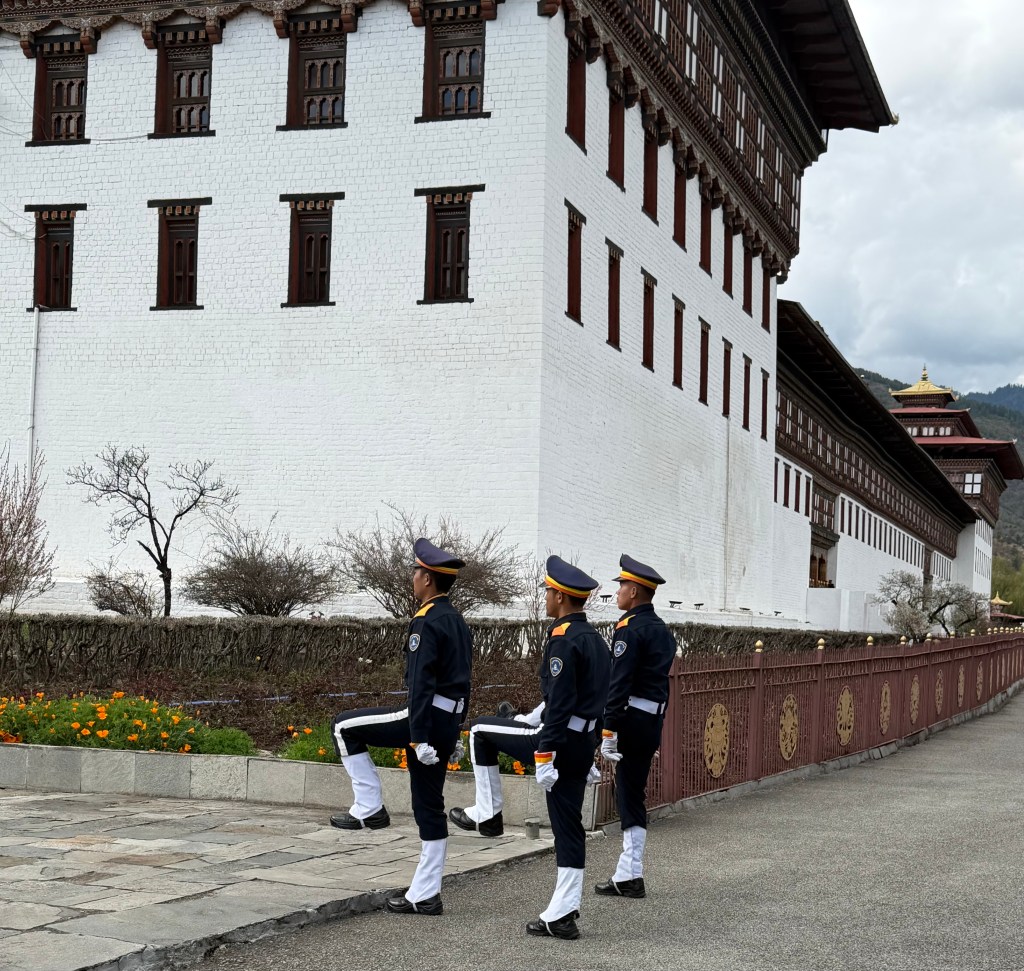
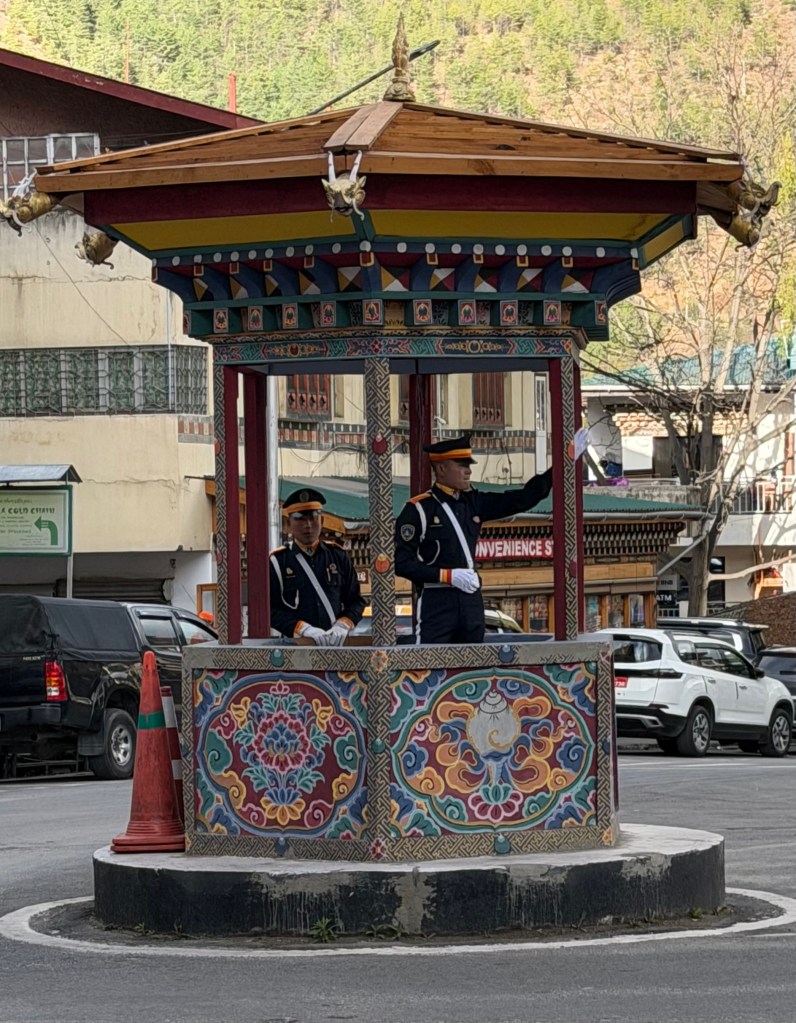
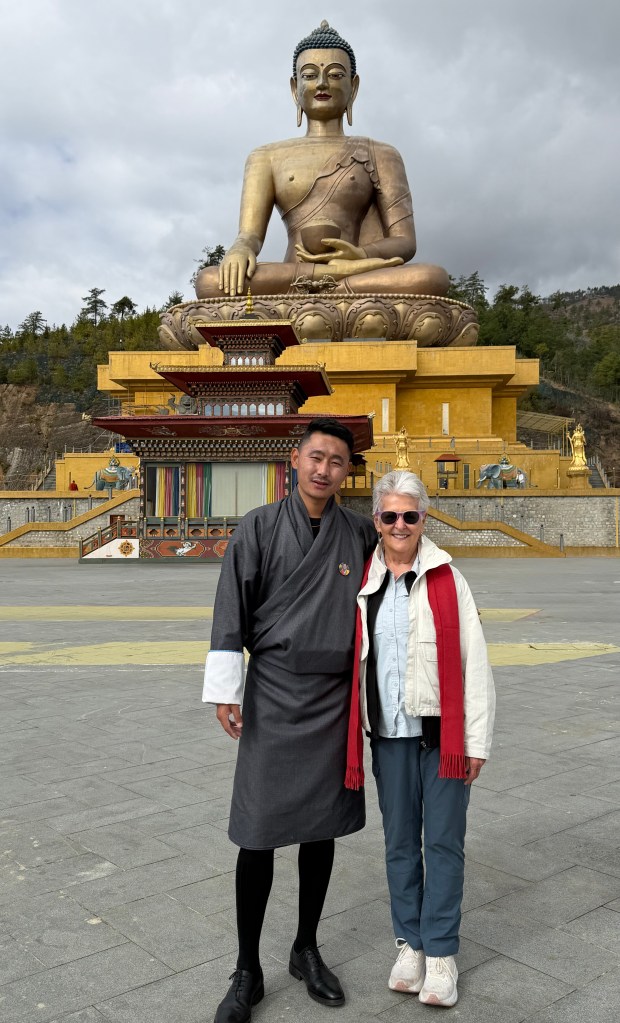
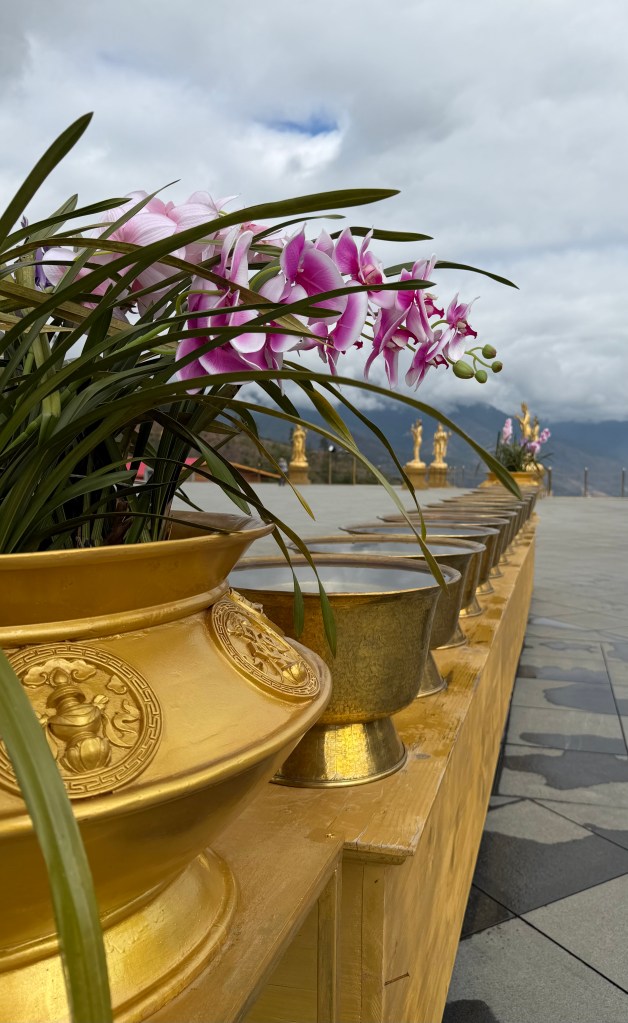
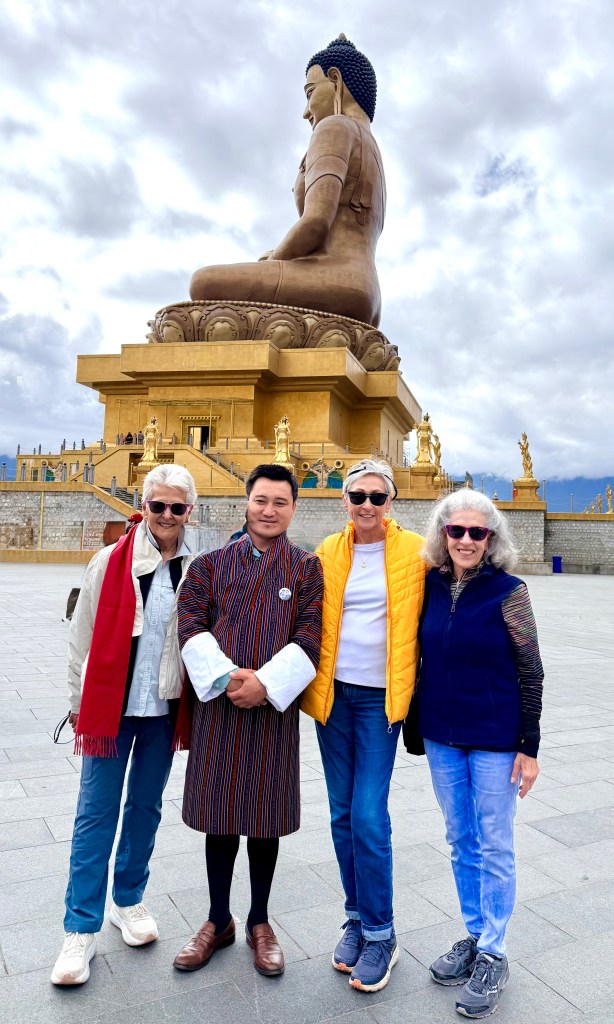
5th King of Bhutan with his wife who was a commoner, now a Royal. The previous King had 4 wives, all sisters, but this king has chosen wisely. Actually, only the Bhutanese in the hill country still practice polygamy & polyandry (multiple husbands). The Monarchy came about in 1908. The people of Bhutan honor their royals by wearing picture pins of them on their native attire.The 4th Queen Mother had these 108 Stupas built to honor the soldiers who died in the 2003 two-day war to clear militants from the area. These Stupas are located at the Dochula Pass which is at 10,100 feet. Misty day, so lucky to get this picture.Joan took this picture of me among the stupas appreciating the serenity of this place.Posing monk in front of the Bhutanese stupa. The stupas are holy places for the Buddhists.Punakha Dzong, one of the oldest temples in Bhutan, & called the Palace of Happiness. Built in 1637 at the junction of the Phochu & Mochu Rivers. When we enter these temples, we walk clockwise to view the stunning artwork & the various Buddhas. No photos allowed, & no shoes.Joan & a mountain woman, always dressed in black, selling her wares outside a temple. She could have been featured in the movie A Yak in the Classroom. After seeing that movie, Bhutan was on my bucket list.Palace of Happiness, & more stairs to climb. Shoes must come off to visit any monastery, & no pictures. We have been fortunate to witness & hear monks chanting, & in one instance eating with their hands during a break.Palace of Happiness. This beautiful architecture is found all over Bhutan on government buildings, offices, hotels, homes. It’s characterized by ornate wooden windows, sloping roofs & symbolic paintings. Technology is still a way of life even in the monastery. Maybe he should put it aside given he is in the Palace of Happiness.Family in traditional dress visiting the Palace of Happiness. They each prostrated themselves 3 times as they entered, & then walked clockwise inside to worship the hundreds of colorful deities & Buddhas.Roadside Market selling dried cheese, apples, grapes, fiddle head ferns & other assorted items from the garden. That which looks like bunched garlic gloves is actually dried cheese.Coming into the bustling city of Thimphu, the capital city of Bhutan. Population of around 100,000 & is the administrative center of Bhutan. Royal family resides here as well.Changing of the guard outside the administrative offices of Bhutan in Thimphu. The King rules from here as well, hence the guards. On the other side of the government headquarters, which we could not enter, is the Tashichhoed Dzong, a fortress on the banks of the Wangchhu River.Human traffic light. Thimpu is the only capital in the world with no traffic light. One was installed a few years back, but the locals complained enough that it was removed. They want to preserve their culture & only let so much modernization creep in.Chenchi, one of our guides, & me in front of the Golden Buddha. He is responsible for the research for a book about female shamans: Devine Messenger: Female Shamans of Bhutan. It was written by 2 females, one from the US & one from Paris. The Paris woman went to Bhutan in 1978 & is now a citizen. The Golden Buddha was erected in 2007 to commemorate 100 years of monarchy in Bhutan. It is made of bronze & gilded in gold. It was built to encourage happiness, prosperity & peace all over the world.Water bowls at the top of the Golden Buddha. Steps took us to the top where we had a beautiful view of the valley.Jigme, one of our 2 guides, agreeing to be photographed with the Golden Buddha in the background.
Let’s call it a night. More fun pictures with stories to come tomorrow.
Left Darjeeling on a warm day for our 5 hour bus ride to Bhutan. More winding roads, some washed out because of the storm from several days ago, which made for rather treacherous driving. Fortunately, we have really good drivers.
Said farewell to Santos at the border of India & Bhutan. Needed to pass through India immigration & again through Bhutan immigration. Stayed a night at the first city in Bhutan which certainly was not representative of what we came to see.
Anyway, a few facts about Bhutan: Population of about 700,000, primarily Buddhists. Ruled by a democratic monarchy who the people respect & revere. Bhutan became open to tourism in 1974; however, the first road was not built until 1961, so travel would have been slow & arduous when tourists first visited. Internet was introduced in 1999, television in 2003 and mobile in 2009. Bhutan is surrounded by the Himalayan Mountains, a lot of the time not visible because of fog & mist. The Bhutanese strive to be the happiest people in the world & believe strongly in their deities. There main economy is rice production & some farming. All in all, a most beautiful culture.
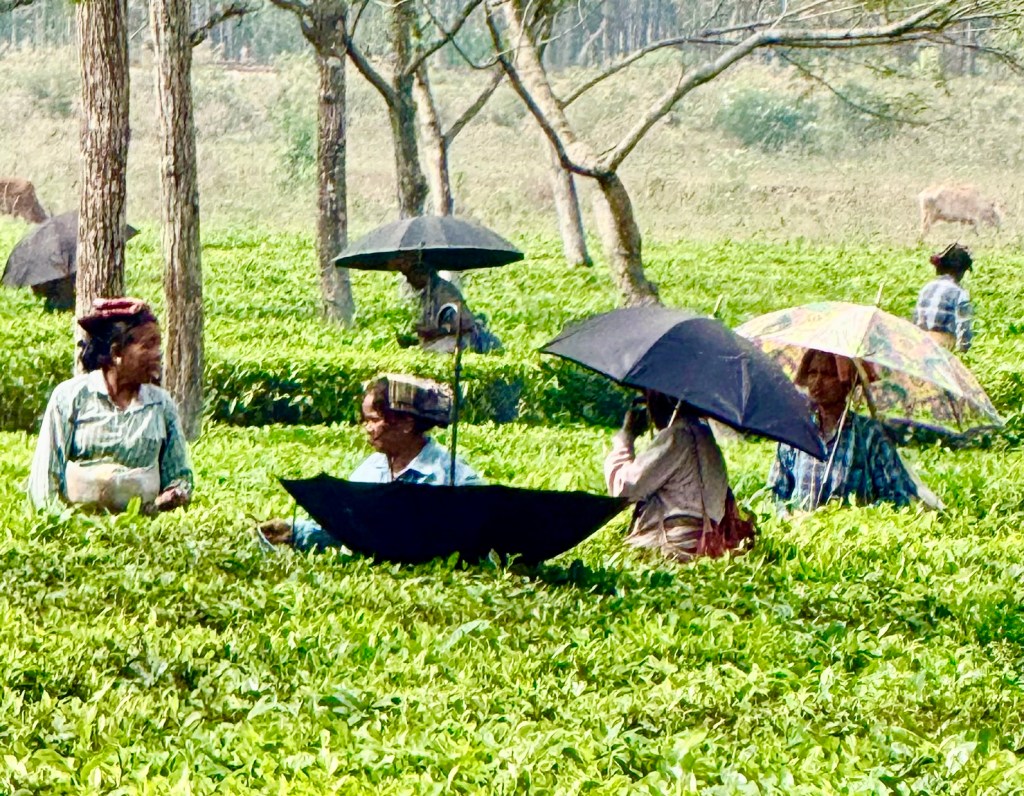
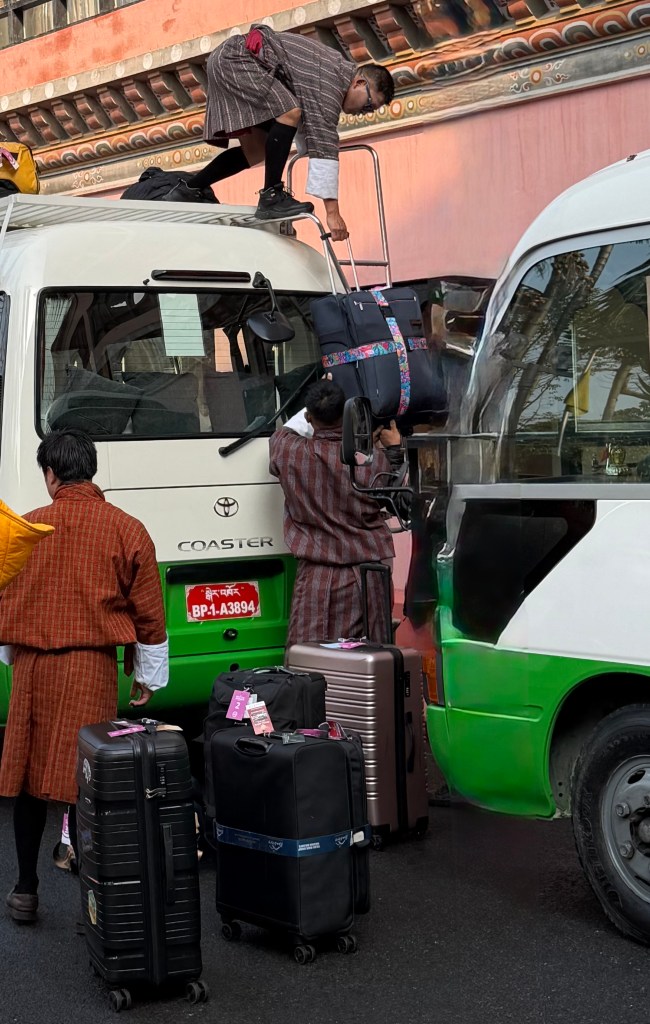
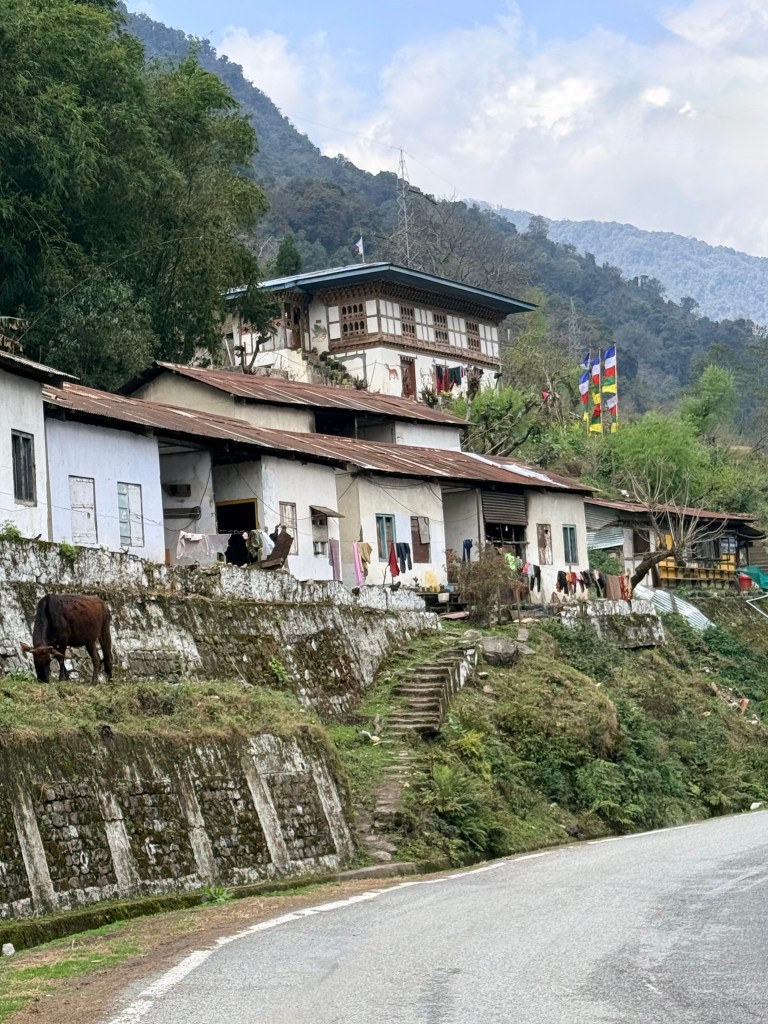
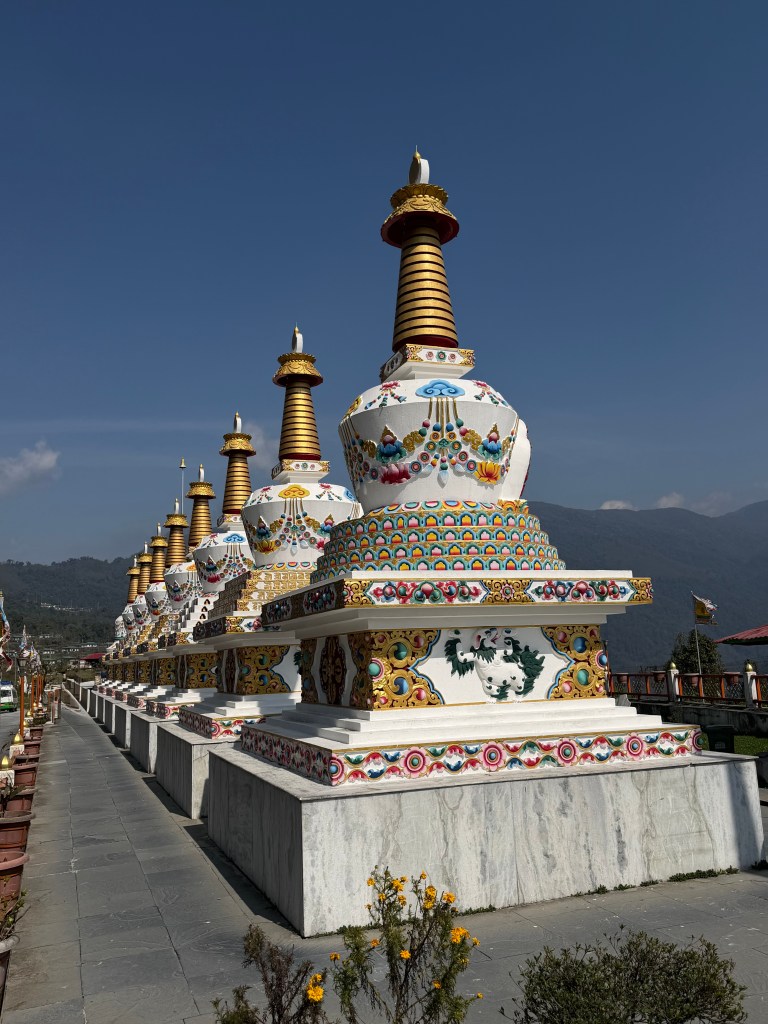
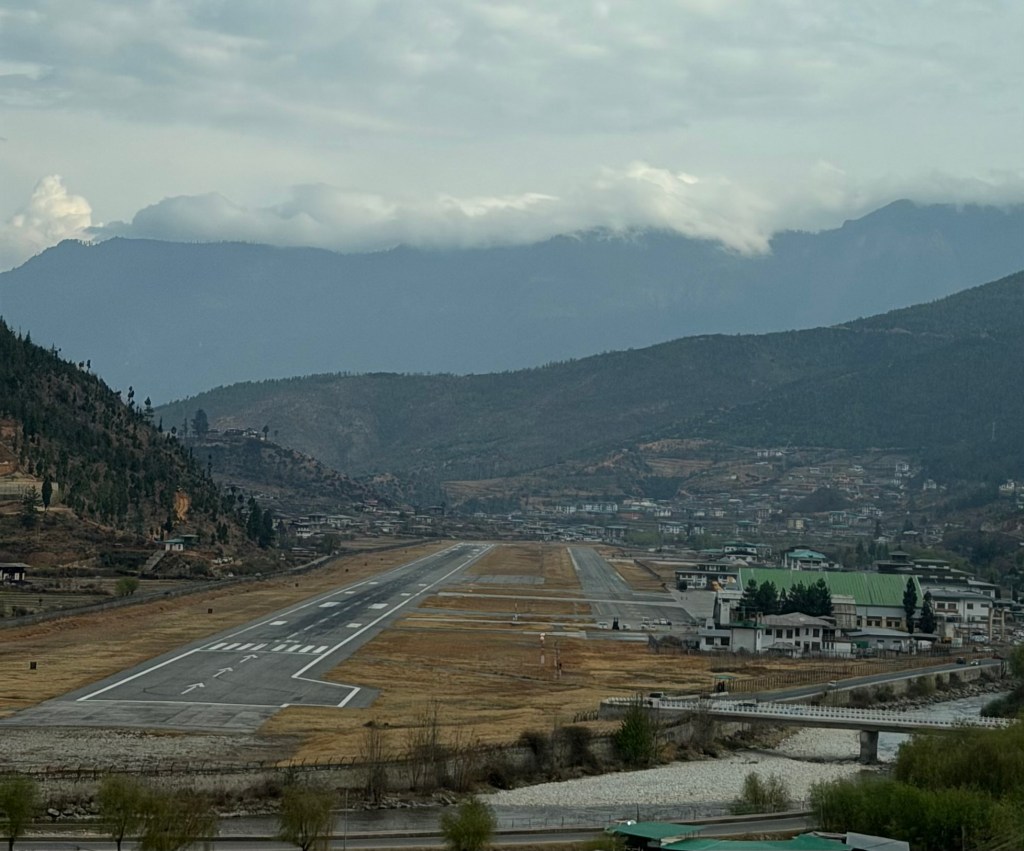
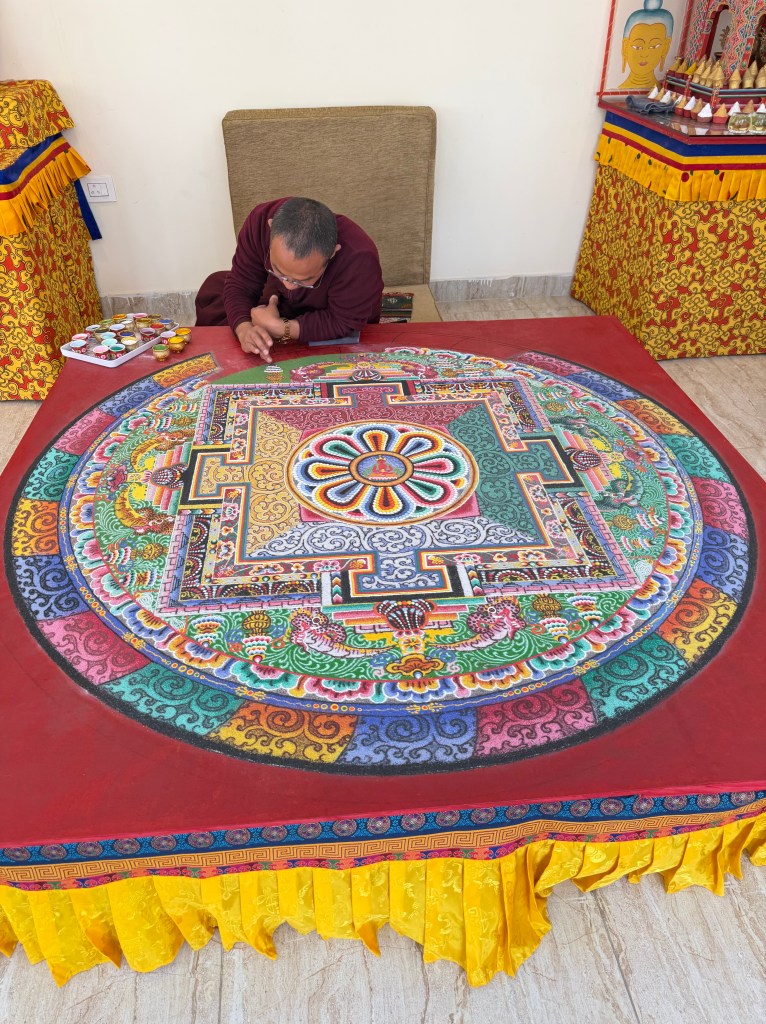
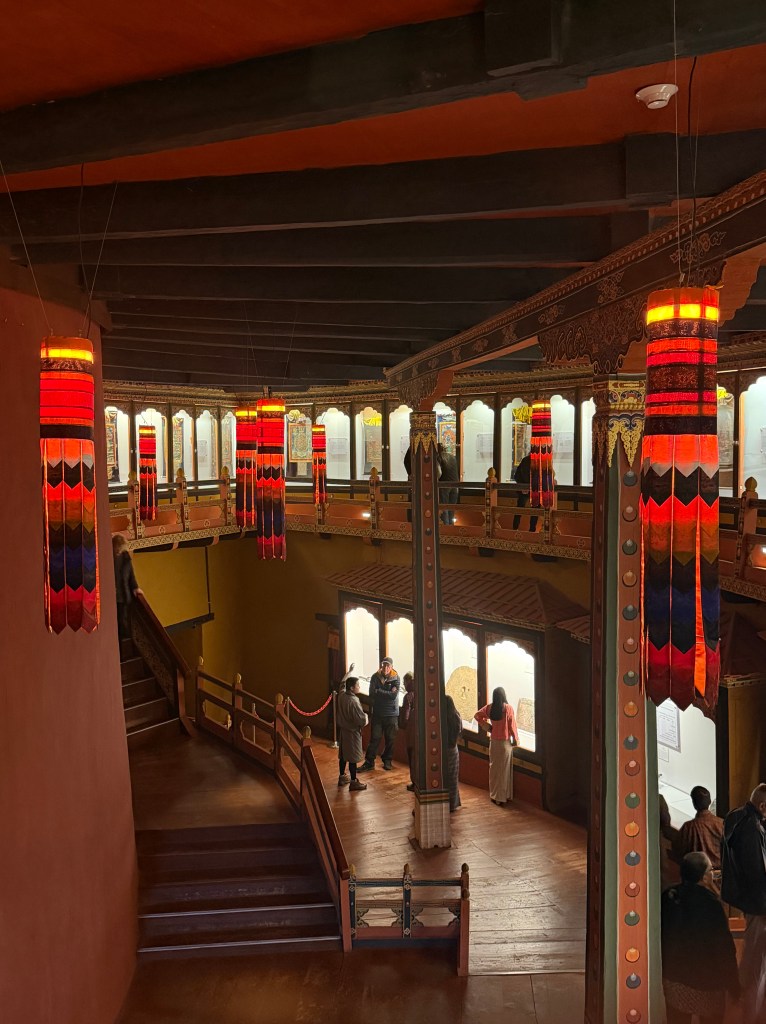
Harvesting the tea. Probably migrant workers from India or Bangladesh. This taken from bus window on way to Bhutan by Melinda.Loading our bags for our trip to Paro. Two buses, 11 per bus. Very basic ride on these curvy roads. Bags covered with a tarp to hopefully protect from the rain. While working, the Bhutan men & women required to wear the native dress.Roadside view.Eight stupas which contain relics from smaller stupas made from clay mold & broken apart. Buddhists are cremated so the ashes might be buried in these stupas along with objects of the person’s life. Eight is an important number in Buddhism as it often means a bridge between the physical & spiritual realms.The international airport in Paro deemed the most dangerous landing airport in the world because it is surrounded by the Himalayas & the runway is very short. We are departing from this airport on Tuesday.Visited a Mandala Museum to learn how to create a simple Mandala using colored sand. A Mandala is a spiritual & ritual symbol used in both Hinduism & Buddhism. The Mandela is destroyed after completion to remind us that nothing is forever; we come into the world with nothing, go out with nothing.Visited the Namgay Artisanal Brewery where we had a guided tour led by this lovely young woman. After the tour, we tasted some of the beers produced here, then offered a full glass of our favorite. I chose the Paro Red Rice Lager.Inside a most interesting Museum of the history of Bhutan. The museum is housed in a historic watchtower built in 1651 & became a museum in 1968. Artifacts date from as early as 3000 BC. The traditional fabric makes for beautiful light coverings.
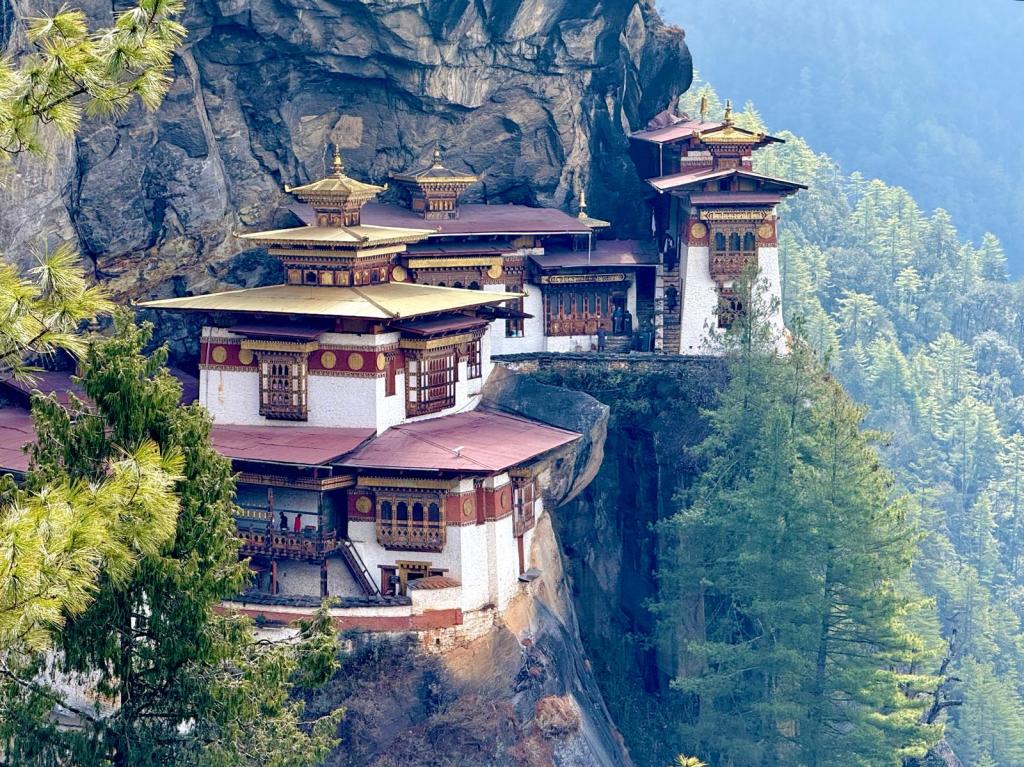
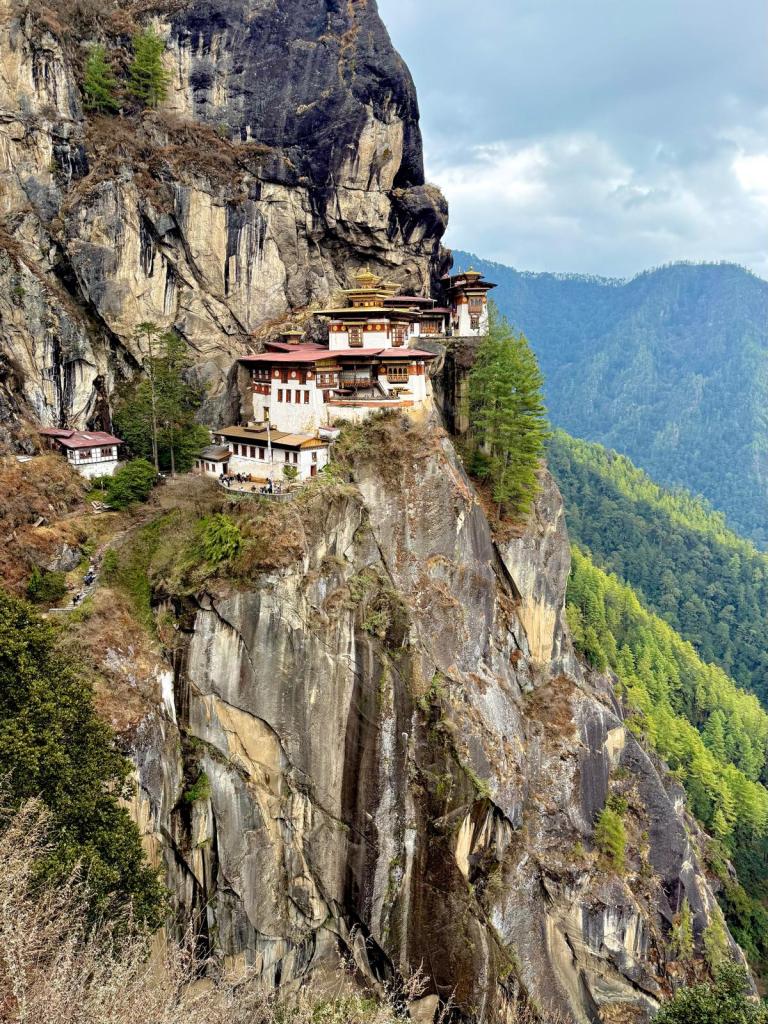
One of the highlights of visiting Bhutan is the Tiger’s Nest Monastery, one of the most famous of many located in Bhutan. It is perched on the side of a cliff 2952 feet above the Paro Valley floor which is at 7300 feet. Legend has it that Guru Rimpoche arrived here on the back of a tigress & meditated at the monastery for 3 years, 3 months & 3 days, hence its name. The site has been recognized as a most sacred place, & all Bhutanese hope to visit at least once in their lifetime.
Bird’s eye view of the Tiger’s Nest Monastery/Temple. Called a temple today because in order to be called a monastery, monks must live & study there. Today, only 3 monks reside at Tiger’s Nest as caretakers.
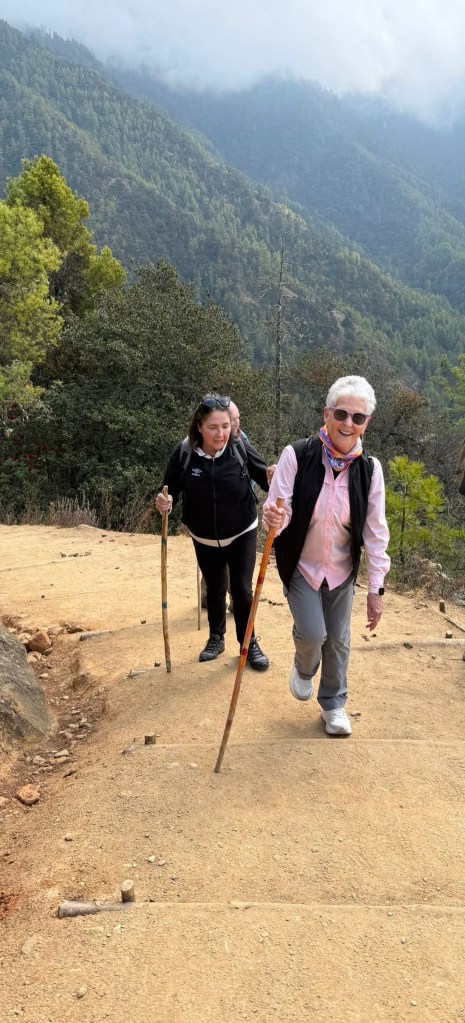
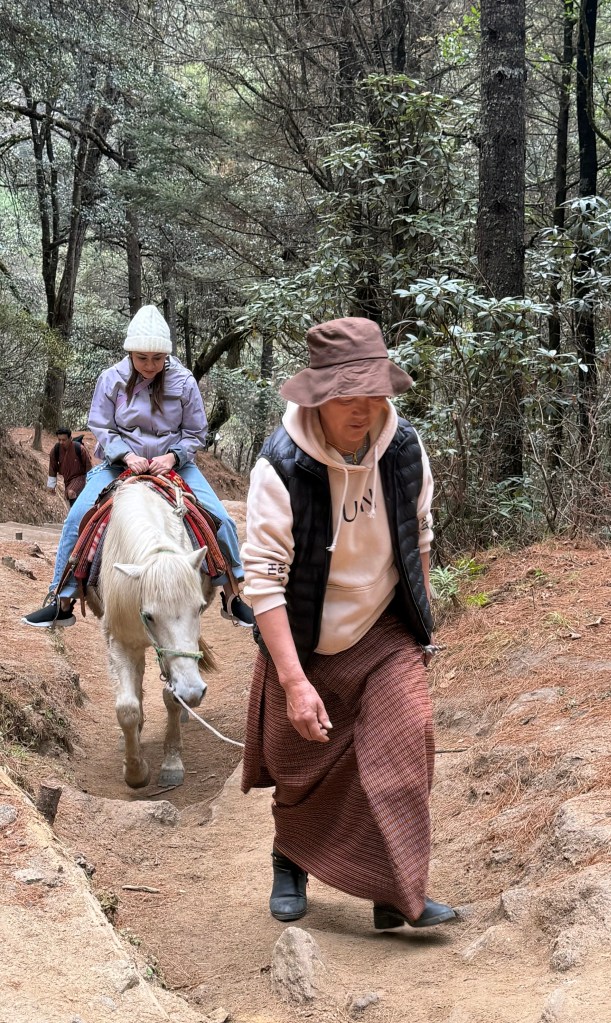
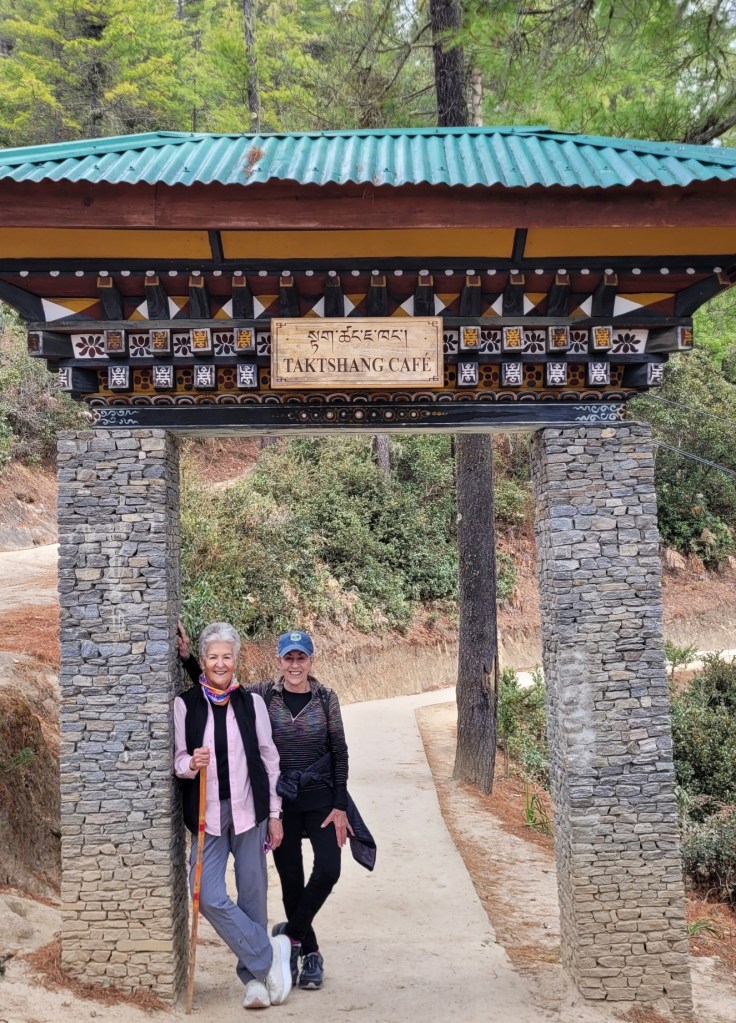
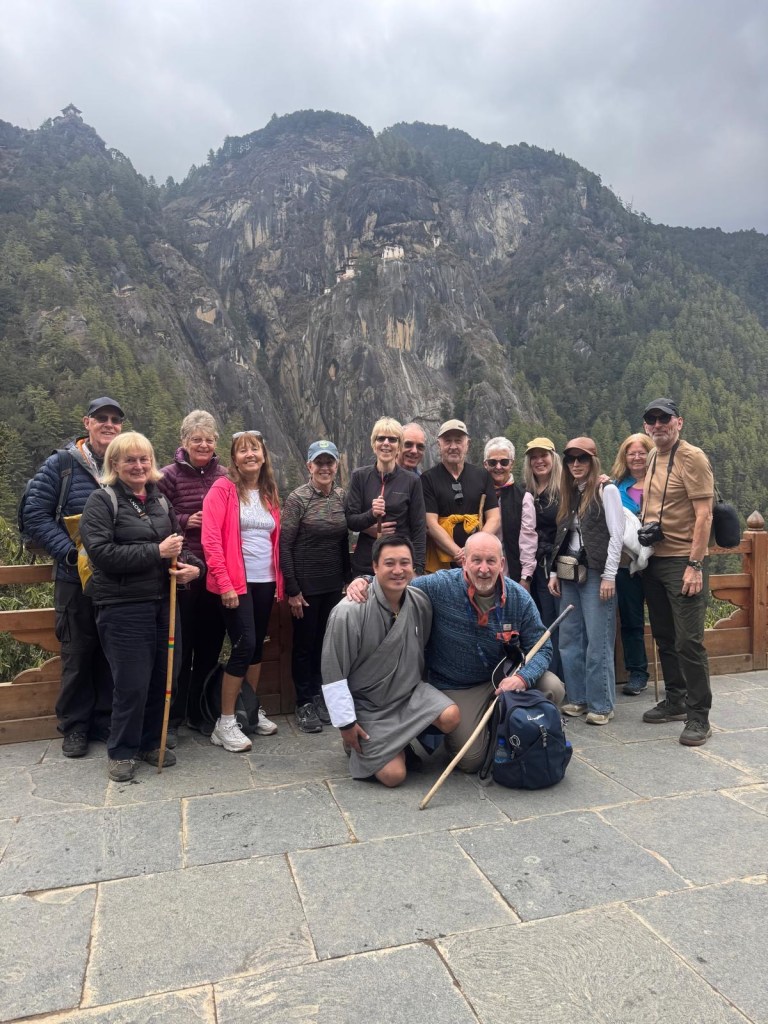
Trekking to the viewpoint, which is at 9500 feet, of the Tiger’s Nest Monastery. From where we started, we experienced a 1245 foot elevation gain. Extremely difficult because of the elevation, steep steps, & uneven surfaces. Took about 2 hours to reach our destination.Some people choose to ride a horse to the viewpoint of the Tiger’s Nest Monastery/Temple.We made it to the viewpoint/cafe.Success for those of us who managed to complete this part of the trek. Two from our group made it all the way to the top. You can see Tiger’s Nest in the background, so the brave 2 had another 50% to go. Our round trip uphill/downhill was just over 3 miles.
Another viewpoint. Russ, who made it to the top with Pam, is responsible for the two photos of the temple.
Enough for this post. We have another two nights after tonight before we head back to Paro for our flight to Kolkata.
Today is the last day we are spending in India. Suffice it to say that this has been a trip of experiences & a few challenges. Changed & delayed flights. Traffic gridlock. Rain & a ferocious windstorm. Day long knocked out internet server. Late & stalled weather related trains. An 82 year old Malaysian woman hobbling with a walking stick, & needing to stay behind at times. A potential visit to see the sunrise over India’s highest mountain, Kanchenjunga at 28,169’, that didn’t materialize because of mist & fog. But, isn’t that why I travel. Each trip is a unique adventure with countless learning experiences. Again, need to reiterate how fortunate I am.
Today’s blog, just picture stories. Not even sure they are in sequence, but who really cares. These pictures, some a group effort, show several days in the life of this latest trip, a tough & busy one in this overpopulated India.
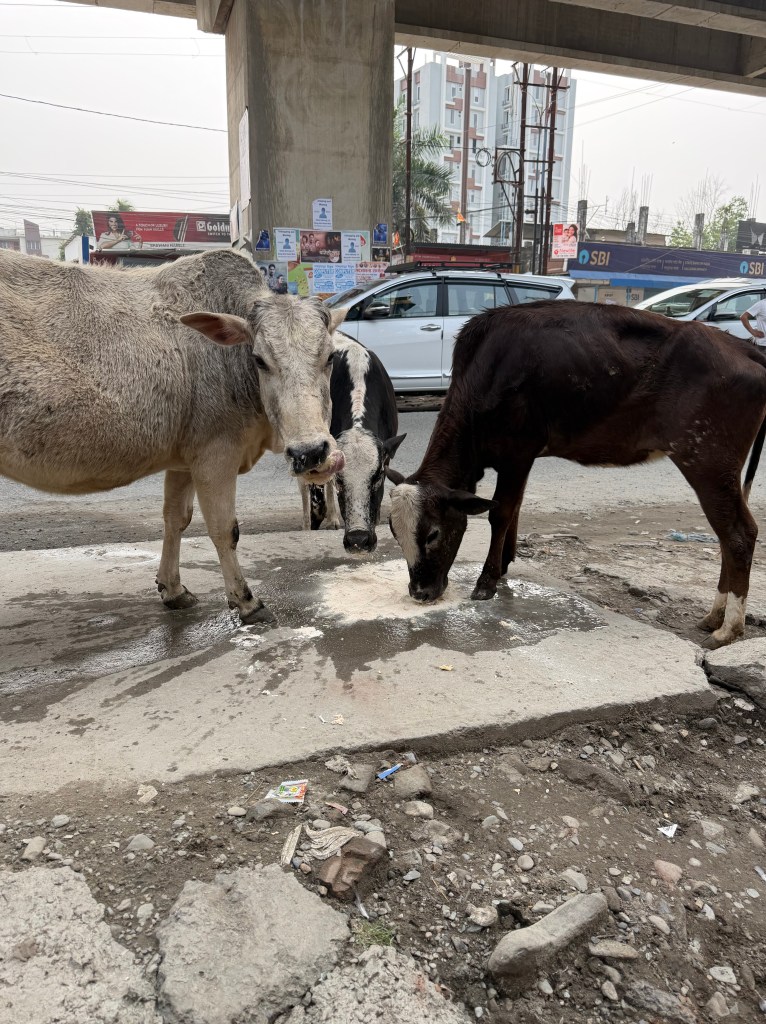
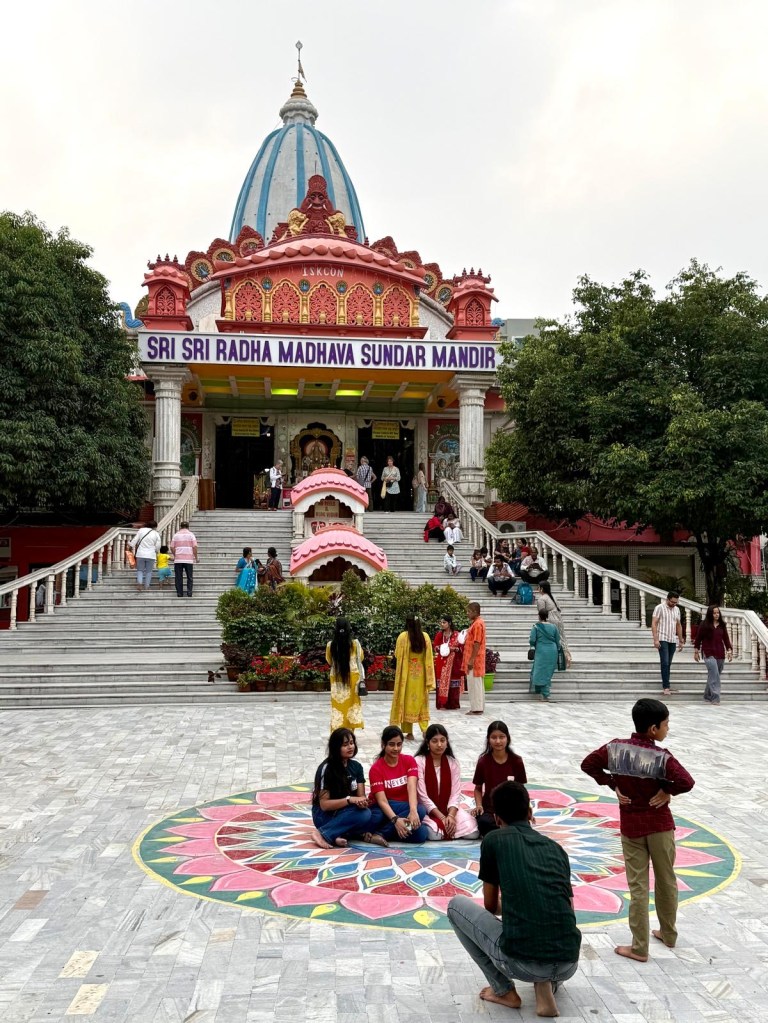
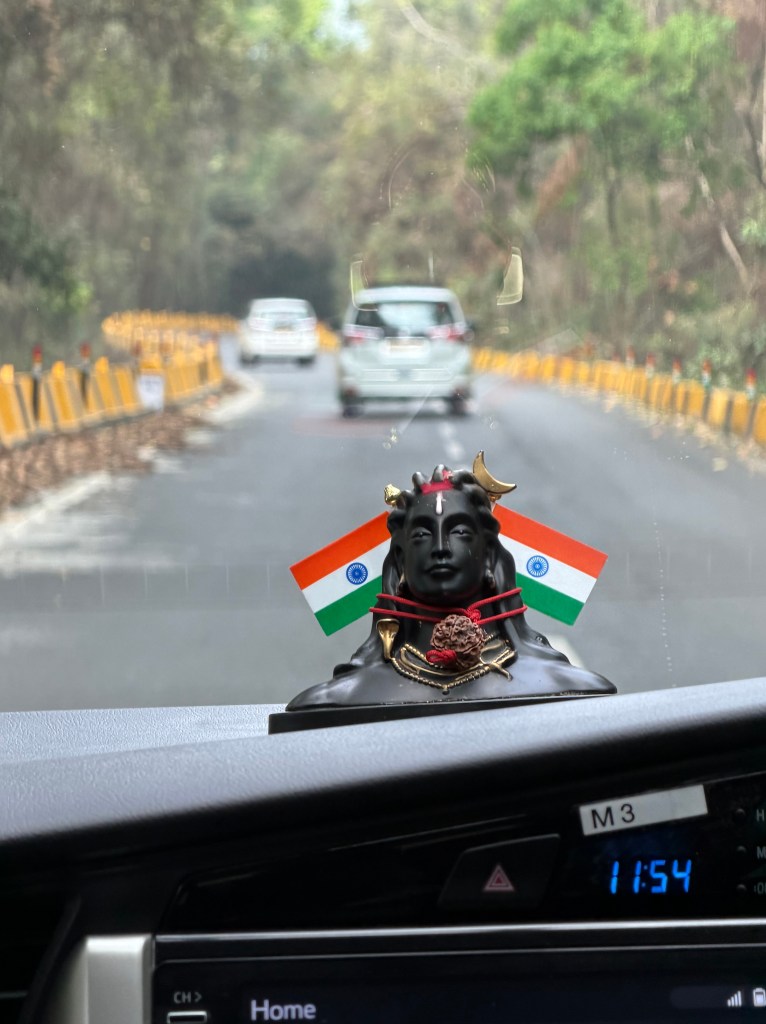
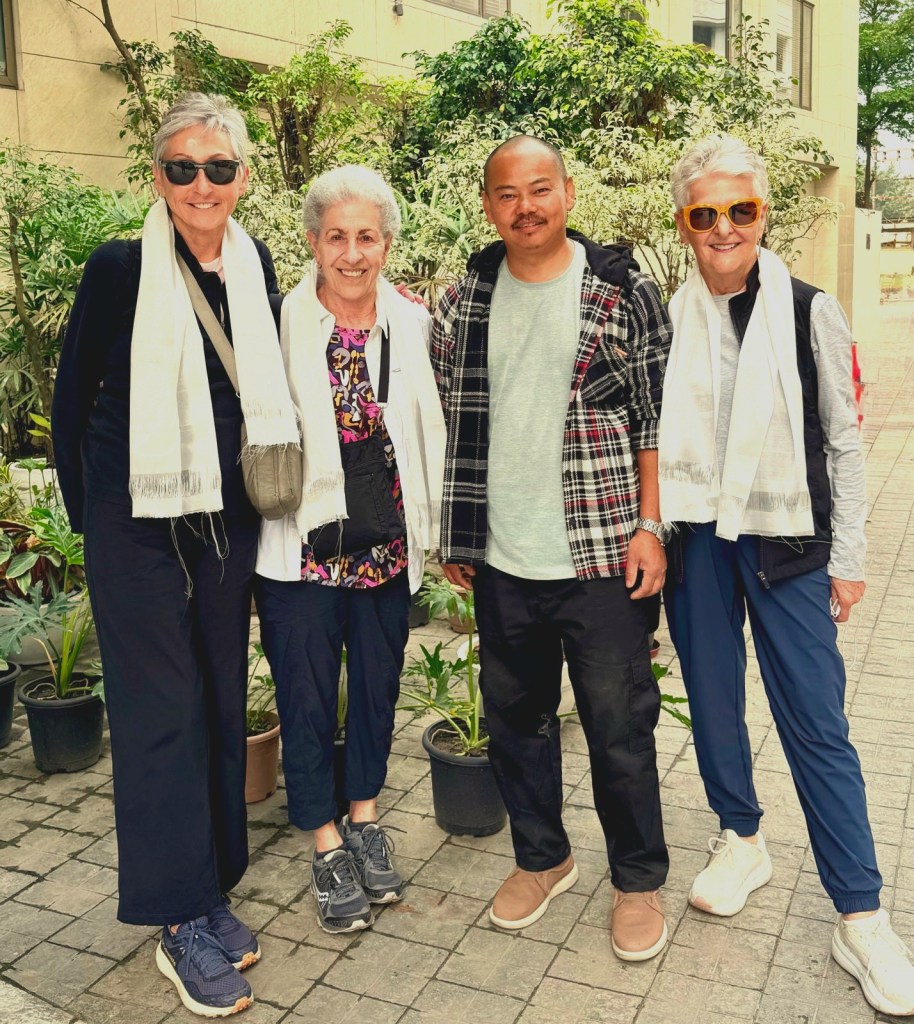
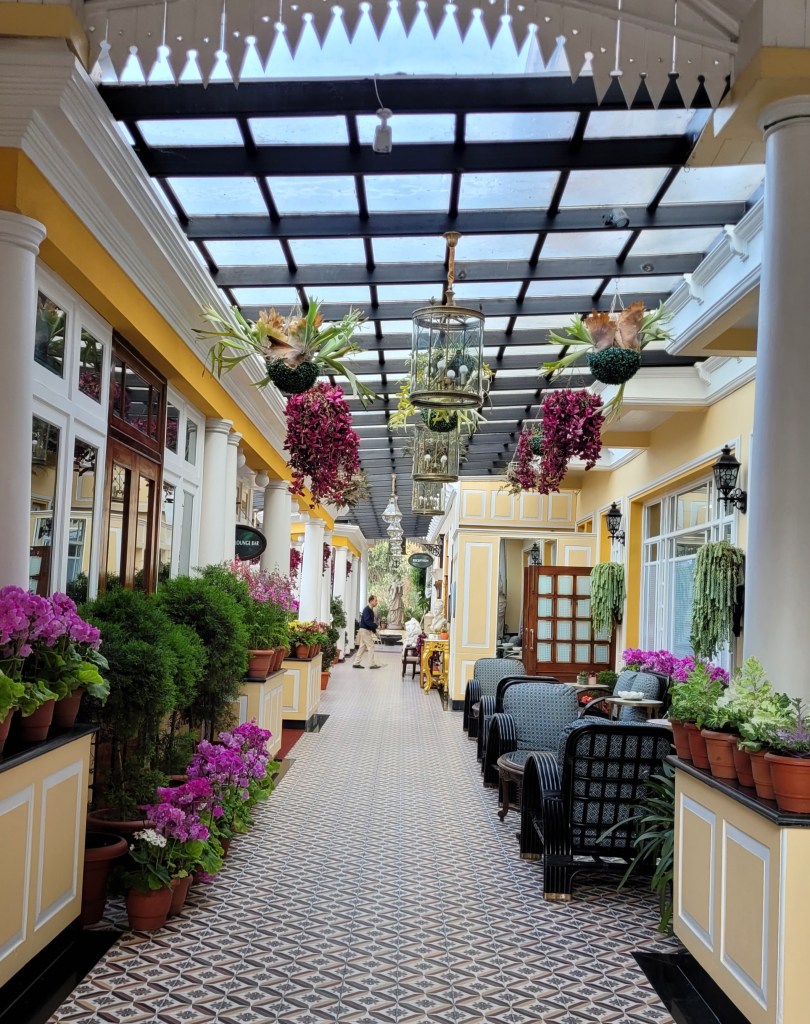
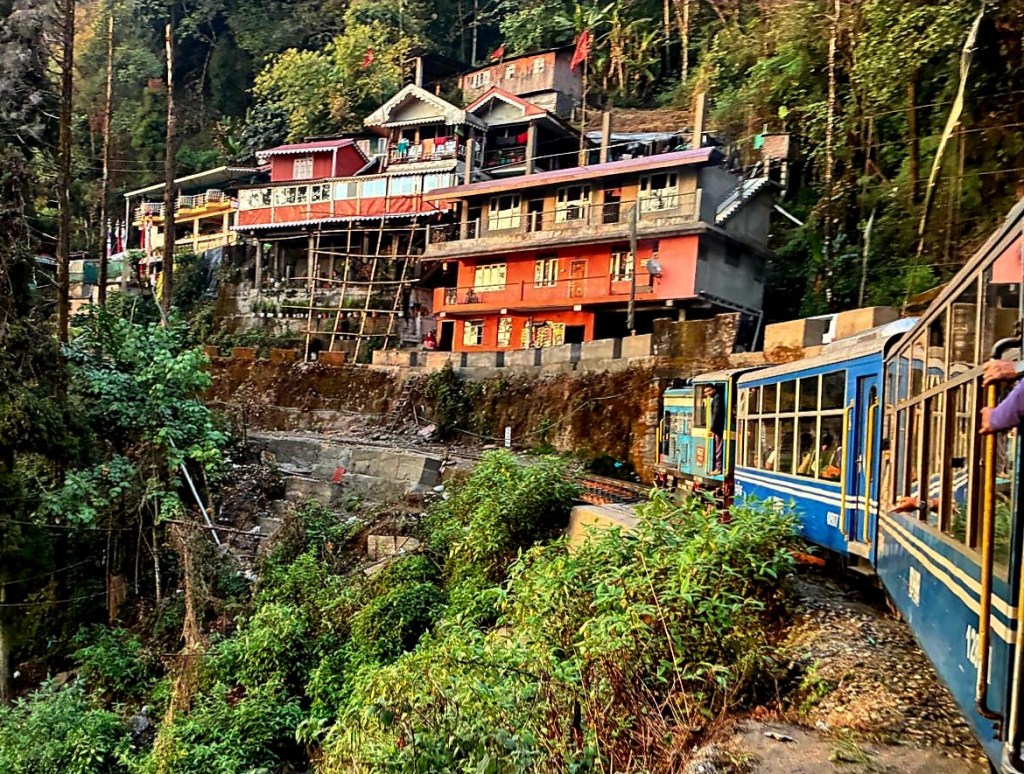
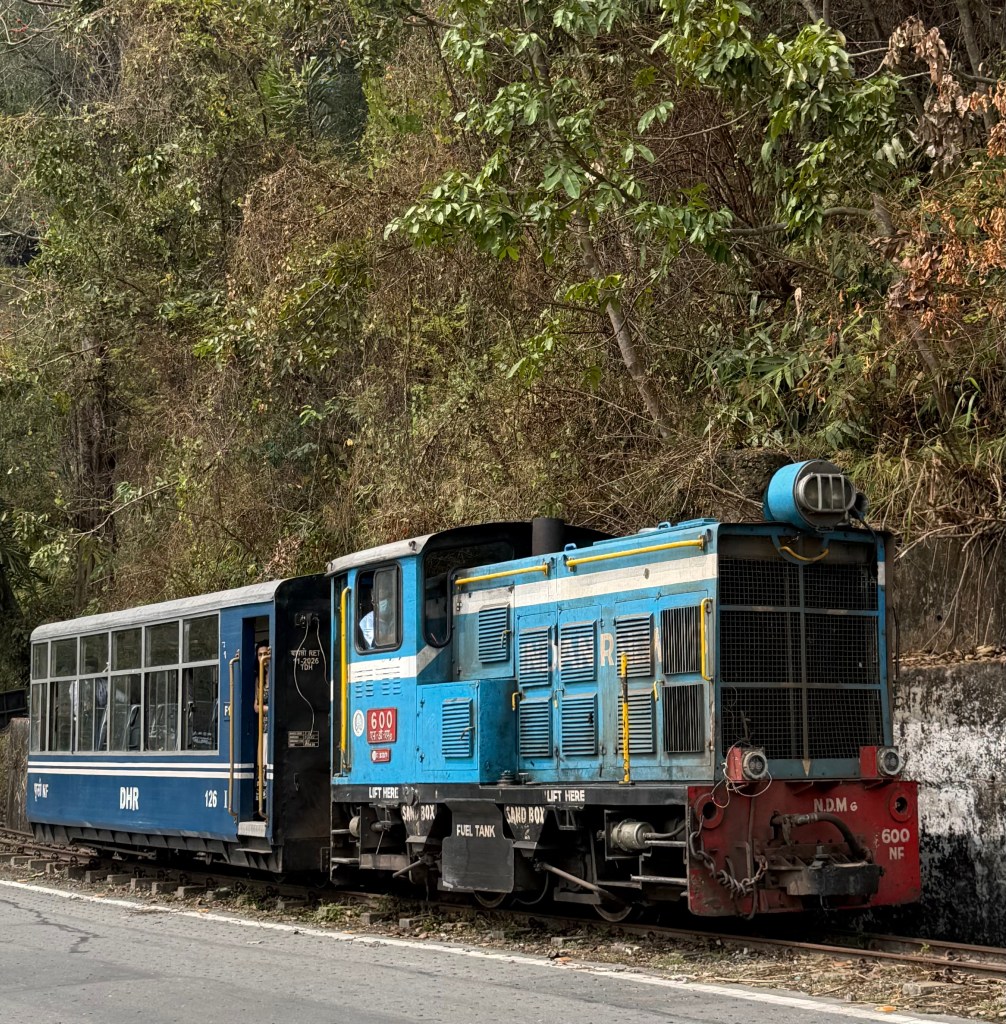
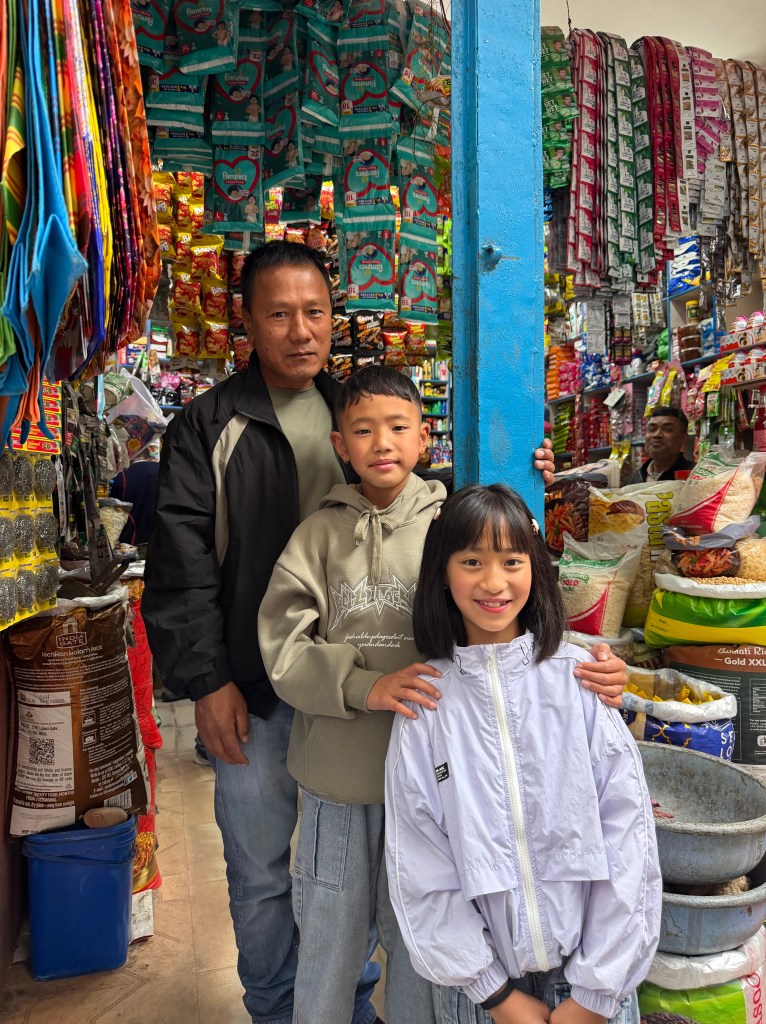
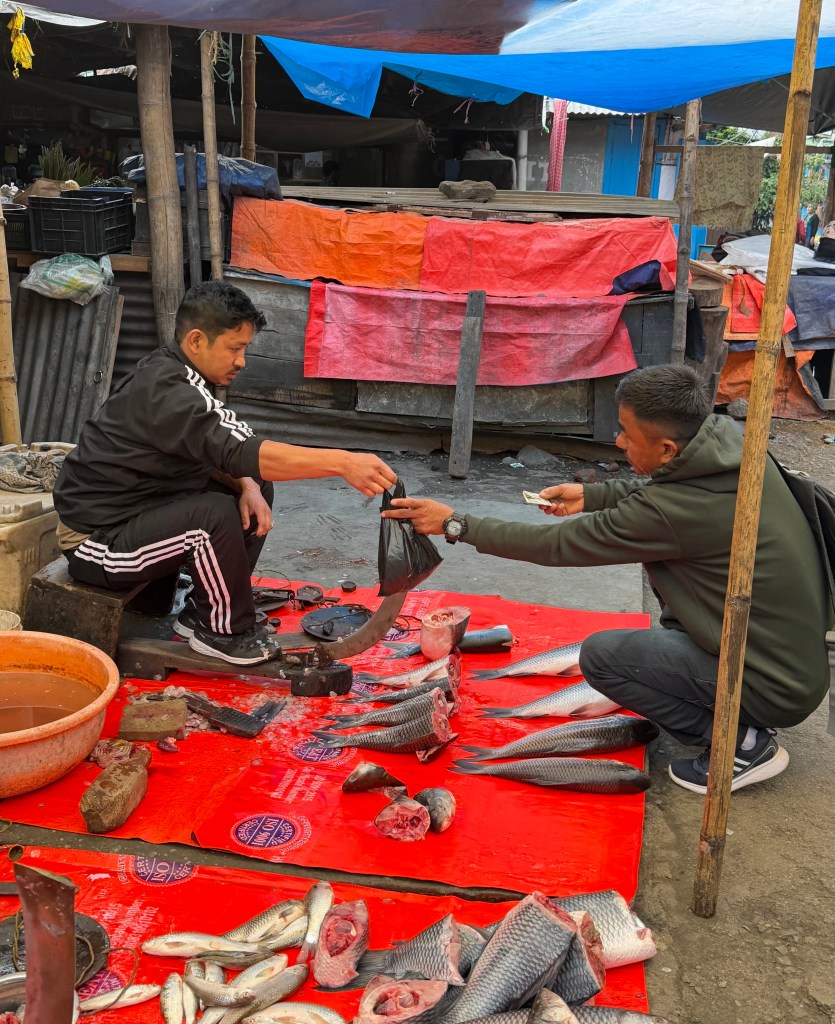
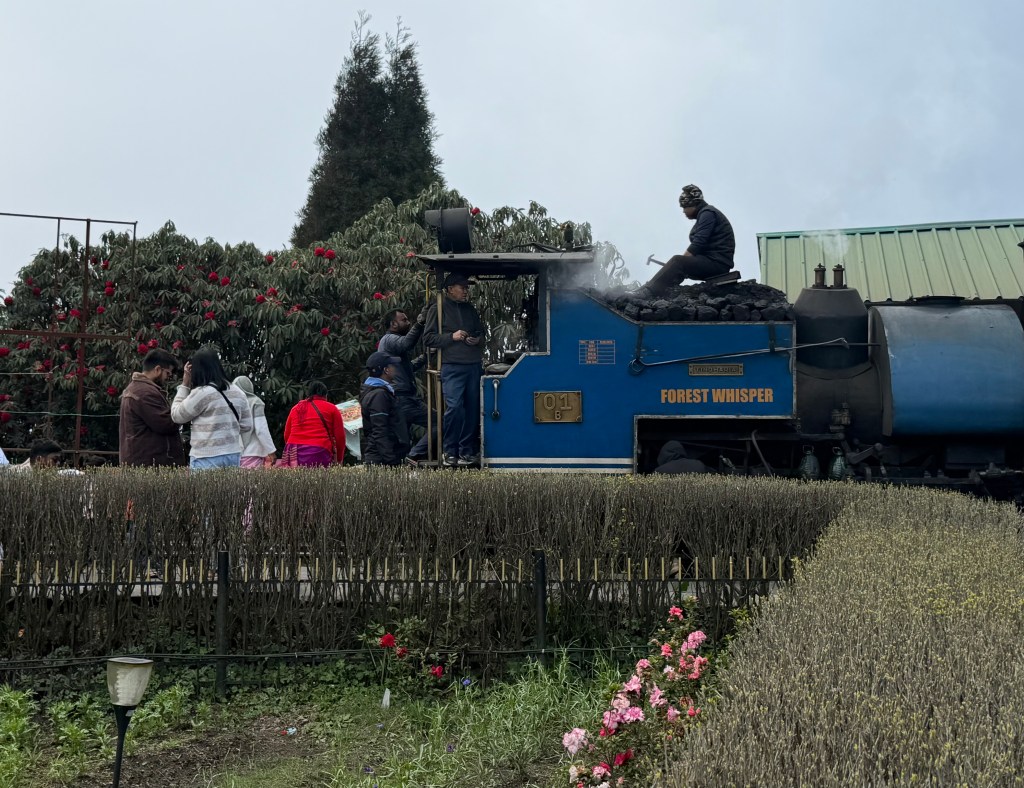
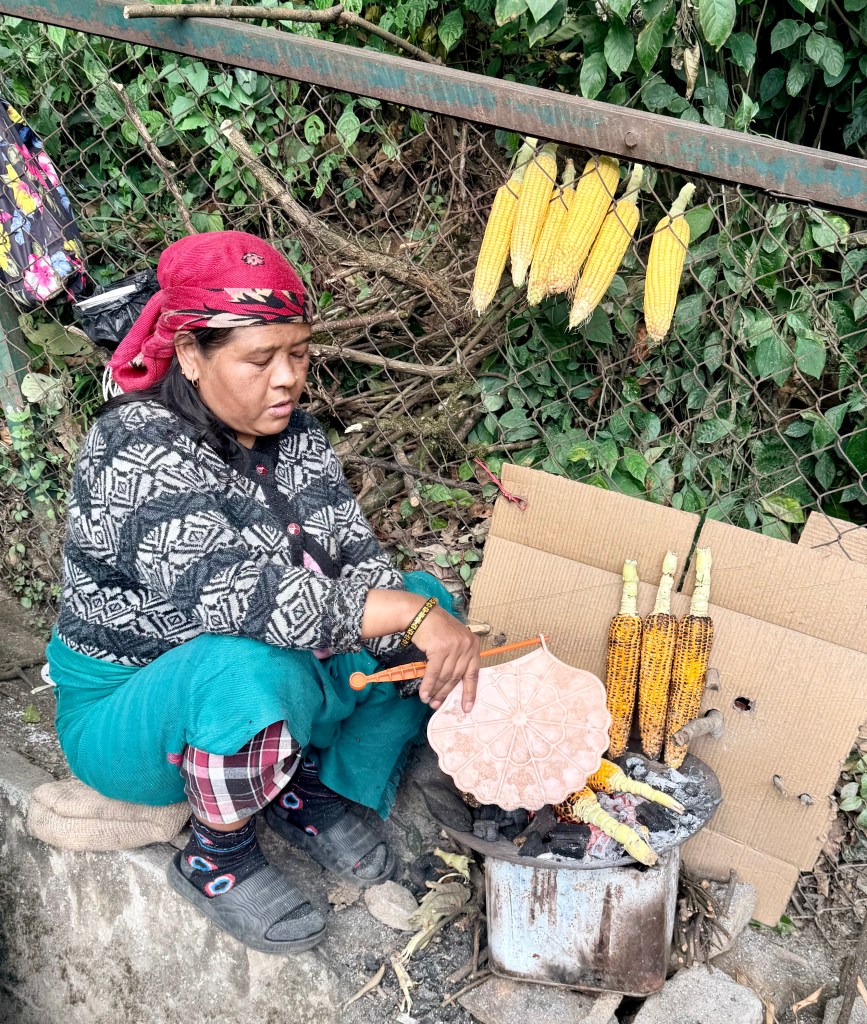
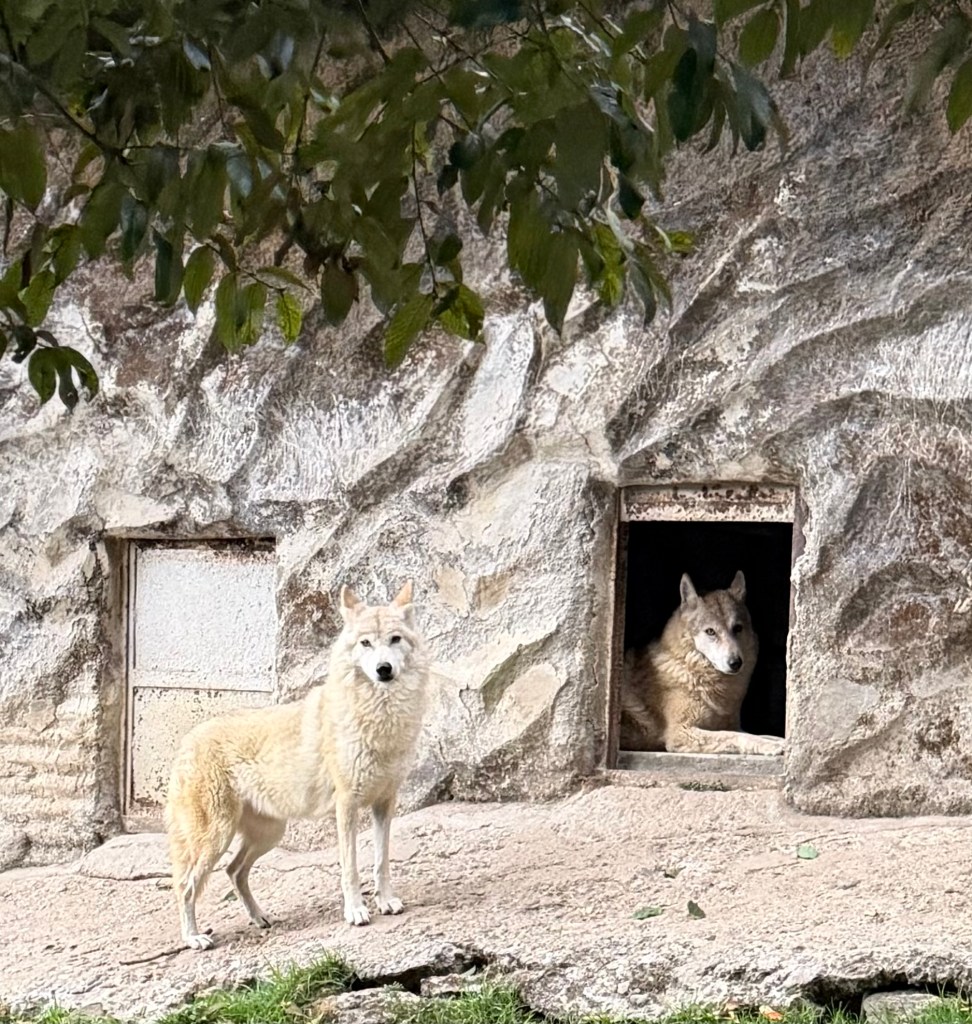
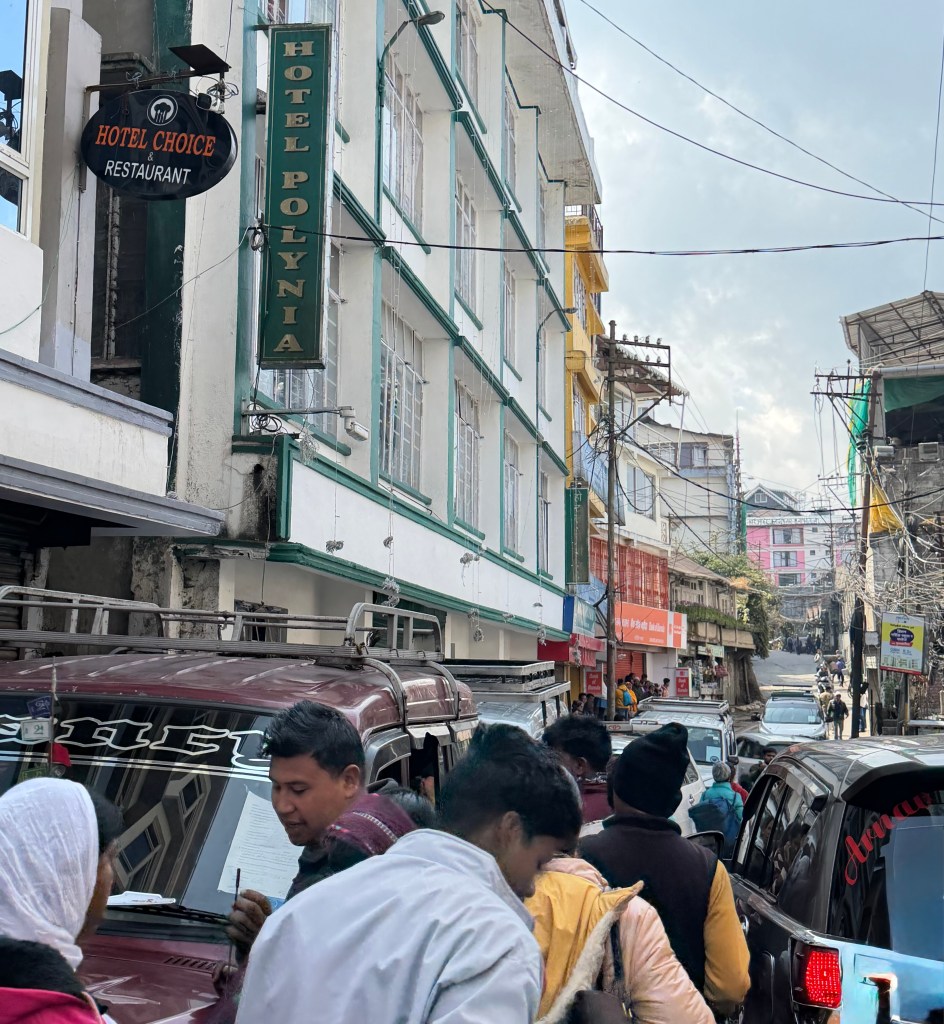
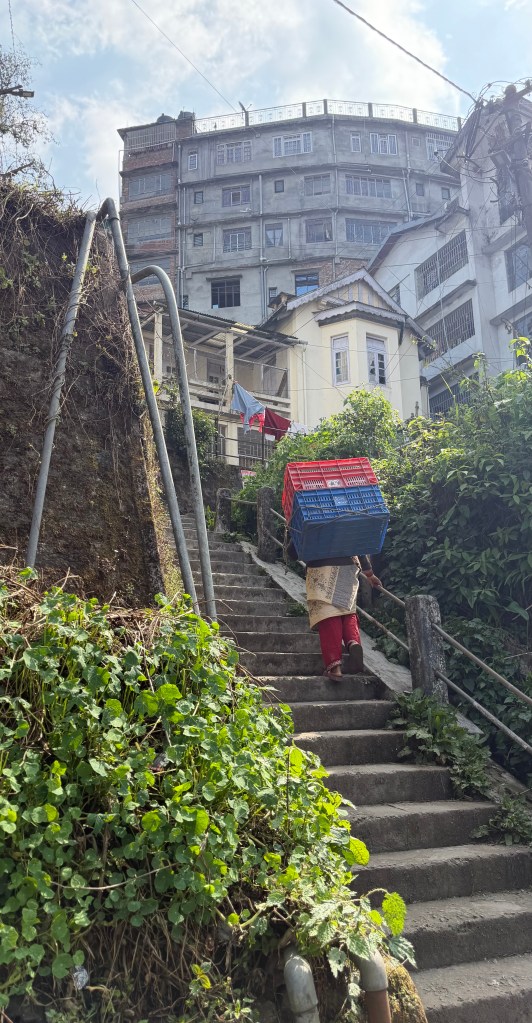
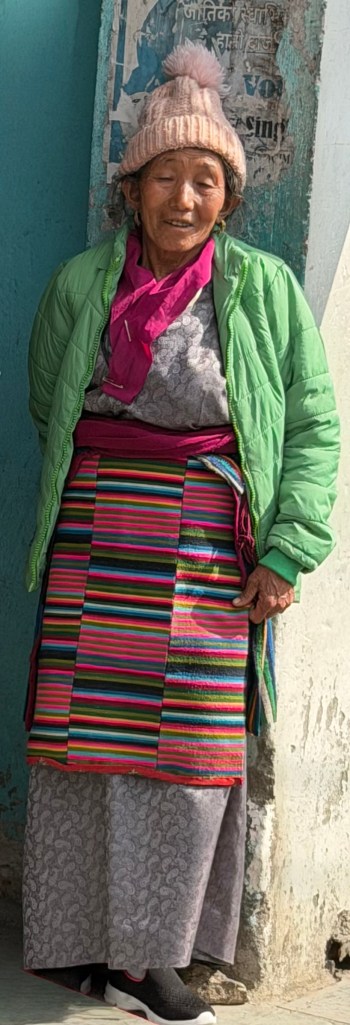
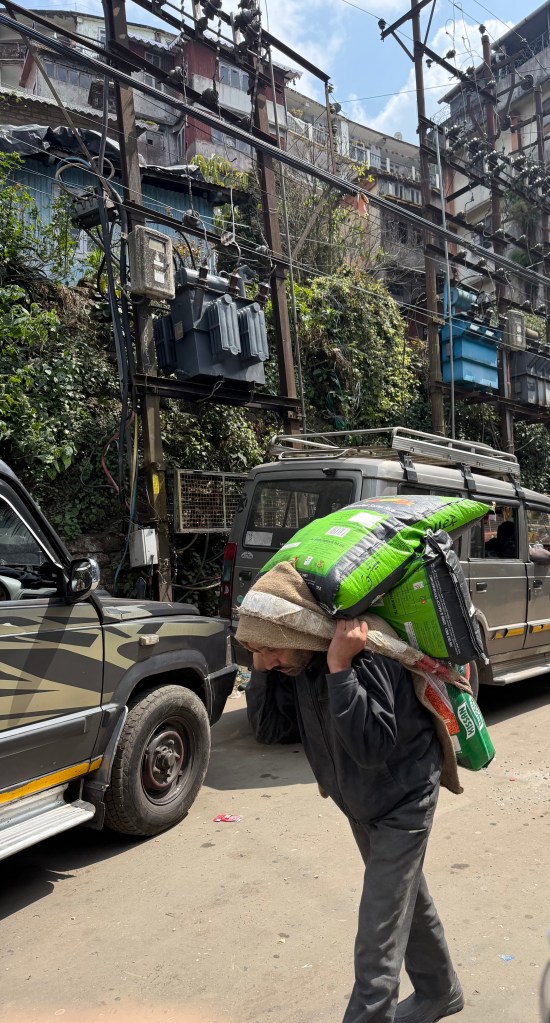
Cows roam freely in this part of India. Sometimes become a traffic hazard. “Grazing” right outside the Buddhist Monastery we visited in Siliguri.Iskcon Hindu Temple which is dedicated to Lord Krishna & located in Siliguri. The walls inside, no pictures allowed, are adorned by the paintings of Russian artisans depicting the various deities. Beautiful lush grounds.Met at the train station in Siliguri by 6 different drivers for the 22 of us plus 2 guides. We called our driver Santos; easier to pronounce. Santos is a practicing Hindu & Shiva, principal deity of Hinduism, is protecting us as we drive the winding, narrow, congested roads. We are now close to the Himalayan foothills.Santos with his girls. Scarves given to us as a welcome gift when arriving at the Mayfair Hill Darjeeling.Reception area of the Mayfair Hill in Darjeeling.Picturesque village along the train tracks.Toy train to Darjeeling. Added another car for us, but only lasted 1 of the 3 hours we were to be on the train. The tracks were slick so sand bags, stored on the side of the road, needed to be emptied on the tracks so we could proceed. Stopped countless times while the skies were darkening. Rescued by the drivers. The Darjeeling Himalayan Railway is the first & still operational hill passenger railway. Opened in 1881 to establish a rail link across a mountainous terrain.This 11 year old was a master of the English language. Introduced her brother to us as her sibling. Lovely family, & another chance meeting because of a late train.Fish merchant along a shopping lane in Kurseong. Scaling, cutting, weighing & selling the farm raised local fish. We always have fish on our buffet lunch & dinners, so the mild tasting fish is probably local.Coal train we rode for about an hour. Covered with cinders once we disembarked. Took quite the shower to remove the grime from my hair & face.On our climb to the Himalayan Mountaineering Institute women were shucking, cooking & selling corn on the cob.Two beautiful wolves at the Zoo. Located on the grounds of the Himalayan Mountaineering Institute.Traffic & pedestrian gridlock. Takes forever to go even a short distance. Drivers use horns incessantly, but display a great deal of patience when behind the wheel.Steep incline, many steps, heavy load, fit body. Undoubtedly of Nepalese descent as the majority of those residing in Darjeeling are Nepalese.In traditional Sherpani dress. Photographed her outside the car window. Coincidentally, our next stop was the Himalayan Mountaineering Institute, the final resting place of Tensing Norgay. As a reminder, he was the Sherpa guide who led Edmund Hillary to the top of Mount Everest. This duo managed to accomplish the feat in 1953.Retired Sherpa.
So many more pictures of life in the West Bengal part of India, but enough for now. Hopefully, we will have internet service in Bhutan so that you can travel with me again.